Last updated November 17, 2026





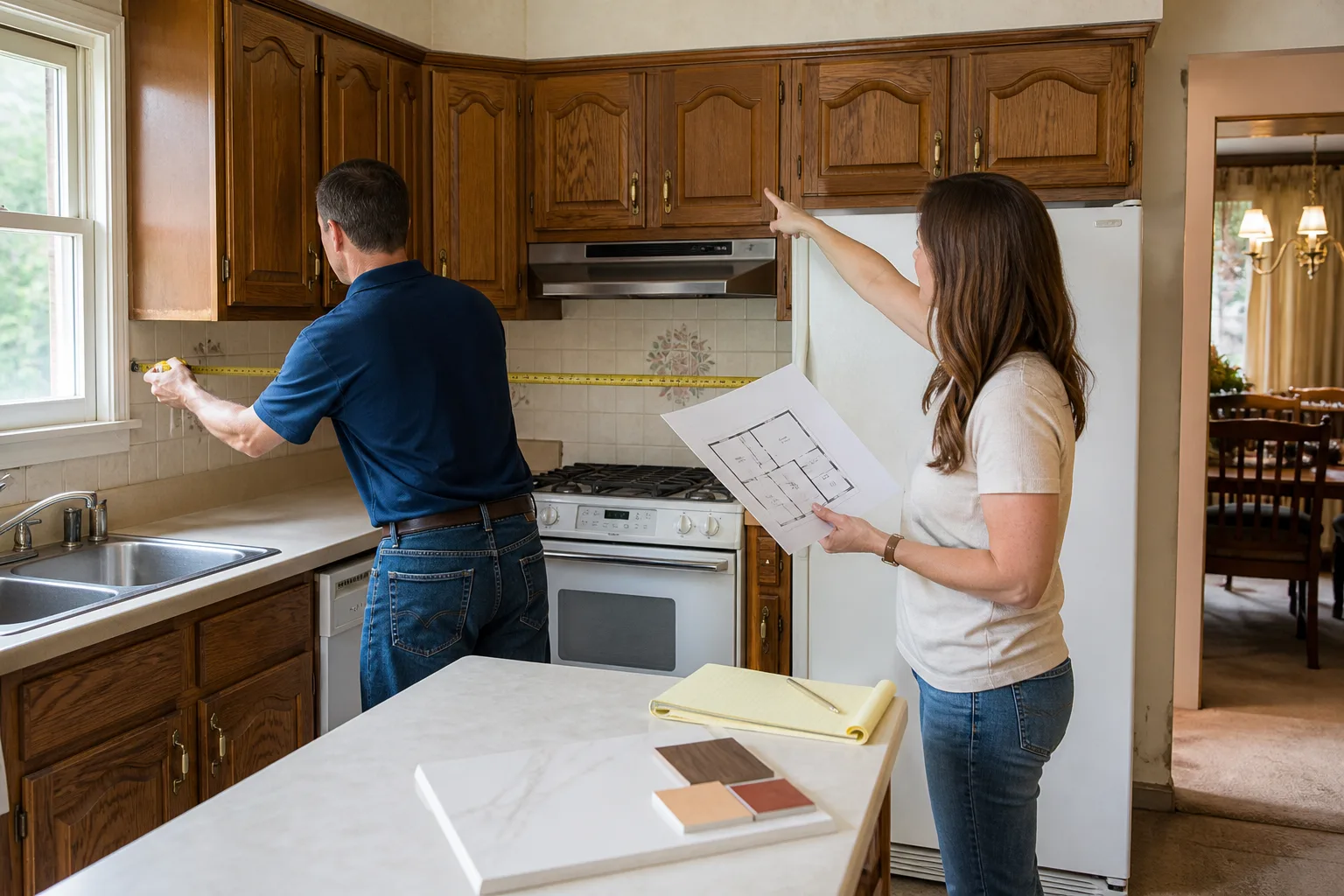
Free written scope consultation - allowances, timeline, and change-order rules on paper before a single trade is scheduled
Choosing the Right Construction Brand: A Buyer’s Guide for Spring Valley
A polished website, a wrapped truck, and a stack of five-star reviews cost roughly $15,000 to assemble. That’s less than the profit margin on a single kitchen remodel in Spring Valley. Which means the contractor with the best-looking brand in town isn’t automatically the one who will show up when promised. The contractor worth your money is the one whose license record is clean, whose guarantee exists on paper, and who says the price out loud before a hammer swings.
This guide walks you through evaluating those three things for real, the way a homeowner in Spring Valley actually has to do it. We’ll cover how to pull and read a Nevada State Contractors Board record, what “satisfaction guaranteed” legally commits a contractor to versus a written warranty, the three documents you should never sign without, and why the contractor who walks you through a line-item estimate without being asked is telling you more than any logo ever could.
Quick Answer
In Spring Valley and across the Las Vegas Valley, the right construction brand to hire is the one with an active, verified license on the Nevada State Contractors Board, general liability insurance you can confirm, and a written guarantee that spells out what gets fixed, for how long, and at whose cost. Branding – the logo, the truck wrap, the polished photos – tells you nothing about whether a contractor will answer the phone in month eight when something cracks. Evaluate the track record and the paperwork, not the marketing.
Styles & brands we work with
- Kitchen remodeling
- Bathroom remodeling
- Home additions & ADU
- Roofing
- Windows & doors
- Driveway & pavers
- Fence
Table of Contents
- What “Brand” Actually Means in a Remodeling Market
- How to Pull a Nevada State Contractors Board Record
- How to Read the Record Like an Insider
- What a Real Written Guarantee Covers
- The Three Documents to Demand Before Signing
- Local Reputation vs. Online Reputation
- Why Line-Item Pricing Is the Real Test
- When to Call a Professional
What “Brand” Actually Means in a Remodeling Market
A brand in the construction business is a promise about how you’ll be treated. When we look at a contractor’s brand, we’re trying to read the answer to three questions: will they tell you the price before the work starts, will they show up in the window they gave you, and will they still pick up the phone when something needs to be made right?
Spring Valley is a community that has grown quickly, and with that growth has come a steady stream of new construction companies advertising on billboards, in HOA newsletters, and across local social media. Some of them are excellent. Many of them are brand-new outfits with a nice website and very little else. The problem for homeowners is that the two are indistinguishable from the outside.
Here’s the test that actually distinguishes them: ask each contractor for their contractor’s license number and the year their guarantee took effect, and watch how quickly they respond. A serious contractor in Spring Valley has these facts at hand. A marketer does not.
Another reality of the Spring Valley market is the specific housing stock. Many homes built in the 1990s and 2000s feature tile countertops and original cabinetry that were standard at the time. A good contractor walks into a Spring Valley home and sees these details and knows immediately what kind of remodel is going to be involved. Look for that level of specificity in how a contractor talks about your home. If they can’t describe the age and style of your subdivision, they’re selling you something generic.
How to Pull a Nevada State Contractors Board Record
This is the single most important step in vetting a remodeler in Spring Valley, and it takes about four minutes. The Nevada State Contractors Board maintains a public database of every licensed contractor in the state. You should always pull the record yourself rather than trusting a link the contractor emails you.
- Go to the Nevada State Contractors Board website and find the license search tool.
- Search by license number if you have it, or by the company’s legal business name. Some contractors operate under a different name than the one on their marketing materials.
- Confirm the status is “Active.” A “Suspended,” “Expired,” or “Revoked” status means the contractor cannot legally perform the work.
- Check the license classification. Nevada breaks general contractor licenses into categories – Class A, B, and C. A Class B covers general building and remodeling work. Confirm the classification matches the scope of your project.
- Review the bond amount. The bond protects you if a contractor fails to complete a job or performs work defectively. It’s not a substitute for insurance, but it’s another layer of protection.
- Read the complaint history. The board lists formal complaints and their resolutions. A history of complaints isn’t automatic disqualification, but a pattern of unresolved complaints is a serious red flag.
If any of these details doesn’t line up with what the contractor told you verbally, walk away. A discrepancy is the beginning of a story you don’t want to be part of in Spring Valley.
How to Read the Record Like an Insider
Pulling the record is the easy part. Understanding what you’re looking at takes a little more attention, and it’s where most homeowners skip a critical step.
The first thing to check is not the license status – it’s the name on the license. Is it the same legal entity that’s on the estimate you’re being asked to sign? Some contractors do business as one entity but hold a license under another. If the names don’t match, ask for clarification in writing before signing anything.
The second check is the bond. In Nevada, the required bond amount varies by license classification. The record will show you how much is bonded against this license. If the bond amount seems unusually low for the project you’re considering, that’s worth a direct question. A larger project should reasonably be handled by a contractor with a bond appropriate to the scope.
The third check is complaint history. Nevada lists both resolved and unresolved complaints. One resolved complaint from 2019 that was resolved in the contractor’s favor is not the same as three unresolved complaints from the past eighteen months. Read the nature of the complaints, not just the count. If the pattern involves “failed to complete work” or “price changed after work began,” you now have evidence of what the contractor’s own track record says.
We’ve seen this play out in a very specific way in Spring Valley. Homeowners who pull the record first save themselves weeks of wasted time on contractors who simply can’t be licensed for the scope they’re proposing. It also lets you ask the smart question: “I pulled your NVCB record, and I see a note about a 2019 complaint – can you walk me through that?” A professional contractor answers that question directly and without getting defensive.
What a Real Written Guarantee Covers
“Satisfaction guaranteed” is marketing language. It has no defined legal meaning in Nevada construction. It doesn’t specify a duration, doesn’t specify what triggers it, and doesn’t obligate the contractor to do anything in particular. It’s a phrase, not a commitment.
A real written guarantee, by contrast, does five things:
- Names the specific scope it covers. Not “our work” in general, but “cabinet installation, countertop seams, and plumbing fixtures installed by our team.”
- States the duration in days or months. “One year from substantial completion” is a guarantee. “For the life of your home” without a defined trigger is not.
- Spells out what triggers a claim. Failures due to workmanship versus failures due to, say, accidental damage are treated differently. The written guarantee should say who decides which is which, and how.
- States who pays for the fix. A guarantee that says “we’ll make it right” but doesn’t say “at no cost to you” leaves the question open.
- Appears on the signed contract, not on the website. Language that only appears in marketing materials is not a contractual commitment.
The 365-Day Done Right Promise here at Penhallow is written into every project contract. If a covered failure occurs inside that window, we come back and fix it at no charge. No service call, no re-inspection fee. That’s the standard we hold ourselves to, and it’s the standard you should demand from any contractor proposing a remodel in your Spring Valley home.
The Three Documents to Demand Before Signing
Before you sign anything for a remodel in Spring Valley, request these three documents from every contractor you’re considering. A professional will have them ready. A contractor who hesitates or pushes back is telling you exactly what to expect once work begins.
- A written, itemized estimate. Not a lump sum, not a range. Itemized means each line of the project carries its own price: demolition, framing, rough plumbing, tile, cabinetry, finish work, and contingency. If the estimate is one big number with a note that says “materials and labor included,” you cannot verify what you’re paying for and you have no defense when the price goes up after demo day.
- Written warranty terms. As we covered above, the guarantee has to be on paper, specify what it covers, state its duration, and be part of the signed contract. Ask the contractor to email you the warranty language before you sign, not after.
- Proof of current general liability insurance naming you as additionally insured. Ask for a certificate of insurance and confirm the effective dates. Then ask the contractor’s insurer to issue an endorsement naming you as additionally insured on the policy. This protects you if something goes wrong on your property and the contractor’s insurance is the only comeback.
These three documents are the foundation of a professional relationship. A contractor who can’t provide all three isn’t ready to work on your home. That’s not us being harsh – it’s the standard the Nevada State Contractors Board itself expects of licensed contractors, and it’s the standard any serious Spring Valley remodeler operates to.
Local Reputation vs. Online Reputation
In Spring Valley, online reviews are easy to game and easy to buy. A company can commission dozens of reviews in a week, or offer a discount to customers who leave a five-star rating. Reviews are a useful starting signal; they are not a track record.
The track record lives in the references. Ask any contractor you’re considering for references from Spring Valley specifically – not just from the broader Las Vegas area. Then call those references and ask the questions that matter:
- Did the price on the invoice match the price they were quoted?
- Did the crew arrive in the window they were given, and were they easy to reach when you had a question?
- If something wasn’t right, how did the contractor handle it?
- Would you use them again, and why or why not?
The neighborhoods matter. A contractor who has done work in Rhodes Ranch, Peccole Ranch, and The Lakes is familiar with the housing styles and lot conditions specific to those Spring Valley communities. That familiarity cuts down surprises during the build. It also means they’ve likely worked with the same local building inspectors, which saves time on permit sign-offs.
The most powerful reference question is the referral question: “Do you know anyone else who used this contractor?” A contractor with a strong local reputation in Spring Valley generates referrals. A contractor with a strong online reputation generates reviews. The two are not the same.
Why Line-Item Pricing Is the Real Test
Ask a contractor for a verbal ballpark on a kitchen and watch what happens. Most will give you a range that’s vague by design: “$30,000 to $60,000, depending.” That range protects the contractor’s margin, not your budget.
Now ask the same contractor to break that range into line items. A professional does this without blinking. Here’s a reasonable itemized starting point for a mid-range kitchen remodel in Spring Valley:
- Demolition and disposal: $1,500 – $4,000 depending on whether load-bearing walls are being moved.
- Rough plumbing and electrical: $3,000 – $8,000 depending on fixture relocation.
- Cabinetry: $8,000 – $22,000 depending on cabinet grade and whether you choose a stock line or a semi-custom line.
- Countertops: $3,000 – $9,000 for quartz or natural stone; Silestone and Caesarstone products occupy the mid to upper range, with highly figured stone pushing the top.
- Tile and backsplash: $1,500 – $5,000 depending on material and layout complexity.
- Fixtures: $1,000 – $3,500 for sink, faucet, and lighting; Kohler and Moen products fall comfortably in this band.
- Finish work and paint: $1,500 – $4,000 depending on the size of the space and how detailed you want the finish.
The total on a Spring Valley kitchen typically lands in the $18,000 – $55,000 range, with the line-item detail telling you which end of that range a project is really on. The contractor who hands you this breakdown without you asking has demonstrated more about their accountability than a thousand five-star reviews could.
We put every price in writing before any work starts. That’s a core part of how we operate, and it’s the aspect of the work our clients appreciate most about a kitchen remodeling in Spring Valley. The same line-item discipline applies to a bathroom remodeling in Spring Valley, where the smaller footprint shouldn’t mean a smaller guarantee.
Common Mistakes to Avoid
- Hiring based on the truck wrap. A wrapped truck and a professionally designed website are marketing investments, not track record. Check the NVCB record before you’re impressed by either.
- Accepting a verbal estimate. A verbal number has no legal weight. The contractor can change it the day work begins, and you have no recourse. Ask for it in writing.
- Trusting “satisfaction guaranteed” on a website. This phrase commits a contractor to nothing legally specific. Ask for the written warranty language that goes on the contract.
- Skipping the additional-insured check. A certificate of insurance alone doesn’t protect you; the endorsement naming you as additionally insured does. Ask for it in writing.
- Ignoring complaint history. A single 2019 complaint is not disqualifying. Three unresolved complaints in the past year, especially of the same type, is. Read them.
- Taking references from outside Spring Valley. A contractor who has worked across the valley may not know the specific housing conditions in your subdivision. Ask for local references, then call them.
- Missing the permit question. Spring Valley projects above a certain scope require permits and inspections. Ask the contractor whether they pull the permit or expect you to. A serious contractor handles permitting and inspection sign-off as part of the job, and the permit is your evidence the work is up to code.
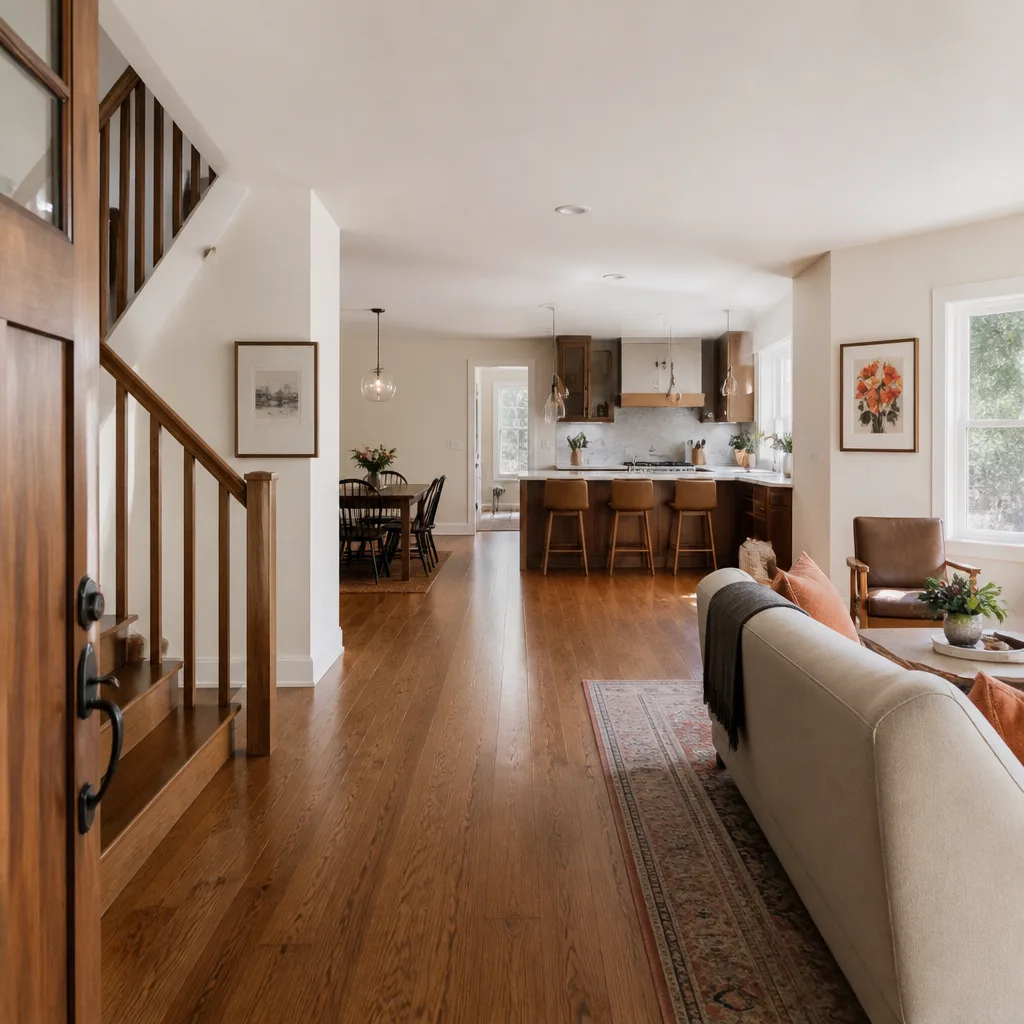
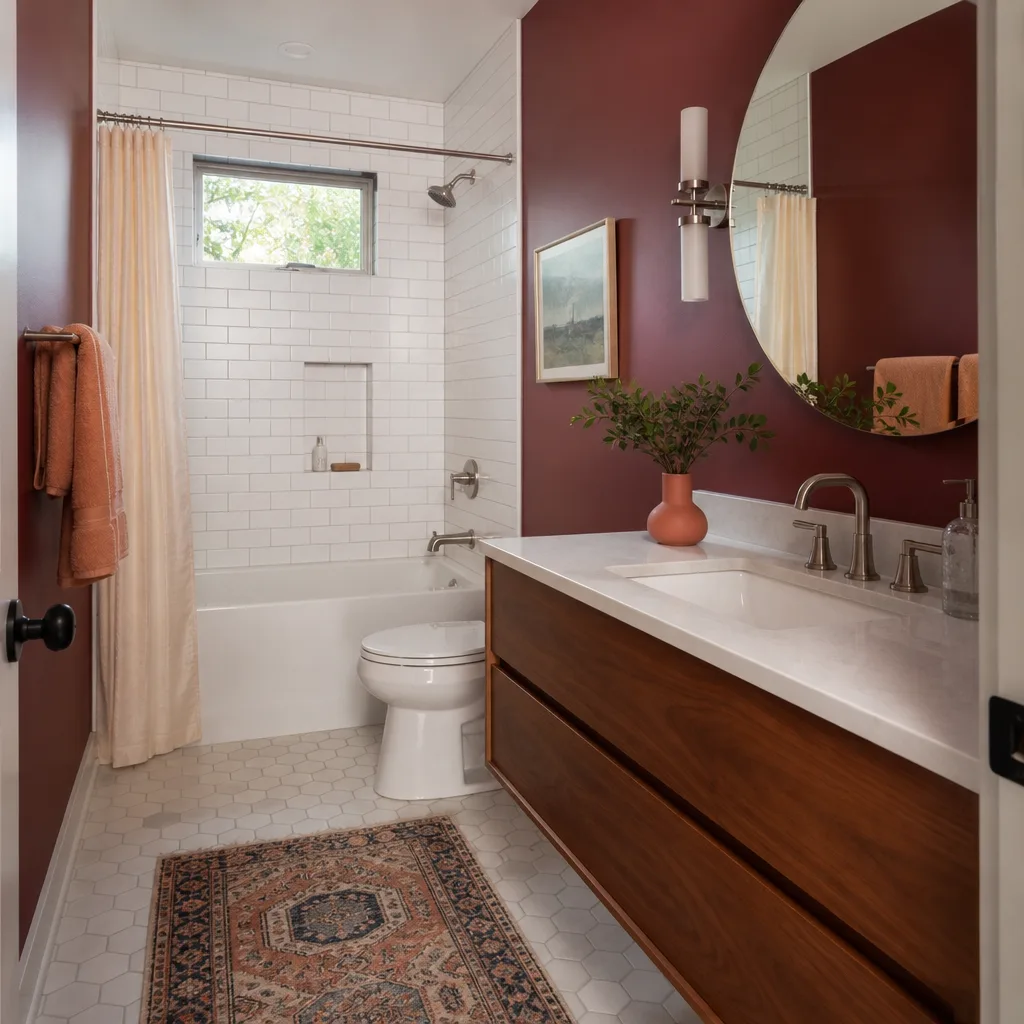
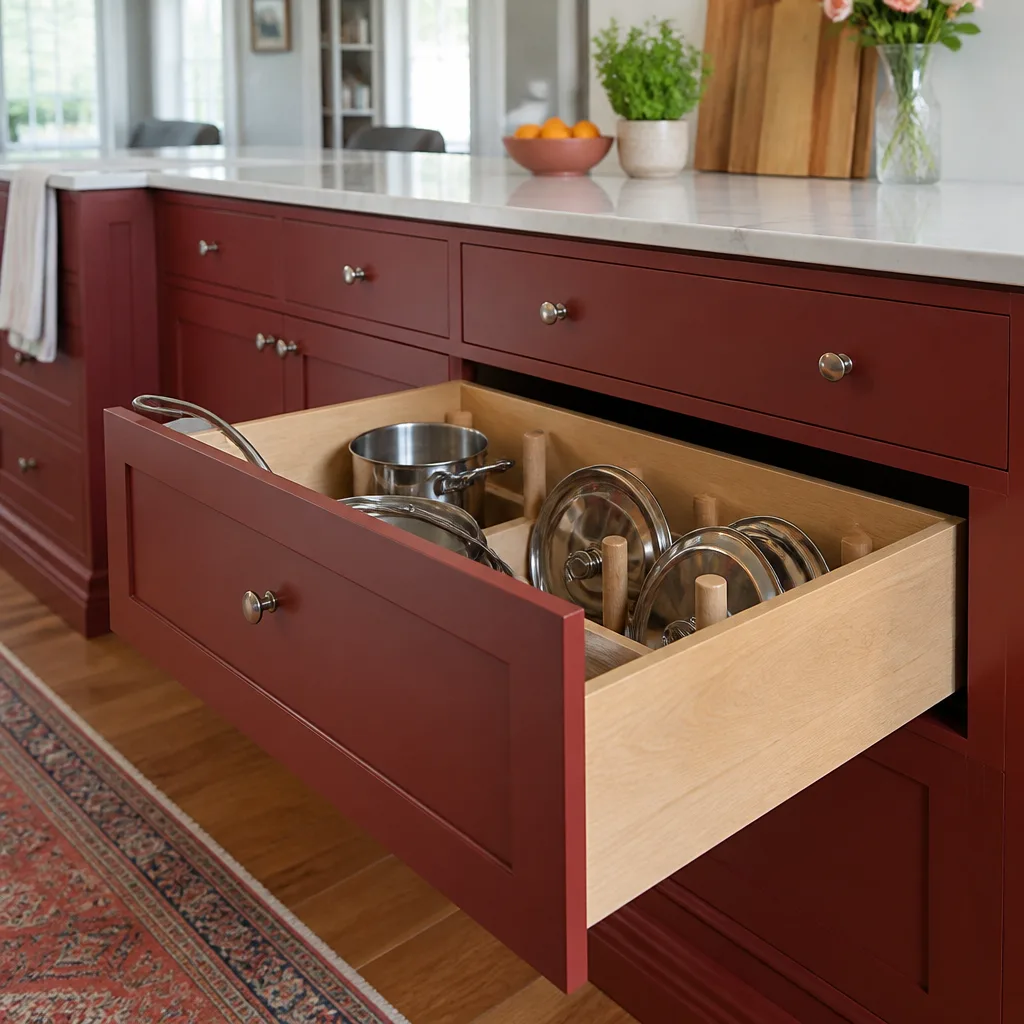
See the difference
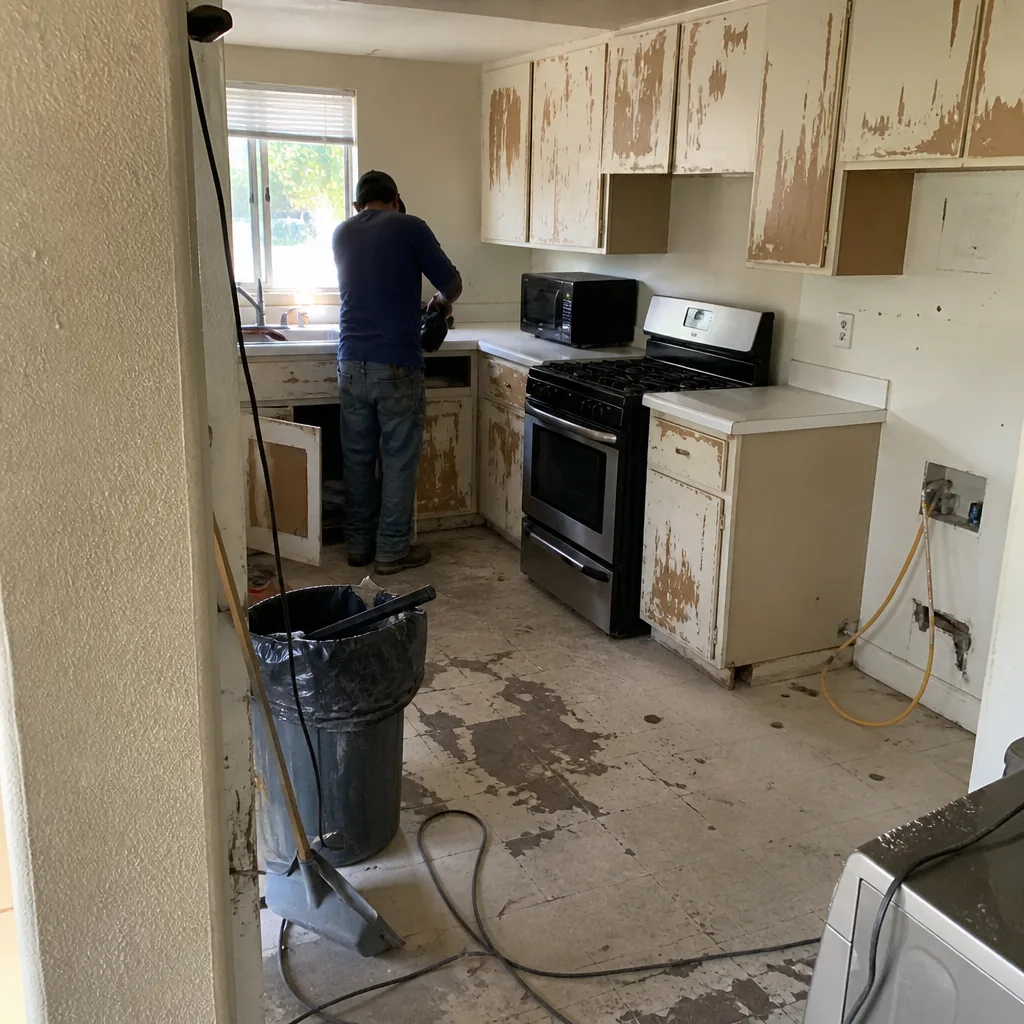 Before
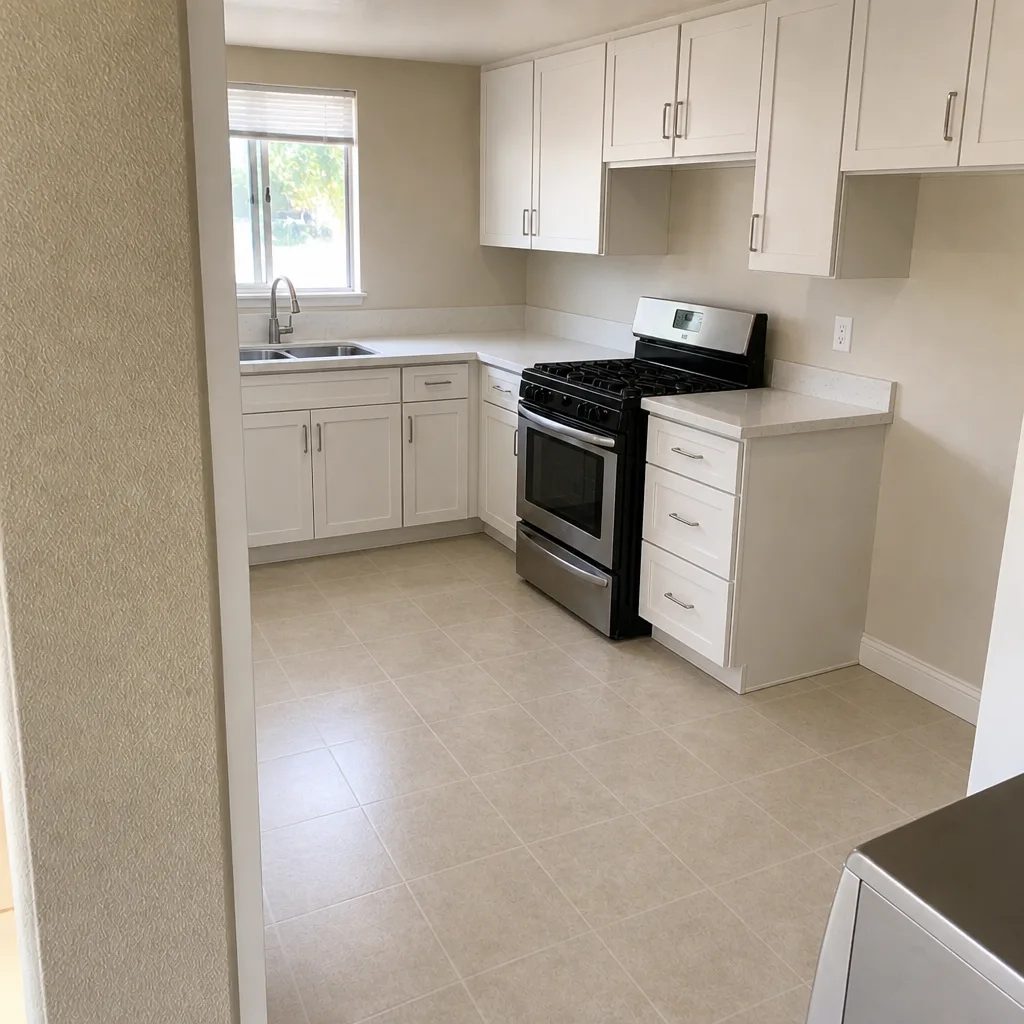 After
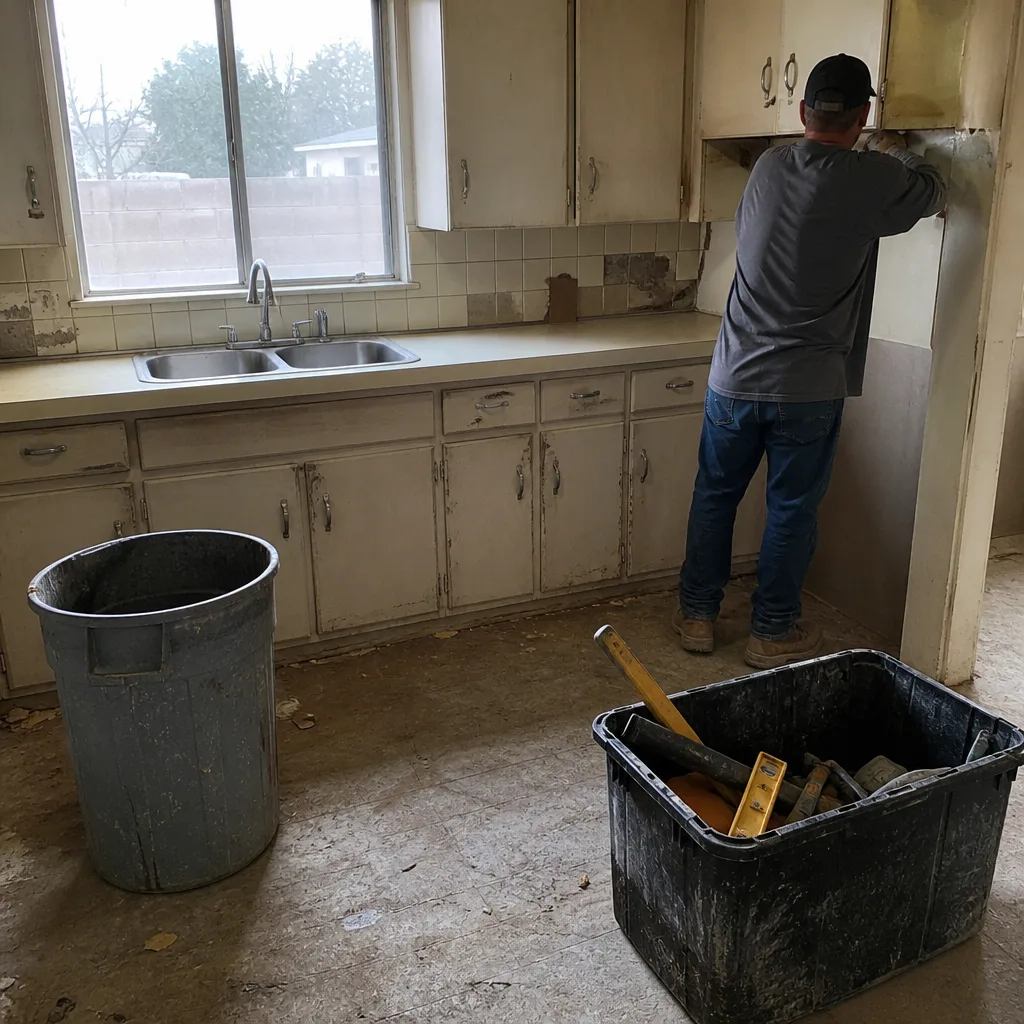 Before
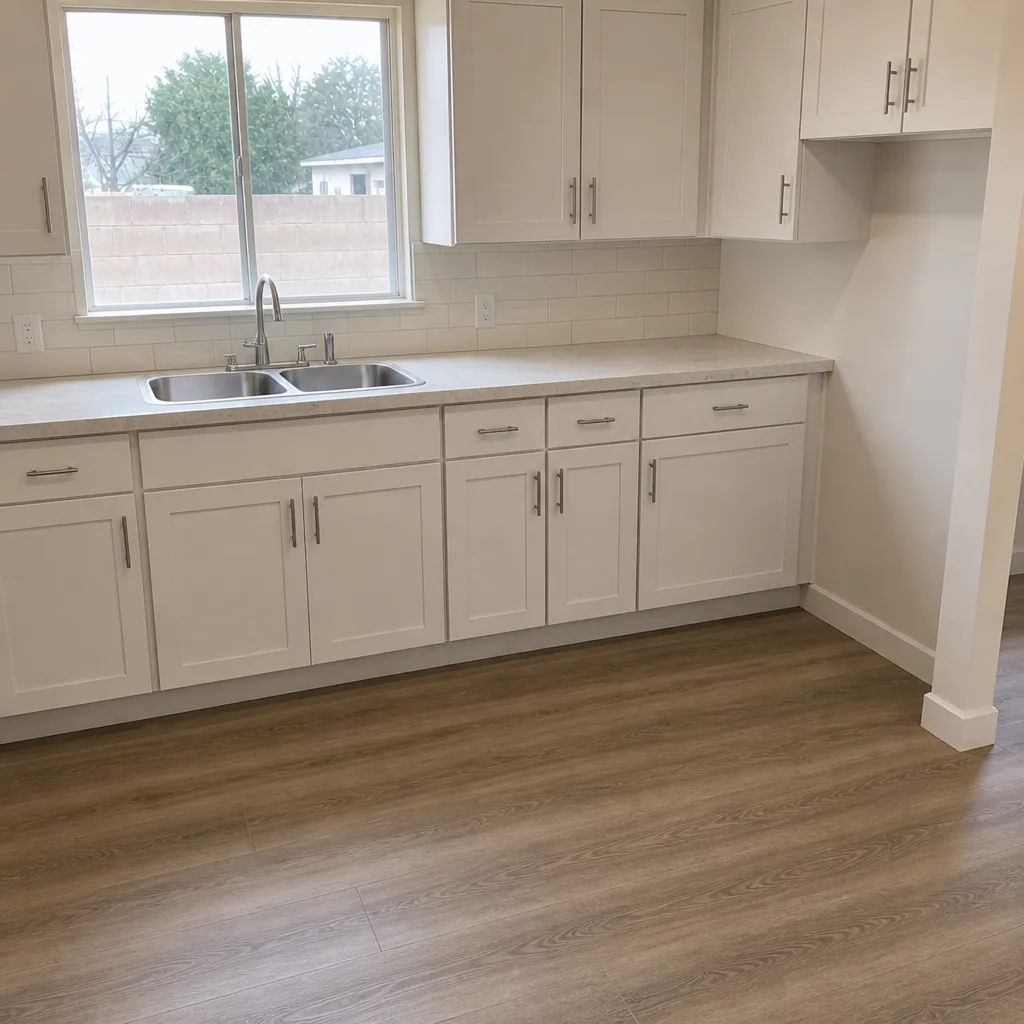 After
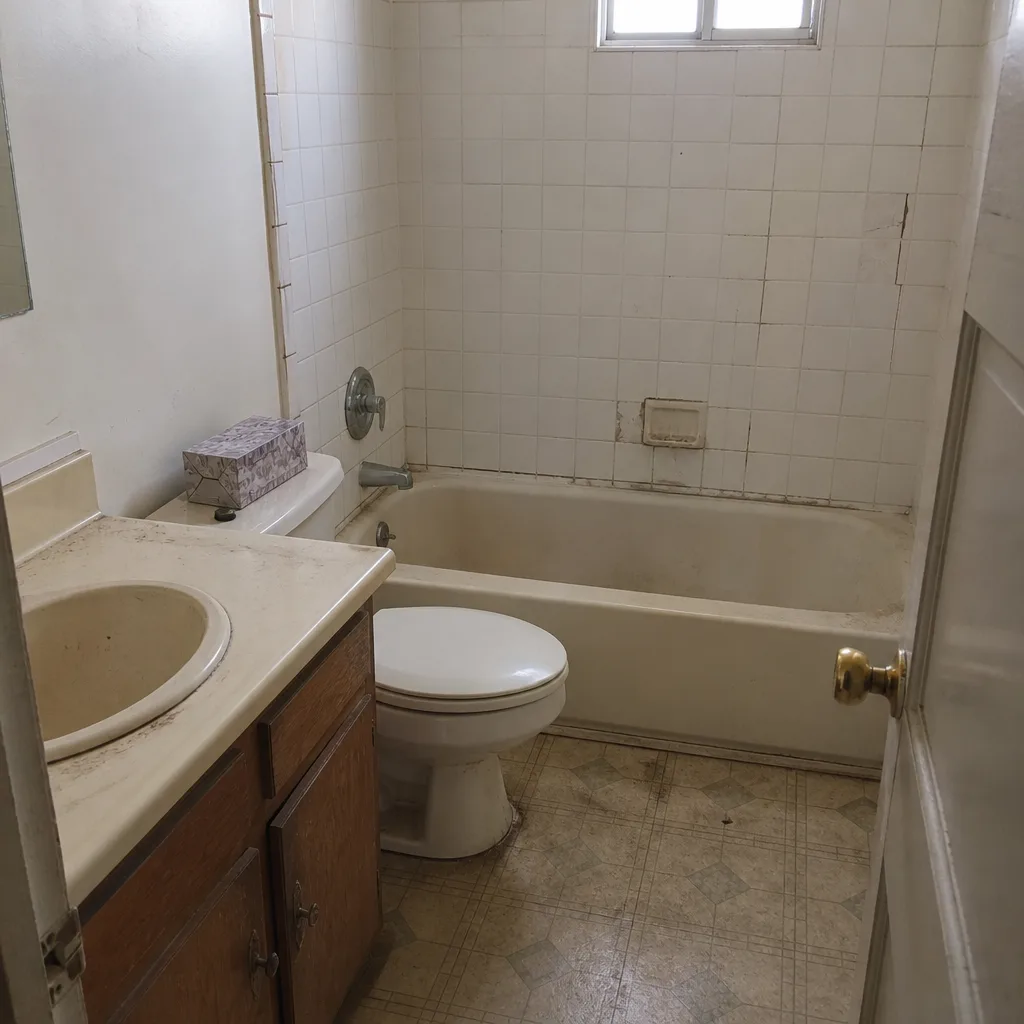 Before
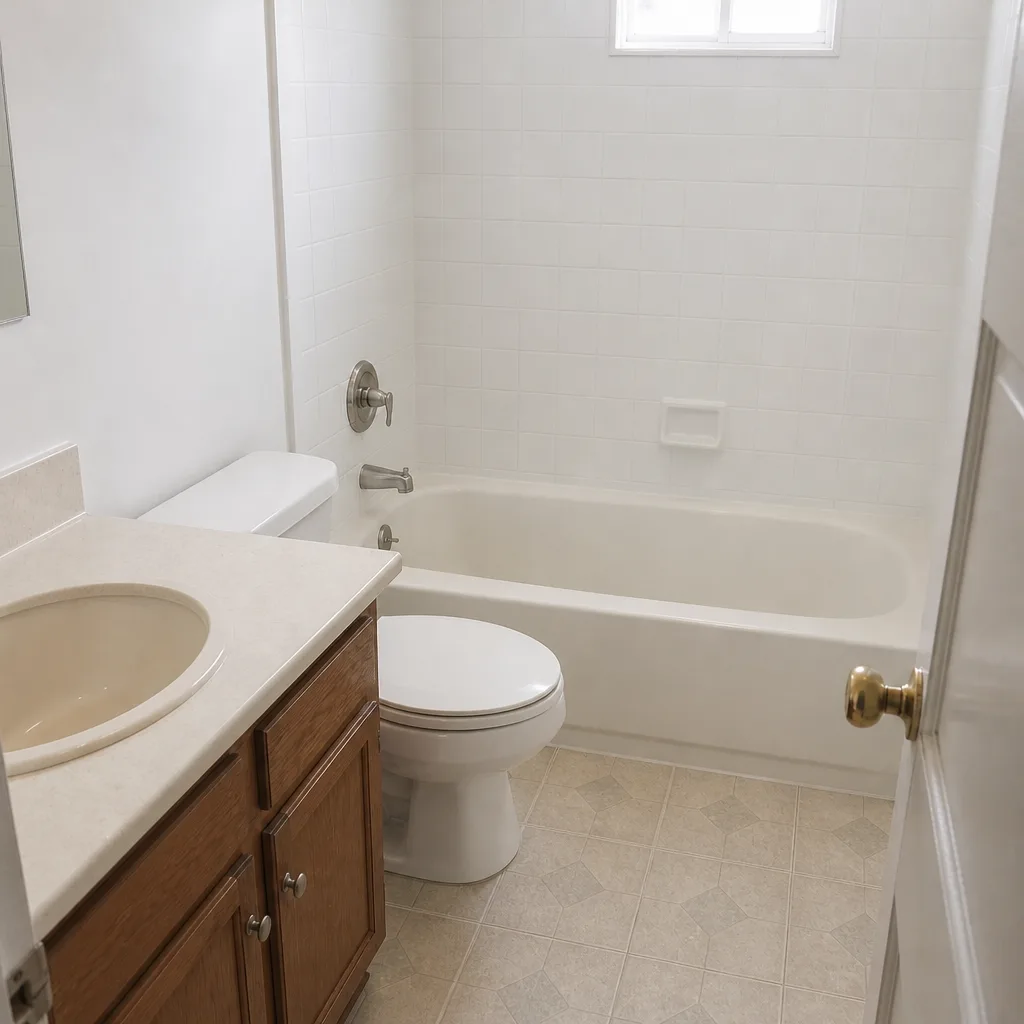 After
When to Call a Professional

Not every improvement requires a general contractor, and it’s worth knowing where the line is. Cosmetic paint, individual cabinet hardware swaps, and simple fixture replacements are within reach for most handy homeowners in Spring Valley. The moment things start involving the structure or the systems, though, it’s time to bring in a licensed professional.
Call a professional when your project involves: moving any wall (load-bearing or otherwise), relocating plumbing fixtures, upgrading or rerouting electrical circuits, changing the footprint of a room, or replacing a kitchen or bathroom in a way that requires permits. Any project that touches the roof, the foundation, or the mechanical systems also lands in professional territory.
Spring Valley has its own specific triggers – for instance, homes in the older subdivisions often need a careful assessment before a wall is moved, because what’s behind the drywall isn’t always what a contractor’s photograph from another job suggested. A licensed contractor will look at the actual structure before quoting.
If your project falls into any of these categories, a free estimate from a licensed contractor is the right first move. You’ll get a written scope and a written price before you commit to anything. Call us for a free estimate when you’re ready to look at the actual numbers.
Frequently Asked Questions
Kitchen remodels in Spring Valley typically run $18,000 – $55,000 depending on layout changes, cabinet line, and countertop material. A cosmetic refresh (paint, hardware, light fixtures) can come in under $10,000, while a full gut with new cabinetry from a line like Wellborn or KraftMaid, quartz counters, and a relocated island lands in the upper part of the range. Call for a written line-item estimate before you commit.
Yes. Nevada requires contractors to be licensed by the Nevada State Contractors Board for most residential remodel work, and the license class must match the scope. Unlicensed work can void your homeowner’s insurance and complicate the sale of your home. Verify the license through the NVCB database before signing anything – call us for a written estimate.
Go to the Nevada State Contractors Board website and use the license search tool. Search by license number or legal business name. Confirm the status is “Active,” the classification matches your project scope, and the bond amount and complaint history are consistent with a clean track record. Never rely on a link the contractor provides.
A legitimate written guarantee names the scope it covers, states a duration in days or months, defines what triggers a claim, states who pays for the fix, and appears on the signed contract. “Satisfaction guaranteed” on a website doesn’t meet that standard. Our 365-Day Done Right Promise covers every project and is written into the contract.
A full bathroom remodel in Spring Valley typically runs four to eight weeks once permits are pulled, depending on scope, material lead times, and inspection schedules. Cosmetic updates (vanity swap, tile refresh, new fixtures) may come in closer to two to three weeks. Get the timeline in writing as part of your estimate, not as a verbal “should be about a month.”
Not if the contractor gave you a written itemized price before starting. A written number that matches the invoice is the standard. Changes happen in two legitimate circumstances: concealed conditions found after demo (e.g., water damage behind a wall) or scope changes you request in writing. Ask the contractor upfront what their change-order process looks like. Call for a written estimate – the price on day one is the price on the invoice.
The Bottom Line

Spring Valley’s remodeling market rewards homeowners who know what to look for. The brand that matters isn’t the one with the nicest truck wrap or the most five-star reviews – it’s the one with an active NVCB license whose classification matches your job, a written guarantee that’s part of the signed contract, proof of insurance naming you as additionally insured, and a line-item estimate delivered before you ask. Those four things tell you more about a contractor than any marketing ever will. Start with the Penhallow Remodeling Spring Valley home page to see how we structure our process, or visit our general contractor in Spring Valley page to learn more about the work.
If you’re ready to see what a written line-item estimate actually looks like for your project, call (844) 797-3346 to schedule a free estimate. We’ll walk you through the scope, put the price in writing, and explain exactly what our 365-Day Done Right Promise covers. No pressure, no rush. The phone line is answered 24/7 by a real person, and the estimate is free.
Written by the team at Penhallow Remodeling Spring Valley.