
Last updated November 17, 2026








Free written scope consultation - allowances, timeline, and change-order rules on paper before a single trade is scheduled
Construction Emergency Preparedness Guide for Spring Valley Homes
Spring Valley sits in FEMA Seismic Zone 2b, and most of its housing stock went up between the 1980s and early 2000s as wood-frame construction on slab foundations. That combination produces a specific set of likely failures: hairline stucco cracking that widens after a tremor, supply lines stressed where they pass through concrete, and roofs that give way during the first real monsoon push of July. The dramatic collapse you picture is rare. The slow leak behind a wall, the cracked stucco field, the ceiling stain that spreads overnight: those are the real emergencies in Spring Valley. This guide walks through the shut-offs every homeowner should locate before anything fails, how to triage an active roof breach, what to inspect after a quake, and which emergency repairs a contractor can legally start in Clark County before a permit is issued.
Quick Answer
Spring Valley construction emergencies are dominated by monsoon roof breaches, burst water supply lines in slab-built homes, and post-earthquake stucco failure. Homeowners who’ve already labeled their water main, gas main, and sub-panel disconnect, and who have a licensed contractor’s written contact and guarantee on file, limit damage to hundreds of dollars instead of thousands. The single most useful step you can take today is to walk your home and find all three shut-offs before you need them.
Styles & brands we work with
- Kitchen remodeling
- Bathroom remodeling
- Home additions & ADU
- Roofing
- Windows & doors
- Driveway & pavers
- Fence
Table of Contents
- The Three Shut-Offs Every Spring Valley Homeowner Must Know
- Monsoon Emergency Sequence: Triage an Active Roof Breach
- Post-Seismic Inspection Checklist for Wood-Frame Stucco Homes
- What Contractors Can Start Without a Permit in Clark County
- Why a Written Guarantee on File Matters Before an Emergency
- Slab-Foundation Supply Lines: The Slow Leak Nobody Sees
- Common Mistakes to Avoid
- Frequently Asked Questions
The Three Shut-Offs Every Spring Valley Homeowner Must Know
When water is spraying into a hallway at 11 p.m., you don’t have time to search the yard with a flashlight. Locate and tag all three of these before anything goes wrong. Spring Valley’s spread-out lots and often-buried utility boxes make this harder than it should be, so do it on a weekend afternoon while the sun’s up.
Main water shut-off. Most Spring Valley homes have a brass gate or ball valve either in a concrete utility box near the front curb or at the hose bib on the street-facing wall. Clear any gravel or landscaping rock off the lid and confirm the valve turns. A ball valve (lever handle) needs a quarter turn. A gate valve (round wheel) may take several full turns and often seizes from mineral scale common in Southern Nevada water. If it won’t budge, call a plumber before an emergency forces the issue.
Main gas shut-off. This is the valve on the meter, typically a flat tab you turn a quarter turn with a wrench until it’s perpendicular to the pipe. Never turn gas back on yourself after shutting it. Once it’s off, only the gas utility or a licensed plumber can restore it, and both will require them to relight pilots across the house.
Sub-panel disconnect. Spring Valley’s slab homes usually have a main panel on an exterior wall plus a sub-panel inside the garage. If water is entering near an outlet or a fixture, kill the circuit at the sub-panel breaker, not the main. Keep a headlamp near the panel and label each breaker in legible marker, because the electrician’s handwriting from 1997 faded years ago.
Take a photo of each shut-off with your phone, print it, and tape it inside a kitchen cabinet. Write the location in a note on the family group chat. It sounds small. It saves hours.
Monsoon Emergency Sequence: Triage an Active Roof Breach
Between July and September, Spring Valley gets the bulk of its annual rainfall in fast, heavy bursts. A roof that’s held up for a decade can breach when wind-driven rain gets under a lifted shingle edge or finds a failed pipe boot. The first ten minutes matter more than the following ten days.
- Get water out of the path of outlets and fixtures. Unplug anything on the affected circuit if it’s safe to reach. Do not stand in water to flip a breaker; if the panel is wet, stay away and call for help.
- Contain the ceiling drip. Place buckets, then move furniture and rugs. Do not poke a hole in a bulging ceiling yourself; a sagging drywall sheet holds standing water and can drop suddenly, and it’s a heavier load than it looks.
- Photograph everything. Wide shot of the room, close-up of the stain, close-up of the source if visible. Your insurance adjuster will want timestamps, so shoot with location turned on.
- Open interior doors and run fans to start drying. In Spring Valley’s dry air, moving air will pull moisture out faster than you’d expect. Pull up any wet rug and get it outside under cover.
- Call your contractor. Report the breach, the room affected, and whether the water is still coming in. A licensed contractor can advise on emergency tarping, which is the one roof action a homeowner should not attempt on a wet, sloped surface.
Roof work at height, especially on a wet shingle field, is genuinely dangerous. A fall from a single-story roof can end in a hospital stay. Let a trained crew tarp it. Penhallow Remodeling Spring Valley has technicians with up to 22 years of experience, and every one of them arrives background-checked and in uniform.
Post-Seismic Inspection Checklist for Wood-Frame Stucco Homes
Spring Valley’s wood-frame stucco construction responds to a tremor in a predictable way. Stucco is a rigid skin over a flexible frame, and when the frame racks even slightly, the skin cracks. That’s normal. What matters is where the cracks are and how wide they are.
Walk the exterior and interior of your home within 24 hours of any felt quake, and check these specific points:
- Stucco cracks at the corners of windows and doors. A hairline crack under 1/8 inch is cosmetic. A diagonal crack that continues into the frame, or is wider than a pencil lead, needs eyes on it.
- The joint between the foundation and the stucco. Look for a gap where the stucco has pulled away from the slab. A slight separation line is standard; a visible opening means moisture is getting behind the skin.
- Interior drywall corners near the ceiling. Diagonal cracks at the corners of doorways and windows are the interior version of the same movement. Note them and watch for growth over a few days.
- Water supply lines where they enter the slab. Look under sinks and at the visible stub-outs for any sign of moisture or a fresh mineral stain.
- Doors and windows that suddenly stick. If a door that closed cleanly last week now catches, the frame may have moved. That’s a signal to call a contractor for a look.
Don’t reoccupy a room where you see collapsed ceiling or buckled floors. If you’re unsure whether a crack is structural, get it looked at. Penhallow Remodeling Spring Valley offers free estimates and will tell you honestly if it’s a $200 caulk-and-paint job or something bigger.
What Contractors Can Start Without a Permit in Clark County
Emergency repairs sit in a different lane than planned construction. In Clark County, a contractor can start emergency mitigation work without a permit filed in advance, then pull the permit for the permanent repair within a short window. The dividing line is mitigation versus reconstruction.
What can generally start immediately:
- Tarping a breached roof to stop water intrusion
- Shutting off water, gas, or electrical to a damaged area
- Removing standing water and saturated drywall
- Setting up drying equipment and securing the site
- Board-up or temporary bracing to prevent further damage
What requires a permit, pulled before work begins:
- Structural repair, including new framing or a foundation patch
- Electrical work beyond killing a circuit, including new outlets or panel work
- Plumbing repairs that involve opening the slab or replacing a supply line
- Roof decking replacement or full re-roof
- Any drywall, stucco, or siding replacement assessed as reconstruction
The practical point: any honest contractor will tell you clearly which side of the line their work is on, and pull the permit before they start the reconstruction side. Permits matter because they trigger an inspection, and the inspection is your assurance that the fix was done to code. If you own a Spring Valley home and you’re unsure about scope, ask a General Contractor in Spring Valley for a written scope and permit plan before signing anything.
Why a Written Guarantee on File Matters Before an Emergency
In an emergency, you cannot afford the time to shop three bids, read reviews, and compare license numbers. You will call whoever you trust in that moment. That’s exactly why the contractor relationship needs to exist before the emergency does.
Under The Kingswell Way, established in 2004, every project starts with a written price before any work begins, a defined arrival window, a clean job site, and a written guarantee on every job. The 365-Day Done Right Promise means that if the work fails inside the guarantee period, Penhallow Remodeling Spring Valley comes back and fixes it at no charge. That’s the document you want in your file already, because the emergency repair you approved at 2 a.m. is still covered by the same terms as a planned remodel.
Get a free second visit if the repair fails. No service call, no re-inspection fee. That clause alone matters after an emergency fix, because the failure most likely to bite you is the one that shows up three months later, when the repaired stucco cracks again from the same settling the temporary repair relieved but didn’t solve. A written guarantee tells you exactly who’s coming back and what it costs.
Slab-Foundation Supply Lines: The Slow Leak Nobody Sees
Most Spring Valley homes built between 1980 and 2005 use copper or early PEX water lines that run under the slab. When the ground shifts from a tremor or the thermal cycling of desert days stresses a joint, the line can fail quietly. You won’t see a geyser in the yard. You’ll see a slightly higher water bill, a warm spot on the tile floor, or the faint sound of running water when every fixture is off.
What to check monthly:
- Turn off every faucet, the washing machine, the ice maker, and the irrigation system. Look at your water meter. Any movement means water is flowing somewhere.
- Check the hot-water side of the meter reading against a known baseline; a leak under the slab often shows on the hot line first.
- Notice warm patches on interior tile floors, especially in the entry and the hallway. Tile over a hot supply leak will feel different from the surrounding floor in bare feet.
- Watch for a persistent musty smell in a room with no obvious moisture source.
Slab leaks are a reconstruction job. Fixing the line usually means opening the slab, which is why we recommend you never sign off on a “quick fix” that leaves the line unrepaired and the floor patched over. The repair has to be permitted, inspected, and guaranteed. We install Kohler and Moen fixtures on the rebuilt surfaces, and those carry their own manufacturer warranties alongside ours, so every layer of the fix is documented. For a bigger room rebuild after a slab leak, our Bathroom Remodeling in Spring Valley team handles the tile, waterproofing, and fixture work under one written price.
Common Mistakes to Avoid
- Not finding the shut-offs until the water is already running. A Spring Valley owner who has to search for the main valve while a pipe is spraying loses ten minutes of water into the home. Walk the property today.
- Turning the gas back on yourself. After any gas shut-off, only the utility or a licensed plumber can safely restore it. A DIY restart risks a leak in a valve that hasn’t been moved in a decade.
- Climbing onto a wet roof to tarp it. Roof work at height on a wet shingle field is the single most likely moment for a serious injury in a storm event. Call a crew.
- Patching stucco cracks without finding the cause. A diagonal crack in Spring Valley wood-frame stucco means the frame moved. Caulking over it looks fine for one season and then opens up again. Get it assessed before you paint.
- Accepting a verbal price in the emergency moment. Emergency pricing is exactly where “the number will be about X” balloons by the time the invoice arrives. Demand a written scope and price before work starts, even at 11 p.m.
- Hiring the first name you find at 2 a.m. without checking for a background-checked crew. You’re letting strangers into your home at the worst possible moment. The company’s hiring standard should already be vetted. Ask.
- Skipping the permit on the reconstruction side. A repair that fails inspection later means tearing open the wall twice. Pull the permit, pass the inspection, keep the paperwork.
See the difference
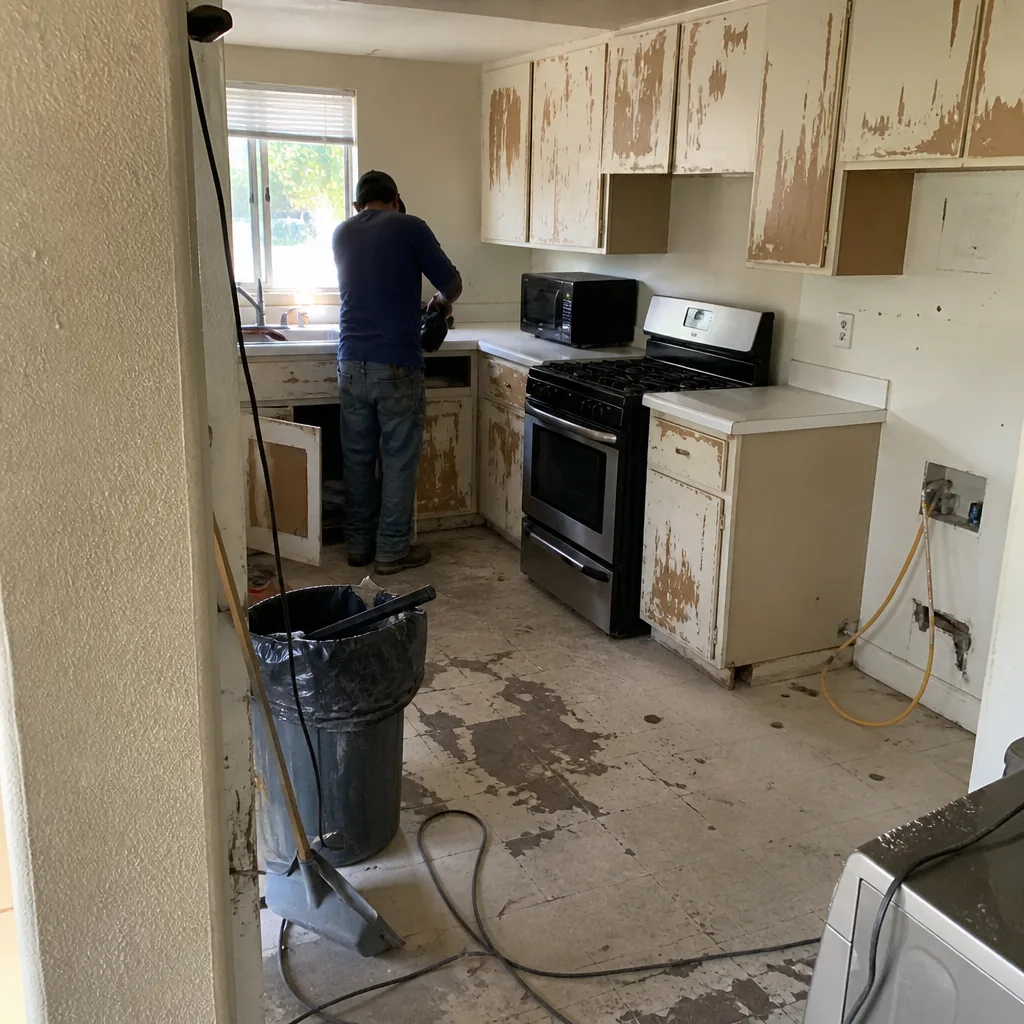 Before
 After
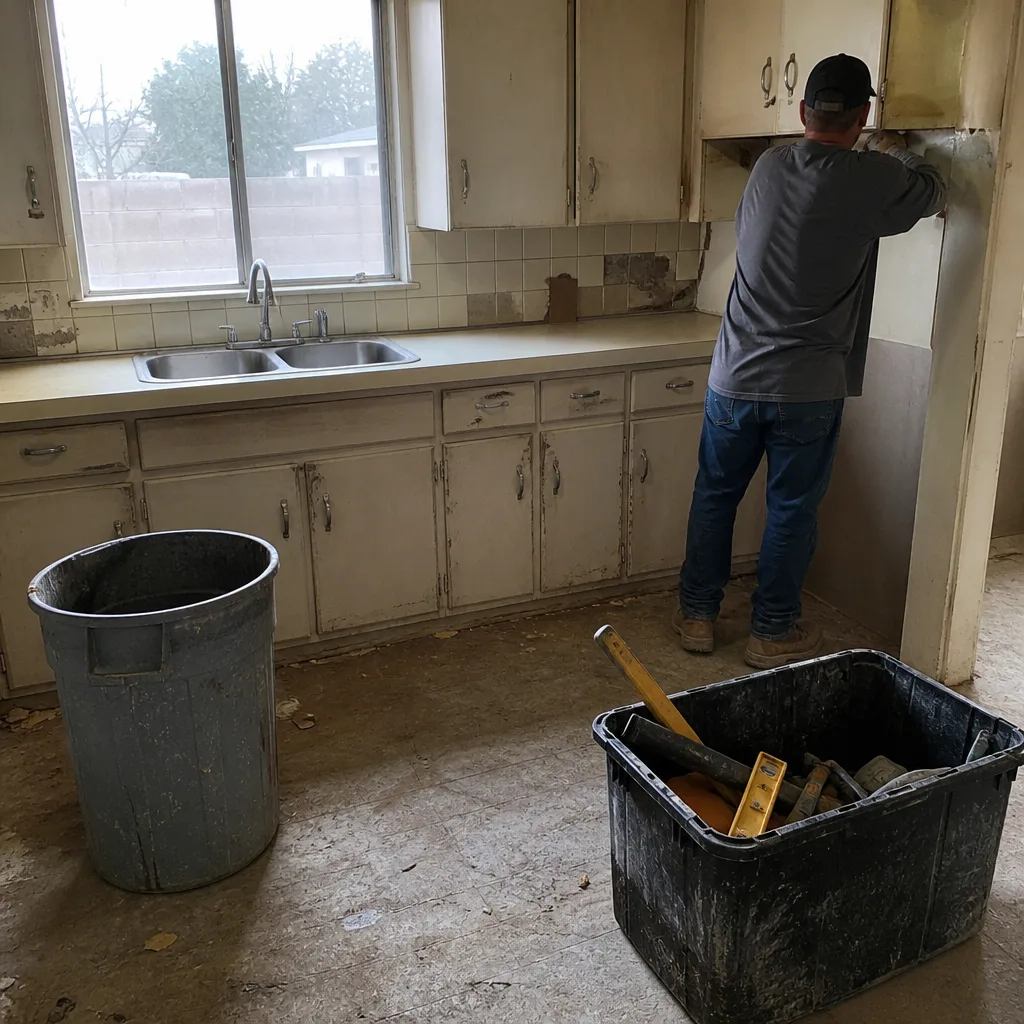 Before
 After
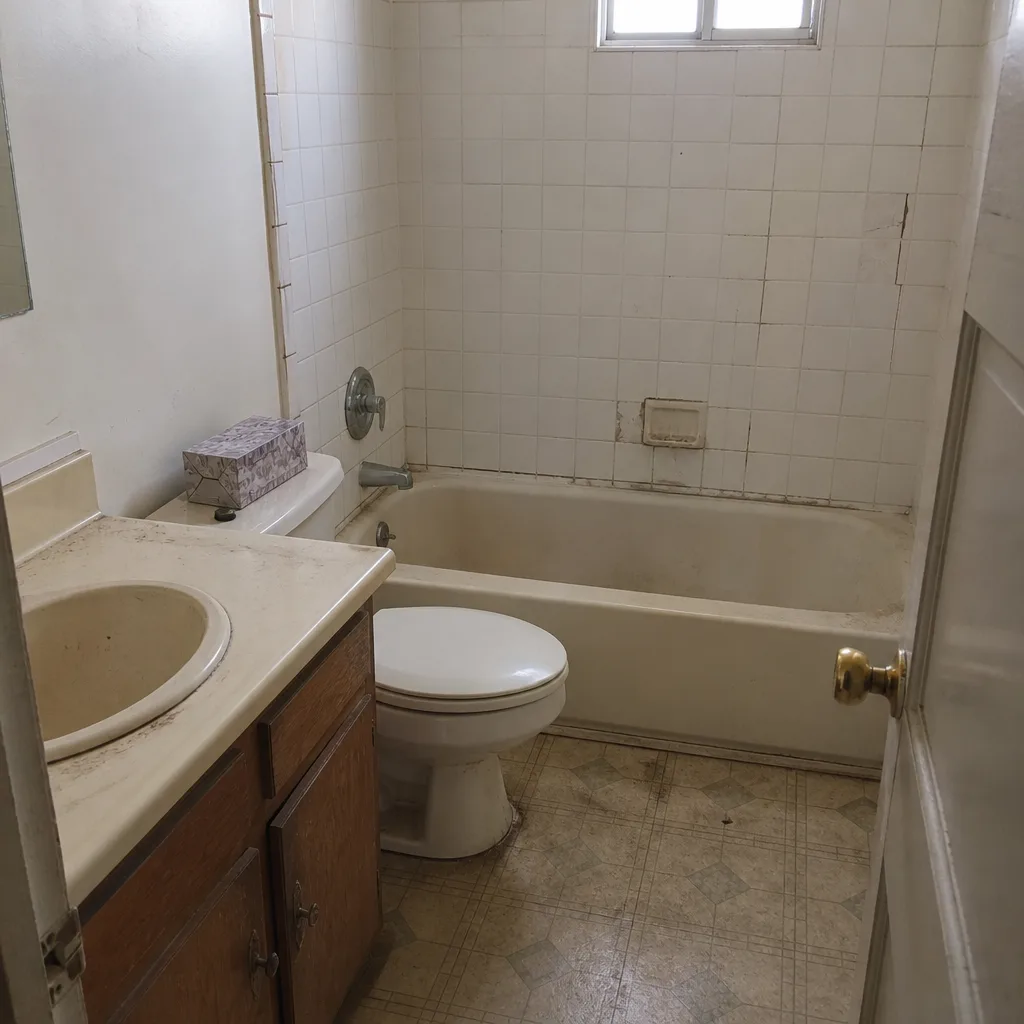 Before
 After
When to Call a Professional

Call a contractor the same day if any of the following happen: water is actively entering a living space; a stucco crack is wider than a pencil and continues into a window or door frame; a door has suddenly stopped closing cleanly after a felt tremor; the water meter moves when every fixture is off; a gas valve has to be shut off for any reason; or a roof breach hasn’t been tarped within a few hours of the storm passing. Those are the situations where a wrong DIY fix compounds the loss. On the mitigation side (shutting off a valve, pulling wet drywall, opening a window and running a fan), a confident homeowner can act. On the reconstruction side, call. Penhallow Remodeling Spring Valley offers free estimates in Spring Valley and written line-item pricing before any work starts. Call (844) 797-3346.
If you’re comparing the emergency question against a planned project, the same written-price-and-guarantee standard applies to a Kitchen Remodeling in Spring Valley job as it does to a burst-pipe repair. Same terms, same coverage, same standard. And if you want the full picture of how we work, the Penhallow Remodeling Spring Valley home page lays out the guarantees in plain language.
Frequently Asked Questions
Emergency tarping and temporary water-stop work in Spring Valley typically runs $350 – $900 depending on roof pitch, square footage affected, and whether the crew has to work in active rain. The permanent repair (replaced decking, new underlayment, matching shingles) usually adds $1,200 – $4,500 depending on the size of the breach. Call (844) 797-3346 for a written price before any work starts; estimates are free.
Yes, you can turn the quarter-turn valve on the meter to the off position if you smell gas or hear a leak. Turning it back on is the part you don’t do yourself, because only the gas utility or a licensed plumber can safely restore pressure, test for leaks, and relight every appliance across the house. If the smell persists, leave the home and call the utility from outside.
In Spring Valley’s wood-frame stucco homes, it usually shows as diagonal cracks radiating from the corners of windows and doors, or a hairline separation where the stucco meets the foundation slab. Cracks under 1/8 inch wide are typically cosmetic. Cracks wider than that, or any crack that runs continuously across a frame corner, warrant a professional look. Photograph the crack with a coin or ruler next to it for scale, and check back in a week to see if it grew.
Most homeowner policies in Nevada cover the water damage caused by a failed supply line but not the pipe repair itself, which is the same rule across the market. The important thing is to document the damage before you clean up, and to have the repair done by a licensed contractor so the insurance company has an invoice and a permit record. Get a written scope from your contractor before authorizing the work.
That depends on the event and the season. A single-home emergency during a monsoon burst can be faster because crews are already staging, but a wide-spread event (a regional tremor or a storm that hits across the valley) means multiple homes are calling at once. The reliable approach is to have your contractor’s number on file before the emergency so you’re already in the queue. Penhallow Remodeling Spring Valley answers the phone 24/7 with a live person, not a voicemail prompt.
The mitigation work (tarping, water shut-off, drying, board-up) can generally start without an advance permit. The reconstruction work (structural framing, slab opening, new electrical, roof decking, stucco replacement) requires a permit pulled before work begins. Any contractor who offers to start the reconstruction without a permit on a Spring Valley home is handing you a future inspection problem. Call (844) 797-3346 if you need help sorting out which side of the line your repair falls on.
The Bottom Line
Spring Valley’s homes face a specific set of emergencies: monsoon roof breaches, slab leaks in wood-frame homes, and post-tremor stucco failure. Most of the loss happens in the first hour, and most of it is avoidable if you know where your water, gas, and sub-panel shut-offs are, if you know how to triage a wet ceiling without climbing the roof, and if you have a contractor’s number and written guarantee already in your file. Do the walk-through today. Do the photo log. Do the phone-call to a contractor before you need one. As a reminder, everything on this page is grounded in The Kingswell Way: say the price before the work, show up in the window we gave, and leave the place cleaner than we found it. Our team in Spring Valley is ready when you are.
Penhallow Remodeling Spring Valley works under the 365-Day Done Right Promise, with a written price before any work starts, background-checked uniformed technicians, and a live person on the phone 24/7. Every estimate is free and non-committal. Call (844) 797-3346 to schedule yours and have that written guarantee on file before you need it.
Written by the team at Penhallow Remodeling Spring Valley.