Last updated November 17, 2026








Free written scope consultation - allowances, timeline, and change-order rules on paper before a single trade is scheduled
General Contractor Warning Signs Every Homeowner Should Know
A contractor with a beautiful Instagram portfolio and a verbal estimate is a higher risk than a plain-spoken contractor who hands you a written number at the first meeting. The portfolio shows what they’ve done. The written estimate shows how they operate. And operating behavior, not finished photos, is what predicts whether your remodel ends on budget or two months late with a change order you never agreed to. This guide is written from Spring Valley, where we’ve watched homeowners get burned in ways that were visible before demolition day. We’ll teach you to audit the paperwork, not the portfolio, so you can spot the difference between a professional and a pretender before you sign.
Quick Answer
The biggest warning signs aren’t about craftsmanship: they’re about what a contractor refuses to put in writing. A missing written price, a vague arrival window, a verbal-only insurance claim, and a deposit that doesn’t match Nevada norms are all signals of a contractor who will cost you more than the bid. If a contractor won’t give you a written price before work starts, a defined arrival window, and a written guarantee, that’s your answer, not their portfolio. In our experience across Spring Valley, the paperwork tells you how the whole job will go.
Styles & brands we work with
- Kitchen remodeling
- Bathroom remodeling
- Home additions & ADU
- Roofing
- Windows & doors
- Driveway & pavers
- Fence
Table of Contents
- What Are the Warning Signs in the First Conversation?
- What Must Be in Your Contract Before Work Starts?
- Why Does a Vague Arrival Window Matter?
- How Do You Actually Verify a Nevada Contractor License?
- What Is a Normal Deposit, and When Is It a Red Flag?
- Why Discouraging Your Permit Application Is a Warning Sign
- What to Watch for Specifically in Spring Valley
- When to Call a Professional
What Are the Warning Signs in the First Conversation?
The first conversation tells you more than a dozen references. Most homeowners listen for enthusiasm about the project. We’d suggest listening for two things: how quickly the contractor gives you a number, and whether that number is written down.
A contractor who says “I’ll send you a rough ballpark once I get back to the office” and disappears for a week is showing you exactly how the job will run. A contractor who says “I can’t really put a price on this until we start demo” is telling you the number is going to move after demolition. That phrase is the most common setup for change orders in Spring Valley homes built in the 1980s and 1990s, where the surprises behind walls are real and should be priced into the written estimate, not glued on afterward.
Here’s what to listen for in that first call or walkthrough:
- Can they say the price out loud? A professional gives a real range, then commits to a written line-item figure. In Spring Valley, a kitchen remodel typically runs $18,000 – $55,000 depending on layout, cabinet line, and countertop material. Vague “it depends” answers followed by silence are a tell.
- Do they name the brands? A contractor who installs Cambria or Silestone countertops will tell you so. A contractor who just says “quartz” and nothing else is either uncaring or unsure of what they install.
- Do they mention permits unprompted? In Nevada, most structural, electrical, and plumbing changes need a permit. A contractor who brushes off permits is one you’ll wait on later.
- Do they answer the phone or text? A missed call happens; a missed call with no return inside 24 hours doesn’t.
These are behavioral signals, not attempts to grade the work. And that’s why they matter: a contractor who behaves like a professional in the meeting behaves like a professional on the job. A contractor who cuts corners on the paperwork does the same under your drywall.
What Must Be in Your Contract Before Work Starts?
The written contract is the single most important document in a remodel. Not the portfolio. Not the reviews. The contract. If a clause is missing there, you have nothing to hold the contractor to when the project drifts. We’ve seen homeowners in Spring Valley learn this the hard way, usually after a change order for $4,000 that was never discussed.
Before work starts, your contract should include, in writing:
- A full written price. Not a range, not an estimate: a number with line items. Labor, materials, permits, cleanup, and disposal all broken out. When the price is written, the number on day one should match the number on your invoice.
- A defined arrival window. Not “sometime Tuesday.” A real window, like “between 8:00 and 10:00 a.m.” The window is the test of whether your contractor respects your time.
- A payment schedule with milestones. Money owed tied to actual delivered work, not to the calendar. Nevada rules and best practice both point to small deposits and staged payments.
- A written guarantee. How long, what it covers, and how a failure gets fixed. This is exactly what the Penhallow Remodeling Spring Valley home page lays out in plain terms: the 365-Day Done Right Promise, in writing, on every project.
- Change-order procedure. What happens when something unexpected appears behind a wall or under a floor. Any change in scope or price, in writing, signed by you, before the extra work starts.
- Cleanup and disposal details. Who hauls the debris, who protects the flooring, who pays the dumpster fee. These sound small until they’re four figures.
A contractor who will sign a contract with all six elements is showing you how they operate. A contractor who wants to talk through half of them “later” is the one you’ll call weekly for updates that never come.
Why Does a Vague Arrival Window Matter?
“Sometime Tuesday” is the shortest sentence in construction and one of the loudest. It tells you the contractor doesn’t schedule their crews, doesn’t confirm their starts, and doesn’t consider your day off from work to meet a plumber to be an actual commitment. That’s not about the arrival itself. It’s about the discipline behind every subsequent obligation: the material delivery, the inspection, the final walkthrough.
A defined arrival window is the first promise a contractor makes. It’s also the easiest one to keep, and the easiest one to break. When a contractor can’t give you a window, we’d suggest you ask what their schedule looks like for the week and see what happens. A real answer comes within seconds. A made-up one arrives by text later.
In Spring Valley, we see this most often around the start of a project when the crew is finishing another job in the southwest part of town and traffic on the 215 adds an hour. A professional accounts for that. They set the window for 8:00 – 10:00, not 7:45. They call if they’re late. They don’t leave your day dangling.
Here’s the practical test: if a contractor can’t tell you the arrival window for the very first day of work, that’s the same contractor who will be missing in action at the final inspection. The window is a small thing to promise, and it’s the cheapest way to find out how they’ll behave when the promise is bigger.
How Do You Actually Verify a Nevada Contractor License?
Verbal claims of “licensed and insured” are worth exactly what a handshake is worth, which is nothing when something goes wrong. Nevada has a real, searchable licensing system, and checking takes about five minutes. A contractor who’s licensed will welcome the question. A contractor who isn’t will get defensive about it.
Here’s how to verify a Nevada contractor license step by step:
- Ask for the license number in writing. Any legitimate contractor has one.
- Look the license up through the Nevada State Contractors Board. The online portal shows the license type, status, and any disciplinary history.
- Check that the license is active and covers the work you’re hiring for. A general contractor’s license isn’t the same as a specialty license, and the scope matters.
- Ask for a certificate of insurance and verify it with the insurer, not just with the contractor. What “insured” actually requires you to check is the policy itself, the coverage limits, and the effective dates. A certificate from last year, or one mailed as a photograph, doesn’t count.
- Ask for a workers’ compensation certificate. If the contractor has employees on your job and no workers’ comp, you could be exposed to liability if someone gets hurt. “Insured” and “licensed” are two separate verifications, and both must be real.
We keep all of this in writing so you can hold us to it. The general contractor in Spring Valley page spells out the credentials, and any contractor worth hiring will do the same. If you’re hiring for a bathroom, the same check applies. Ask yourself whether the bathroom remodeling in Spring Valley team you’re considering is willing to hand you a license number and certificate in writing on the first visit. If they hesitate, that hesitation is a warning sign.
What Is a Normal Deposit, and When Is It a Red Flag?
The deposit is where cash-flow problems show up. A contractor who demands 50% up front isn’t protecting themselves from you; they’re protecting themselves from what’s coming on their other jobs. That’s a problem that becomes your problem.
In our experience with Nevada residential jobs, a deposit of 10% – 20% of the contract price is normal for a kitchen or bathroom remodel, with the remaining payments staged against milestones: rough-in, cabinetry or tile set, final inspection, punch list. Anything above 30% is a red zone. A contractor asking for a third of the money before a single cabinet is ordered is likely using your deposit to fund the previous client’s project.
What should you look for on the schedule?
- Normal: 10% – 20% at signing, tied to a specific milestone, with subsequent payments released only when the prior stage is signed off.
- Caution: 30% at signing, with vague language about when the next payment is due.
- Red flag: 40% – 50% up front, or a request for a “materials” payment in cash before the contract is signed.
- Hard stop: any contractor asking you to pay a sub directly, or to write a check to an individual rather than the licensed business.
Paying staged, in writing, keeps the leverage where it belongs. If the contractor finishes a phase and wants the next check, you get to inspect first. If they won’t agree to that structure, you already know how the project will run when the work stalls. A kitchen remodeling in Spring Valley project with a deposit over 30% is telling you something the portfolio will never show.
Why Discouraging Your Permit Application Is a Warning Sign
A contractor who tells you “you don’t need a permit for that” when you do is not offering convenience. They’re offering liability in exchange for speed. In Nevada, permits are the inspection system’s way of verifying that the work is safe and that the trade behind the work has been reviewed. A kitchen with new electrical, a bathroom with a relocated drain, or any wall movement in a Spring Valley home usually requires one.
There’s a difference between a contractor who pulls the permit for you, as part of the process, and one who “discourages” you from pulling your own. That second one is a warning sign, not a kindness. Why? Because:
- A contractor without a valid license can’t pull the permit in their own name, so they’ll push the paperwork onto you or skip it entirely.
- Unpermitted work can complicate a future sale, and it can fail the inspector at resale time, which means you pay for the fix later.
- Insurance and warranty are conditional. If a covered failure traces back to work done without a permit, the coverage may not apply.
- An inspector catching a mistake while the wall is open is a cheap fix. Catching it after the countertop is set is not.
The right contractor pulls the permit, schedules the inspections, and hands you the pass notices at the end. The wrong one asks you to be the permit holder, then disappears at inspection time. That’s not a shortcut. It’s a signal about how every part of the job will go.
What to Watch for Specifically in Spring Valley
Spring Valley has its own character, and the warning signs sometimes come dressed in local clothing. Homes built through the 1980s and 1990s are common here, and many of them were originally finished with builder-grade materials. Remodels that pull out the original drywall and cabinetry often turn up surprises: a misplaced drain line, a wall that wasn’t fully insulated, or an electrical tie-in that doesn’t match the panel’s original labeling. A contractor who tells you not to worry until you “get in there and see” is a contractor who hasn’t done a written scope on a similar house.
The desert climate also matters. Materials expand and contract hard across the heat cycle, and a bathroom or kitchen remodel that doesn’t use cement board substrate (the moisture-resistant layer behind tile) and properly sealed cabinetry will fail within a season or two. In our experience, we’ve watched tile in a Spring Valley bathroom crack in the same spot twice because the first contractor skipped that layer and the second one didn’t know to check. When you’re reviewing a bid, ask what’s going in the substrate and the vapor barrier. The number on the page tells you the cost. The spec behind the number tells you whether you’ll be calling a contractor again in a year.
Brands matter here too. A written price that names what’s getting installed, like a Kohler fixture or a Cambria countertop, is worth more than a bid that says “fixtures and counters.” The named brand is a promise the contractor can’t quietly swap out later. If the estimate is silent, the substitution will happen at the showroom.
See the difference
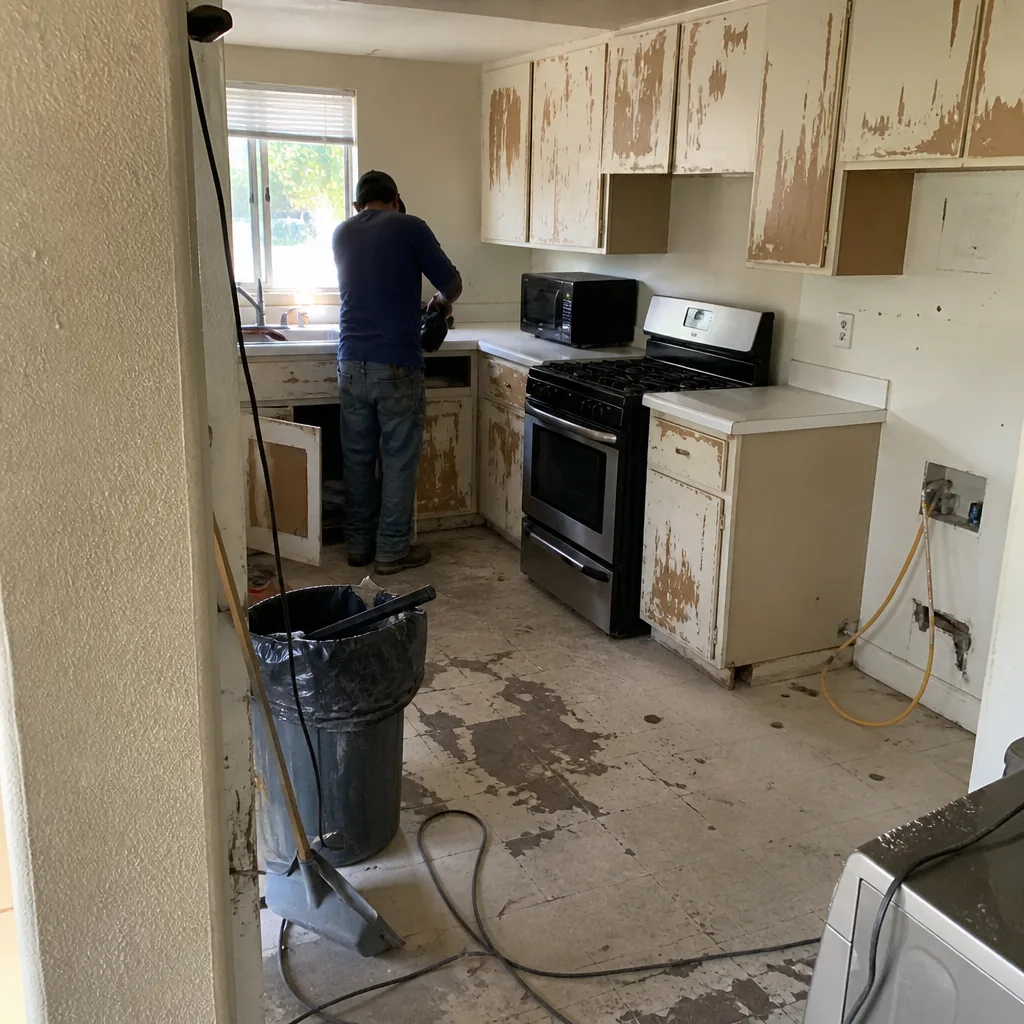 Before
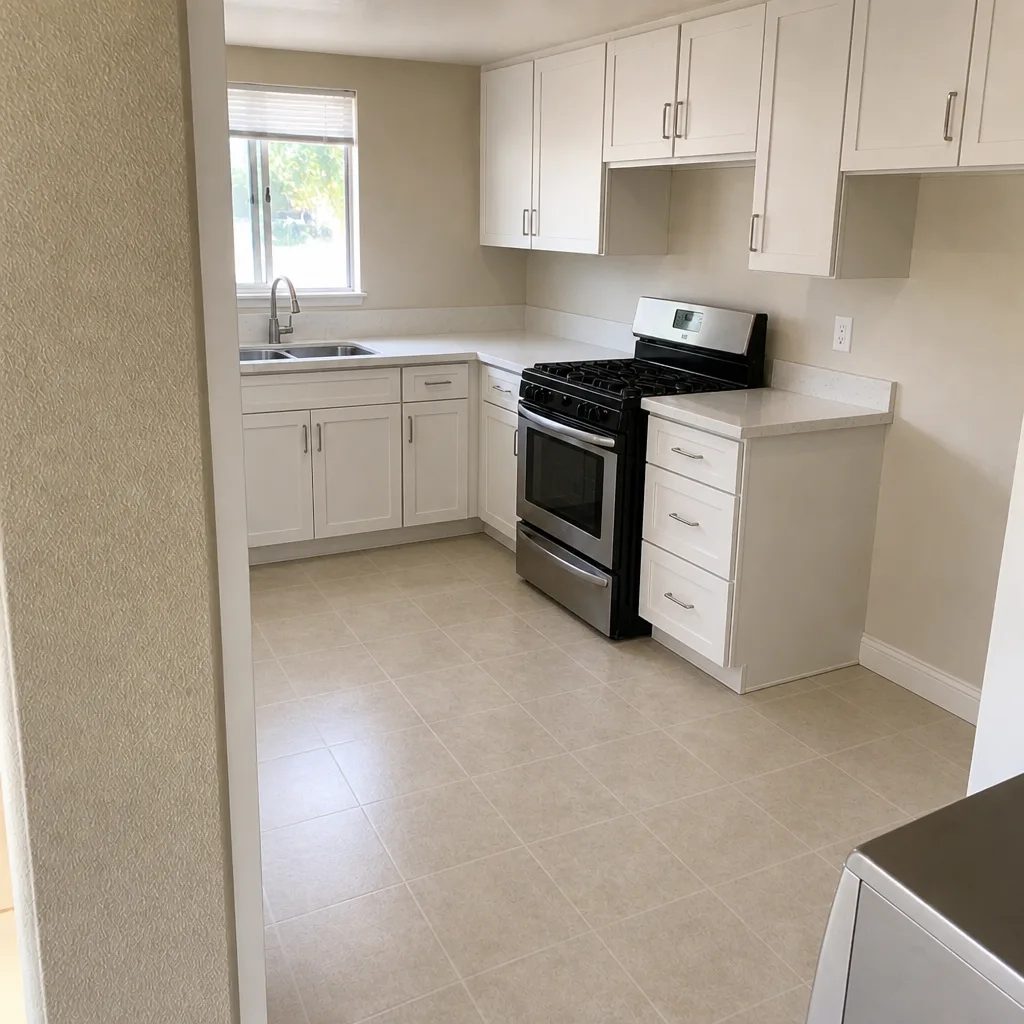 After
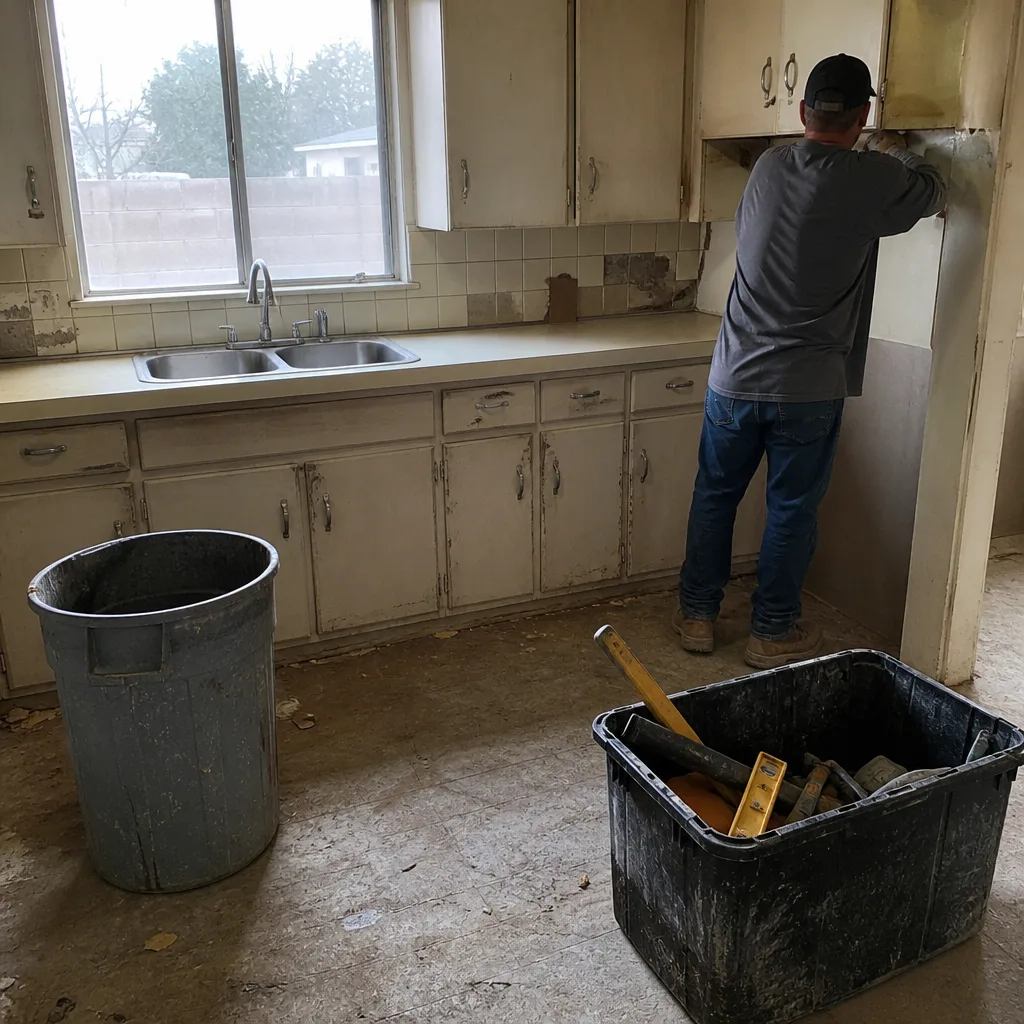 Before
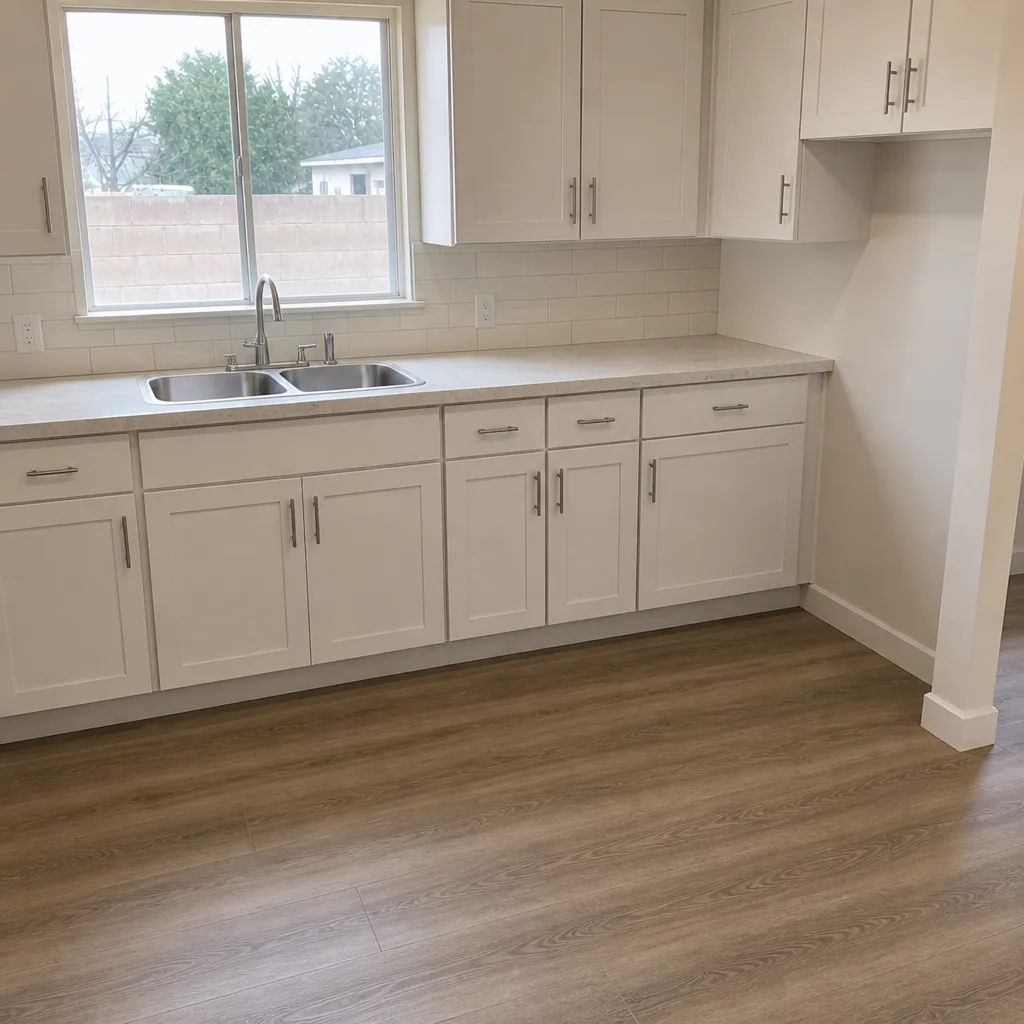 After
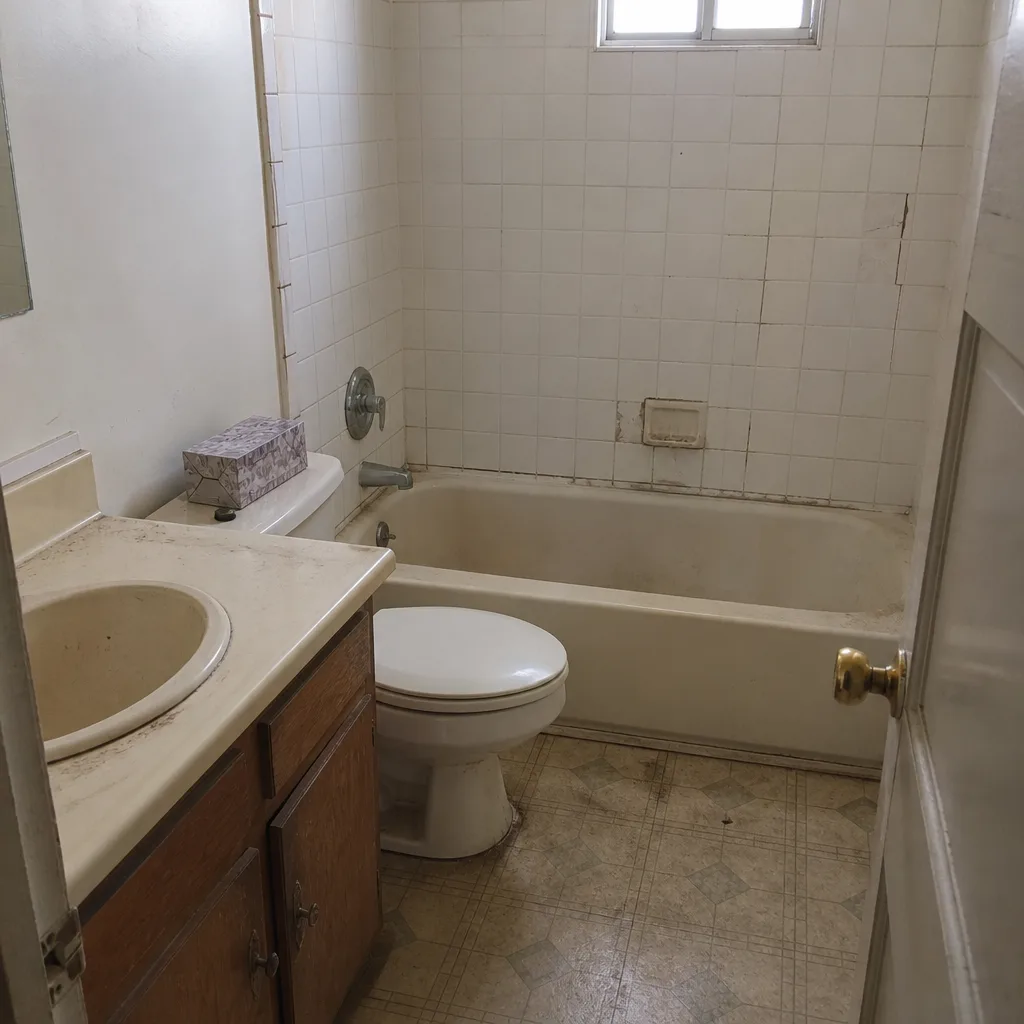 Before
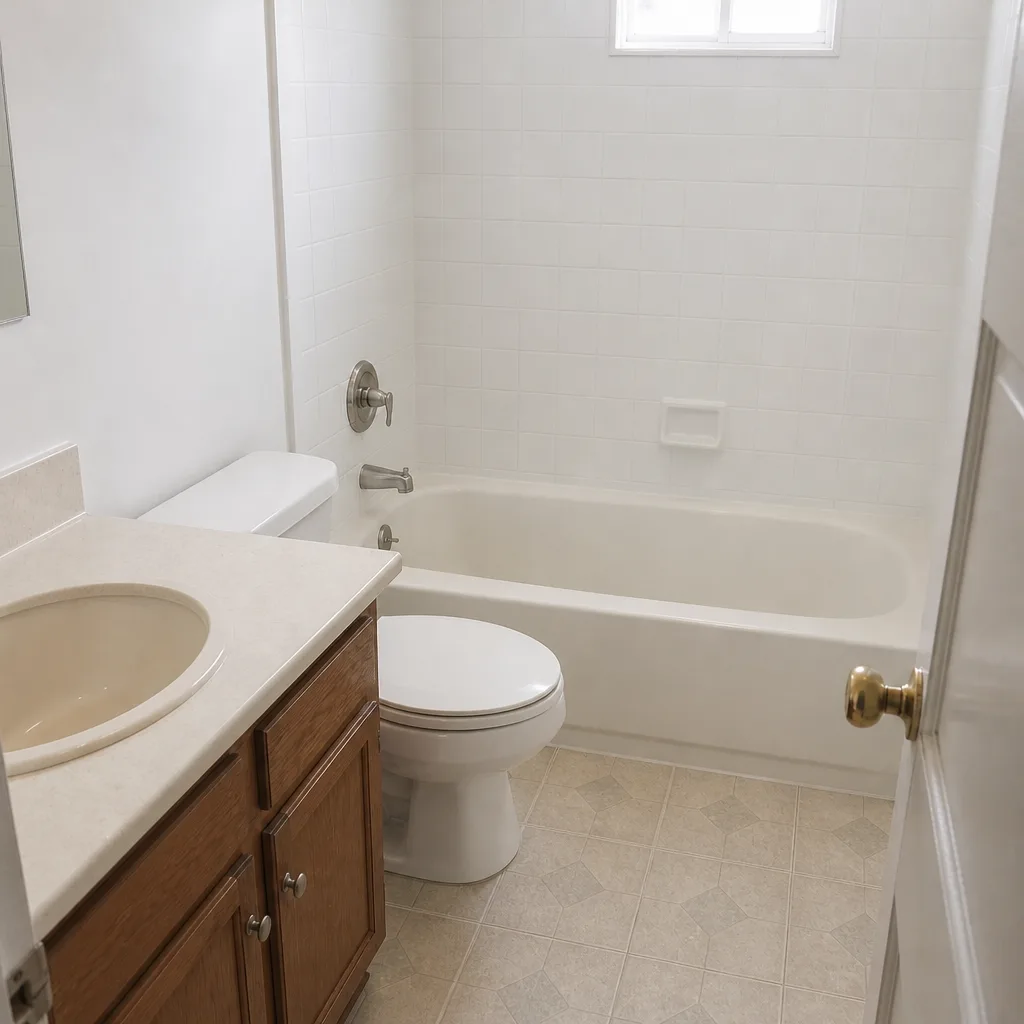 After
Common Mistakes to Avoid
- Hiring from the portfolio alone. A nice gallery of finished kitchens tells you they photographed well. It says nothing about their change-order history. Ask for a written price, then decide.
- Accepting a verbal arrival window. “Sometime Tuesday” is the same as no window at all. Require an actual hour range in writing, and hold them to it. In Spring Valley, most reputable crews will give you an 8:00 – 10:00 window and call if they’re running behind.
- Believing “licensed and insured” without checking. Verify both the license number and the insurance certificate with the actual Nevada registry and the insurer. A photograph of a certificate in a text message is not verification.
- Paying a deposit above 30%. Normal in Nevada is 10% – 20%, staged against milestones. A third-up-front request is a warning sign about cash flow, and cash flow problems become your problem.
- Letting a contractor talk you out of the permit. If the work needs a permit, the contractor pulls it. If they discourage that, they may not be able to pull it in their own name.
- Skipping the written guarantee. If the promise is verbal, it doesn’t exist. Every Penhallow project comes with the 365-Day Done Right Promise in writing; ask any contractor you’re considering to put their guarantee in the contract.
- Not asking what brands are in the price. A bid that names Cambria, Silestone, or Kohler carries a real commitment. A bid that names nothing is a bid that will substitute.
When to Call a Professional
Some problems are safe to fix yourself: a loose cabinet handle, a chipped tile, a wobbly toilet seat. Others are not. If the job involves an electrical panel, gas line, structural wall, or anything behind a permitted layer of drywall, it’s a professional call. The same is true when a previous contractor’s work has failed and the fix requires undoing part of what’s there. In Spring Valley, we’re often asked to come behind a rushed bathroom job where the substrate wasn’t right, and the honest answer is that we’d rather catch it before it fails a second time than after. Penhallow Remodeling Spring Valley offers free estimates in Spring Valley. Call (844) 797-3346 to schedule yours, and bring the written bid from anyone else you’re considering. We’ll sit down, put a price in writing, and go from there.
Frequently Asked Questions
The biggest red flags are about paperwork, not portfolio: no written price, a vague arrival window, an unverified “licensed and insured” claim, and a deposit above 30%. Each of these tells you how the contractor operates before the work starts. If any one of them shows up, ask for the written version or walk. Call us at (844) 797-3346 and we’ll walk you through a free estimate instead.
In Nevada, a normal residential remodeling deposit is around 10% – 20% of the contract price, with the balance staged against milestones. Anything above 30% up front is a red flag, and a 40% – 50% deposit is a strong sign of a cash-flow problem. Any contractor who won’t agree to staged payments is telling you how the project will run. Call (844) 797-3346 for a written estimate and a clear payment schedule.
No, and you shouldn’t. In Spring Valley, the contractor should pull the permit in their own name, schedule the inspections, and hand you the pass notices at the end. A contractor who discourages you from pulling your own permit, or asks you to be the permit holder, is a warning sign. Call us for a free estimate and we’ll tell you exactly what the job requires.
Ask for the license number in writing, then verify it through the Nevada State Contractors Board, which lists status and disciplinary history. Separately, ask for the insurance certificate and verify it with the insurer, not just with the contractor. Verbal claims don’t count. Call (844) 797-3346 for a free estimate and a copy of our credentials in writing.
At minimum: a written line-item price, a defined arrival window, a milestone-based payment schedule, a written guarantee, a change-order procedure, and cleanup and disposal details. If any of those are missing, the job will drift. Call (844) 797-3346 for a free estimate and a written contract you can hold us to.
Don’t patch it. Get a trained eye on it first, especially if the work is in a bathroom, a kitchen, or anything behind a wall. A quick diagnosis now is cheaper than a second failure later. Call (844) 797-3346 for a free estimate in Spring Valley, and we’ll tell you what failed, why, and what the fix actually requires.
The Bottom Line

Red flags show up in the paperwork long before they show up in the work. A written price, a defined arrival window, a verified license, a 10% – 20% deposit, a written guarantee, and a permit pulled by the contractor, those are the six checks that separate a professional remodel from a cautionary tale. Do them before you sign, not after. Auditing the paperwork takes about an hour. Fixing a contractor’s mistake takes about four months and a lot more money. If you’re in Spring Valley and ready to see what an estimate looks like when everything is in writing, we’re at (844) 797-3346, and estimates are always free.
Call Penhallow Remodeling Spring Valley at (844) 797-3346 for a free estimate. We’ll hand you a written price, a written guarantee, and a real arrival window before anything starts.
Written by the team at Penhallow Remodeling Spring Valley.