
Last updated November 17, 2026








Free written scope consultation - allowances, timeline, and change-order rules on paper before a single trade is scheduled
How Long Does a General Contractor Take? Timelines and What to Expect
The national average for a kitchen remodel is six to eight weeks. The Spring Valley average runs two to three weeks longer, and not because local contractors are slower. Clark County permit queues and summer material delivery windows don’t show up in the national number, so a timeline built on a magazine average will be wrong before demo day. This guide explains how to read a project schedule before work starts, how to spot a fantasy timeline while it’s still just words on paper, and how to tell a contractor delay from a permit backlog. If you’ve been burned by a remodel that dragged on with no explanation, this is the page that shows you what a real schedule looks like.
Quick Answer
A general contractor takes six to eight weeks for a bathroom remodel, eight to twelve weeks for a kitchen, and four to eight months for a whole-home remodel, measured from permit approval to final inspection. In Spring Valley, add one to three weeks for Clark County permitting and another one to two weeks if the heavy work lands in June through August. The single biggest variable isn’t crew speed, it’s how much of the schedule was written down and agreed to before work started.
Styles & brands we work with
- Kitchen remodeling
- Bathroom remodeling
- Home additions & ADU
- Roofing
- Windows & doors
- Driveway & pavers
- Fence
Table of Contents
- Real Timelines by Project Type
- How to Read a Contractor’s Schedule
- What a Written Arrival Window Actually Means
- The Summer Squeeze in the Las Vegas Valley
- Contractor Delay vs. Inspection Backlog
- Milestones You Need in Writing
- Permits, Inspections and Code in Clark County
- Common Mistakes to Avoid
Real Timelines by Project Type
Here’s what a realistic Spring Valley timeline looks like, measured from the day permits clear, not the day you sign. The gap between signing and clearing is where most timelines are already off track, and where homeowners get the most frustrated, because nobody explained it up front.
- Bathroom remodel: 6 to 8 weeks. Rough-in and waterproofing take longer than finishes, and tile substrate (the moisture-resistant layer behind the tile) accounts for about a week of that before you see a single square of tile.
- Kitchen remodel: 8 to 12 weeks. Cabinetry lead time from KraftMaid or Wellborn typically runs 4 to 6 weeks, and that clock usually starts after the order is released, not when you first discussed finishes.
- Whole-home remodel: 4 to 8 months. Multiple inspection hold points, structural work, and sequenced trades extend this.
- Permit review, Clark County: 2 to 6 weeks for most residential work. Structural changes and additions trend toward the top end.
The Permitting and Inspection section below dives into the hold points that catch homeowners off guard. What matters right now is that every one of those numbers should appear in the schedule you’re handed before signing. A verbal “it should take about two months” isn’t a timeline, it’s a wish. We’ve watched homeowners in Spring Valley lose three weeks to a single cabinet reorder that could have been planned around if the lead time had been written into the schedule from day one.
How to Read a Contractor’s Schedule for the Gaps That Cause Overruns
A schedule that only lists trades and weeks isn’t a schedule, it’s a hope. A real one shows four things for every phase: what’s happening, who’s doing it, how long it takes, and what has to happen before the next phase can start. Those dependencies are where overruns live. If two phases overlap that shouldn’t, or a sequence leaves no buffer for material delivery, the delay is already baked in before you sign.
- Material lead times: Ask when each major item (cabinets, countertops, fixtures) is ordered and when it arrives on site. If the schedule doesn’t list an order date, the delivery date is fiction.
- Permit windows: Confirm the date the permit application went in and the expected review window. A schedule that starts with “week one: demo” but never mentions permit timing is missing its first two to six weeks.
- Inspection hold points: Rough framing, rough plumbing, and rough electrical inspections each require the work to stop and be seen before the next phase starts. Those hold points need to be scheduled days, not assumed.
- Buffer zones: Ask where the schedule builds in slack. A schedule with no buffer anywhere is a schedule that assumes nothing will ever go wrong. Something always goes wrong.
Reading a schedule this way before signing is the single highest-value hour you’ll spend on a remodel. It’s also the difference between a project that hits its milestones and one where you’re calling twice a week to ask what’s happening. If you want the full picture of how we build a written schedule for a whole-home project, the Spring Valley home remodeling page walks through the process.
What a Written Arrival Window in a Contract Actually Means
A written arrival window is a two-hour time block the crew commits to in the contract, e.g. “between 8 and 10 a.m. on the scheduled day.” It’s not a courtesy, it’s a scheduling tool, and it changes how the whole project runs. When every trade has a fixed window, the day gets sequenced properly instead of three crews showing up at once and getting in each other’s way.
Compare that to “we’ll be there in the morning.” That phrase costs you a half workday, because you can’t leave the house, can’t schedule your own work, and can’t plan around it. Multiply it by six or eight scheduled days and you’ve lost most of a week to a phrase that didn’t need to be vague. In Spring Valley, where a lot of homeowners work from home or commute to the Strip on shifts, that vagueness hits especially hard – a missed morning window means half a day of lost income, not just inconvenience.
The Kingswell Way puts it plainly: say the price before the work, show up in the window we gave, leave the place cleaner than we found it. A written arrival window isn’t a nice-to-have, it’s the second clause of that promise. When you’re reviewing a contract, look for it by name. If there’s no arrival window clause, ask for one in writing before signing.
The Summer Squeeze: Why June Through August Adds Buffer Time
Summer in the Las Vegas valley adds time to any major remodel, and not for the reasons homeowners guess. It’s not the heat slowing the crew – a professional crew manages heat. It’s that material delivery, concrete work, and exterior scheduling all get harder between June and August because demand spikes while certain types of work become physically more demanding.
If your project involves a slab pour, exterior siding (James Hardie boards need specific install temperatures), or outdoor site work, the summer window is tighter than any other. Concrete delivery lead times can stretch, and work that requires an inspector on site during peak hours can get pushed to the following day. Planning a major remodel to start in June, rather than to finish by June, is usually a planning decision that adds one to two weeks of buffer to the schedule. If you’re set on a summer start, that buffer needs to be in the timeline from the beginning, not discovered in July.
None of that is a reason to avoid summer. It’s a reason to plan summer work honestly. If the timeline you’re handed doesn’t mention the seasonal buffer, ask where it is – because the honest schedule has one.
Contractor Delay vs. City Inspection Backlog: How to Tell the Difference
Not all delays are the contractor’s fault, but they are all the contractor’s job to communicate. The difference between a legitimate delay and a contractor that’s simply not managing the project is what you can see in writing. If your contractor knows the delay is coming and told you before it happened, that’s management. If you found out when the crew didn’t show up, that’s a problem.
- Contractor-caused delay: No scheduled crew, missing material that wasn’t ordered in time, rework due to a mistake, or a subcontractor who wasn’t coordinated. Recourse: written notice, updated written schedule, and a clear new date. A guarantee-backed contractor will put a new date in writing and stand behind it.
- Inspection backlog delay: The city inspection isn’t available within expected timeframe, or a correction notice (a “red tag”) requires rework before re-inspection. Recourse: the contractor should document the inspection request date and the delay, and adjust the schedule in writing. You’re entitled to see the request in writing.
- Weather or material delay: A specialty item delayed in transit or unusually heavy weather. Recourse: written notice as soon as it’s known, plus a plan for adjusting downstream phases.
Ask for a written acknowledgment of any delay within 48 hours. On a Penhallow project, a repair that fails inside the 365-Day Done Right Promise gets a free return visit – no service call, no re-inspection fee – and that same logic applies to communication: if we’re the reason the schedule slipped, we tell you before you have to ask. If a contractor can’t produce that in writing, you’ve learned something important about how the next delay will be handled.
Milestones You Should Have in Writing Before Work Starts
Milestones turn a timeline from a promise into a measurement. Each one is a date, a completed deliverable, and an agreed sign-off. Without them, “on schedule” means nothing and “giving it a few more weeks” becomes the default answer. The general contractor in Spring Valley page lays out how we structure milestones on every project, and it’s worth reading before you sign anything with anyone.
- Pre-construction sign-off: Date the written scope, price, and schedule were agreed and signed.
- Permit approved: Date the permit was issued and posted, with the application date clearly noted.
- Demo and rough-in complete: Date the old material is out and the new rough work is in, ready for inspection.
- Rough inspections passed: Date framing, plumbing and electrical have passed inspection and are signed off.
- Finish phase start: Date the drywall is up and finishes begin – tile, cabinets, countertops, fixtures.
- Final inspection: Date the final walk-through and inspection are scheduled.
- Punch-list closed: Date every remaining item on the walk-through list is finished and signed off in writing.
If any of these milestones is missing from your written schedule, ask for it to be added before you sign. A contractor who gives you the price in writing should give you the milestones in writing too. Those two documents belong together.
Permits, Inspections and Code in Clark County
Clark County permitting has its own rhythm, and building a schedule without it is how remodels end up three weeks behind. Most residential remodel work – moving walls, changing plumbing, adding electrical – requires a permit, and the review queue is the first hold point. Structural work and additions take longer than cosmetic work. A few local realities to plan around:
- Permit review: 2 to 6 weeks for most residential work, depending on scope and current queue volume.
- Inspection hold points: Rough framing, rough plumbing, rough electrical, and final – each is a stop-work-and-be-seen event that needs to be on the schedule as a day, not assumed.
- Correction notices: A red tag requires rework before re-inspection, which means the schedule needs slack. A contractor who says “inspections always pass” has never had one fail.
- Summer inspection load: The summer inspection queue runs heavier in Spring Valley because more projects are happening at once. Build extra time into the inspection phases in June, July, and August.
Homeowners who schedule around the permit calendar finish on time. Homeowners who treat it as a formality tend to discover it the hard way. Our full bathroom remodeling in Spring Valley guide covers what a bathroom permit typically requires, and the same logic applies to any project type.
Common Mistakes to Avoid
- Signing a contract with no written schedule. A verbal timeline isn’t a schedule, it’s a guess. Insist on a written schedule with dates and milestones before signing.
- Scheduling a major remodel to start in June without buffer. The summer squeeze adds one to two weeks in the Las Vegas valley. Build that into the plan, not into your patience.
- Not asking when materials were ordered. If cabinet lead time isn’t in the schedule, the schedule is unlikely to hold. Ask for the order date for every major item.
- Accepting a vague arrival window. “We’ll be there in the morning” costs you a half workday. A written two-hour window is part of what you’re paying for.
- Assuming inspections are automatic. Clark County inspection wait times and red-tag corrections can each add days. Those need to be scheduled as hold points.
- Not checking where the buffer is in the schedule. A schedule with no slack anywhere is a schedule that assumes a perfect project. Something always goes wrong.
- Not asking for the delay plan. Before signing, ask what happens if the schedule slips: how will you be notified, when, and in what form.
See the difference
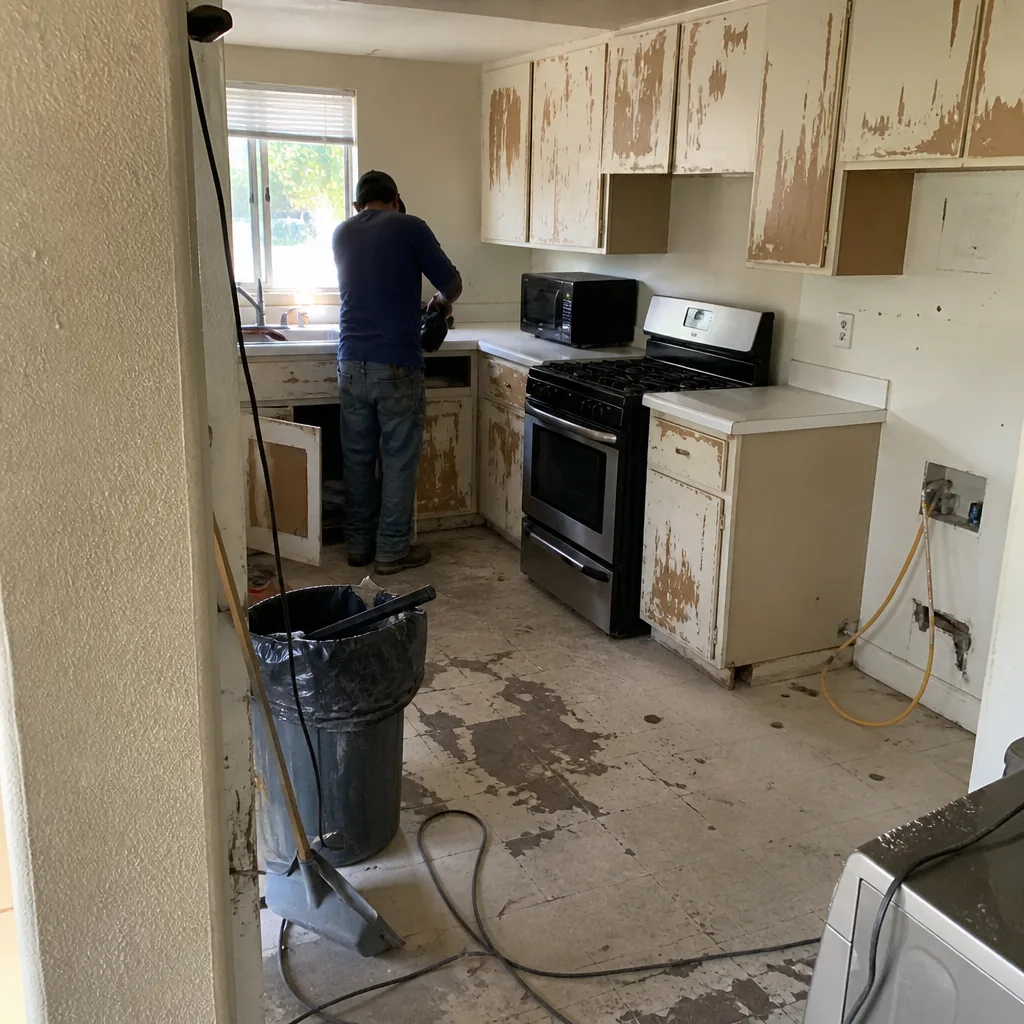 Before
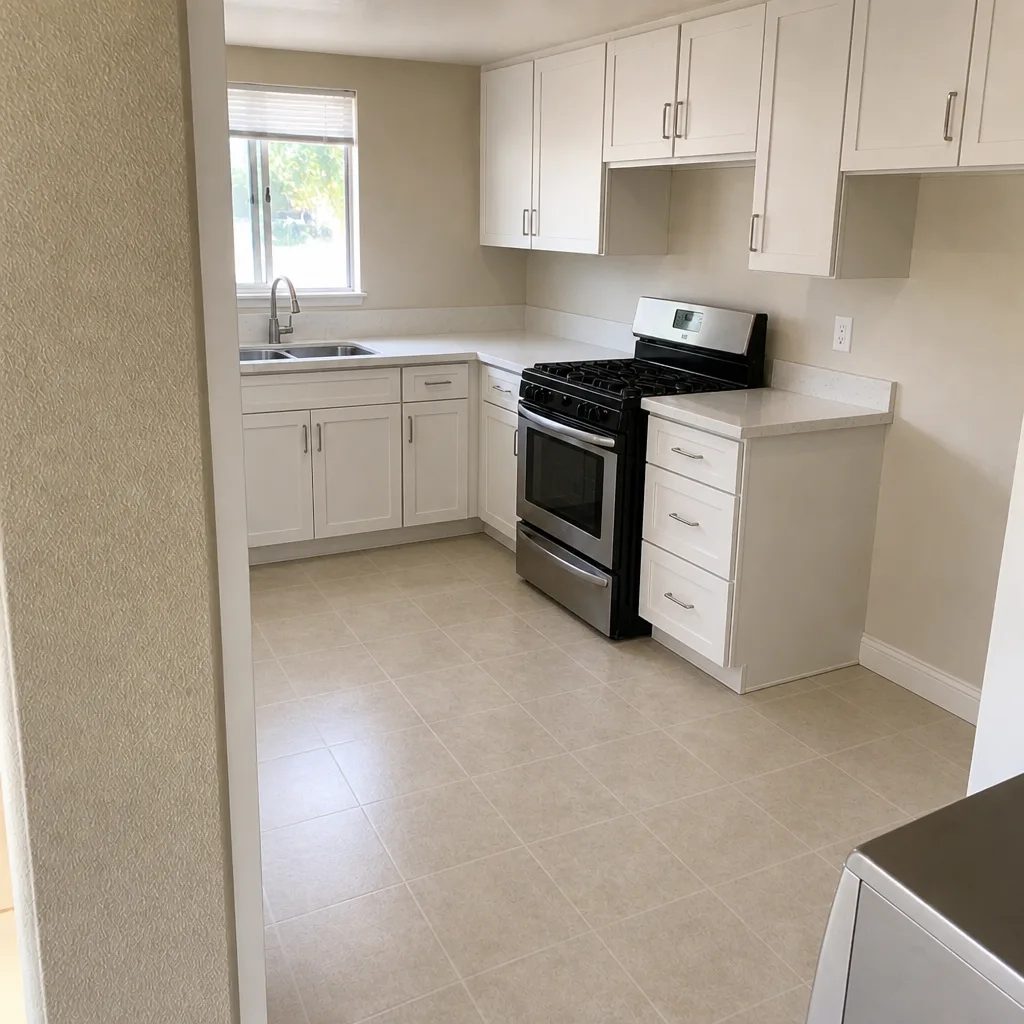 After
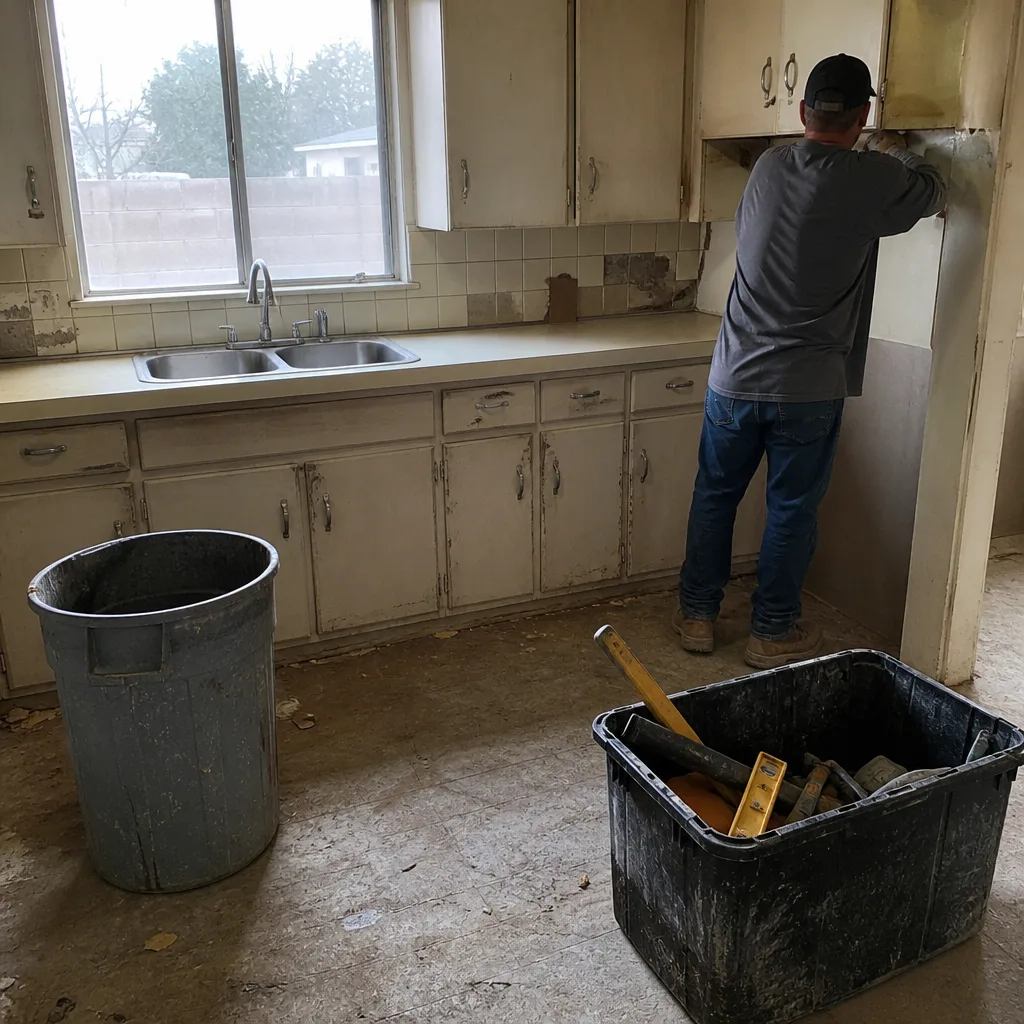 Before
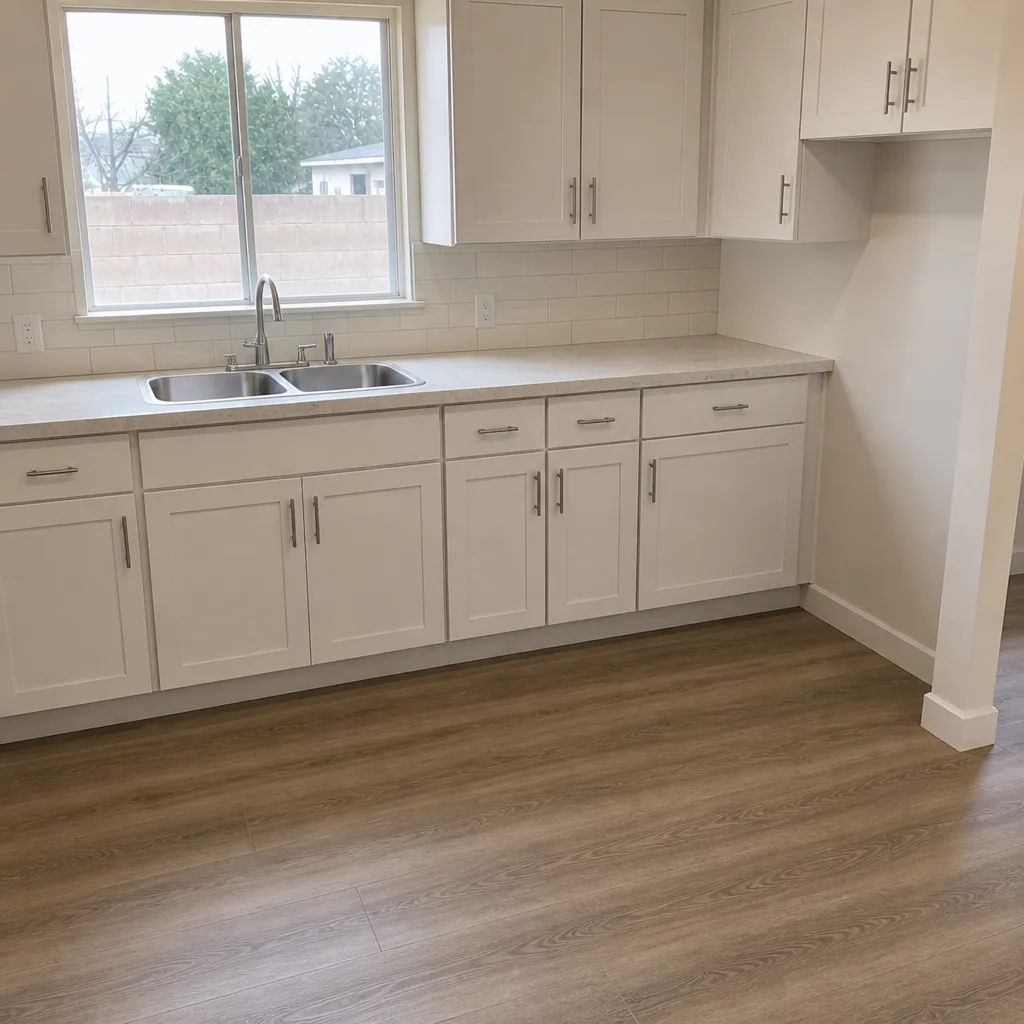 After
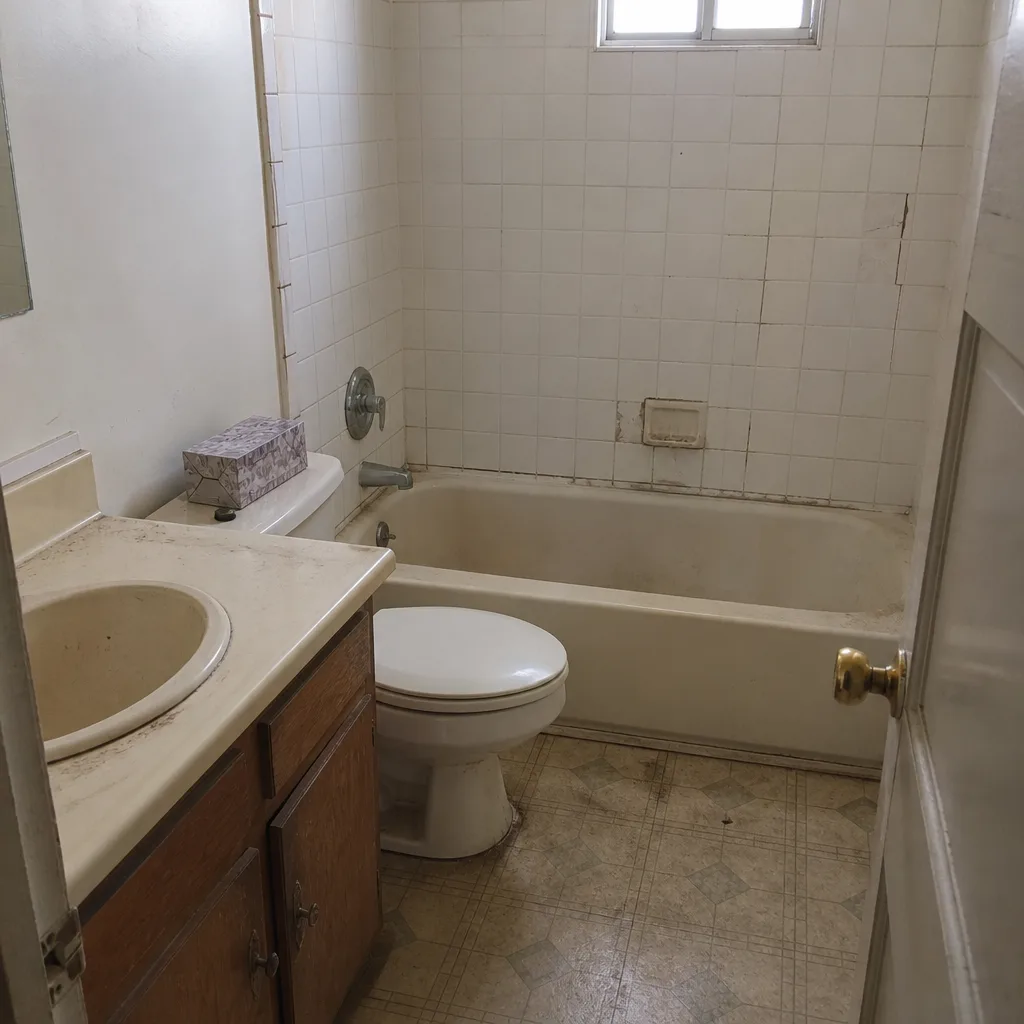 Before
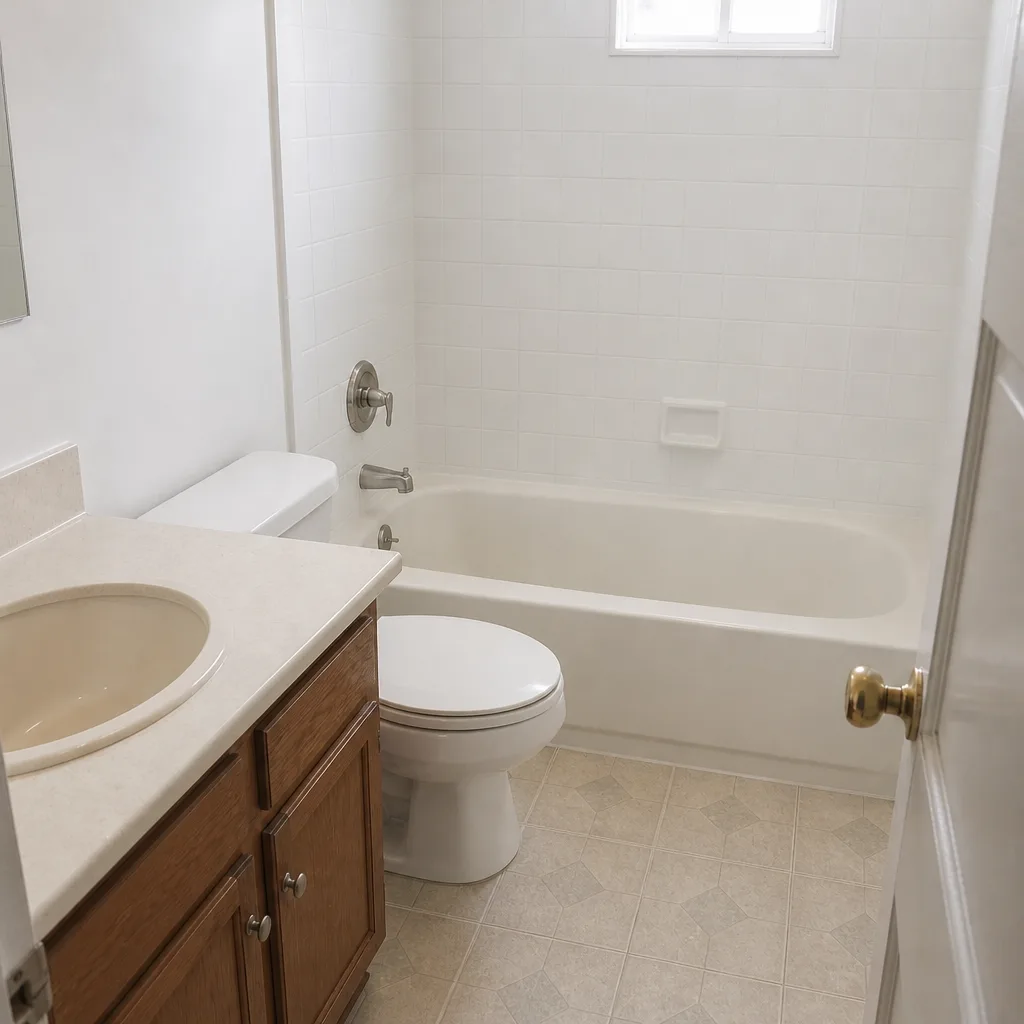 After
When to Call a Professional
If your project involves moving walls, changing plumbing, wiring, or a permit of any kind, call a professional rather than tackling it alone. A schedule you can hold someone to is worth as much as the work itself. If you’ve already been given a verbal estimate with no written schedule, or a timeline that seems optimistic compared to what Chapter 8 of the contractor’s own paperwork implies, call us. Penhallow Remodeling Spring Valley offers free estimates in Spring Valley – call (844) 797-3346. A live person answers 24/7. We’ll walk through your project and put a real number, a real timeline, and a written guarantee in front of you before you sign anything.
Frequently Asked Questions
A home remodel in Las Vegas takes four to eight months for a whole-home project, eight to twelve weeks for a kitchen, and six to eight weeks for a bathroom, measured from permit approval. Add two to six weeks for Clark County permit review and another one to two weeks if the project lands in the summer. Call (844) 797-3346 for a written timeline on your specific project – estimates are free.
Kitchen remodels in Spring Valley typically run $18,000 to $55,000 depending on layout, cabinet line and countertop material, with a mid-range project around $30,000 to $40,000. Cabinetry from KraftMaid or Wellborn and Cambria or Silestone countertops are common drivers of the higher end. Call (844) 797-3346 for a written line-item quote – estimates are free.
It shouldn’t. A written price before any work starts is the standard, and the number on day one should be the number on the invoice. Change orders should only happen when a hidden condition or an agreed scope change is documented and signed by both parties. If a contractor won’t put the price in writing before work starts, that’s a warning sign. Call (844) 797-3346 to see what a written quote looks like.
Yes. On any project that requires a permit – moving walls, changing plumbing, electrical work – the permit should be pulled and inspections passed as part of the job, with the permit posted on site and the application date written into the schedule. A contractor who asks you to pull your own permit is a contractor you should probably walk away from. Call (844) 797-3346 with questions.
Once permits are approved, a kitchen runs eight to twelve weeks, a bathroom six to eight, and a whole-home remodel four to eight months. The schedule should be broken into milestones – demo, rough-in, inspections, finish, punch-list – with a date on each. Call (844) 797-3346 to get your project’s milestones in writing.
For most interior remodels, winter is slightly easier because the Clark County permit queue and inspection load run lighter and material delivery is faster. Summer adds one to two weeks of buffer, mostly on inspections and site work. If you’re planning a summer start, budget that extra time in the schedule from day one. Call (844) 797-3346 to plan a realistic start window.
The Bottom Line

Timeline overruns in remodeling almost always start in week one, with a scope and schedule that were never written down. A real contractor gives you the price before the work and the schedule before the demo – a written timeline with material order dates, permit windows, inspection hold points, and milestones you can actually measure. If a contractor can’t give you that in writing, you’ve already found your first delay. If you want a written number, a written timeline, and a written guarantee before a single tool comes out, call Penhallow Remodeling Spring Valley at (844) 797-3346. A live person answers 24/7, technicians have up to 22 years of experience, and every project comes with the 365-Day Done Right Promise.
For a look at how we build this into a full kitchen project, see the kitchen remodeling in Spring Valley page, or return to the Spring Valley remodeler home page to see all our services.
Written by the team at Penhallow Remodeling Spring Valley.