Last updated November 17, 2026







Free written scope consultation - allowances, timeline, and change-order rules on paper before a single trade is scheduled
DIY vs Professional Kitchen Remodeling: What’s Safe to Do Yourself
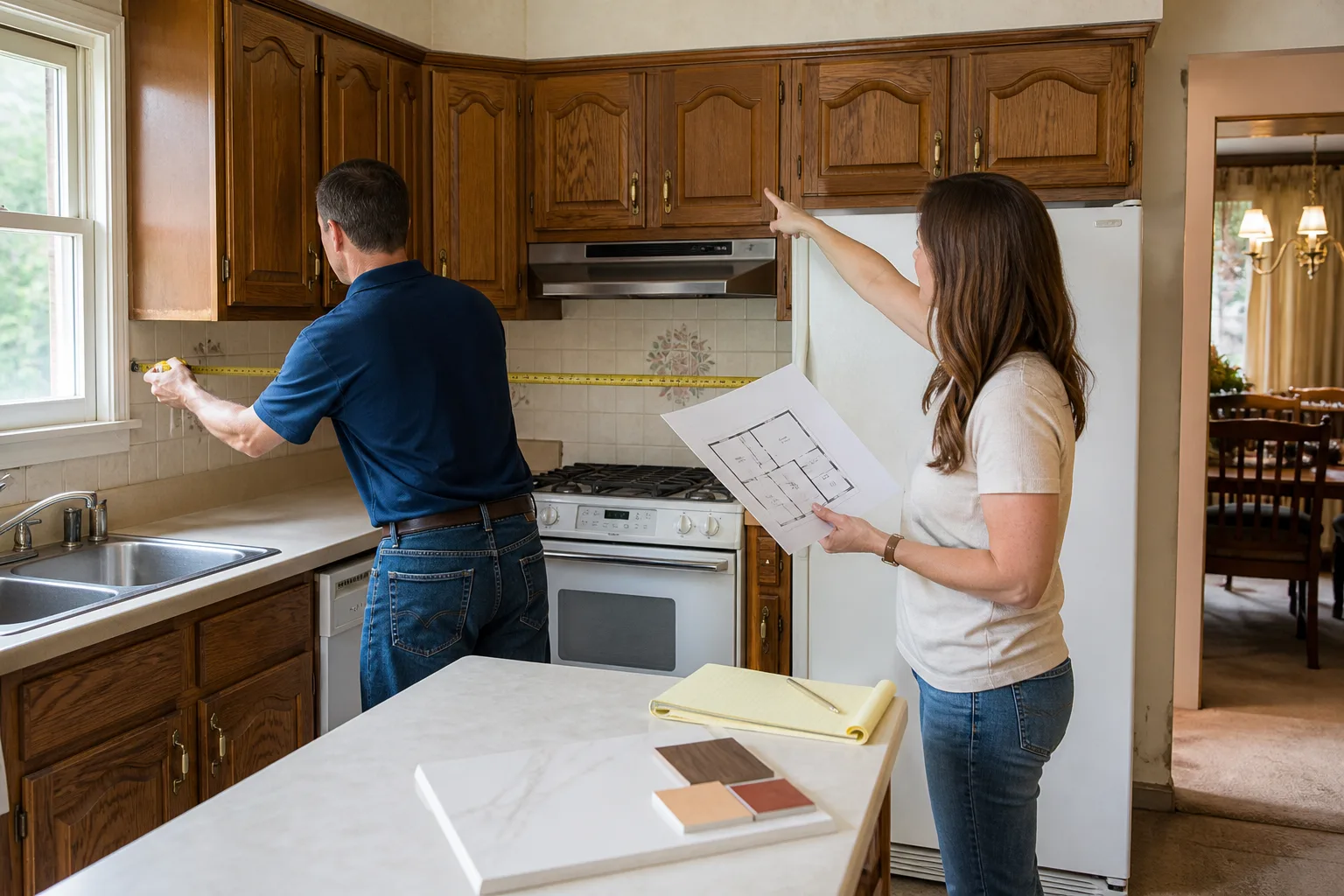
Painting your cabinets yourself is smart. Moving a gas line six inches to fit a new range yourself is a Clark County permit violation that can void your homeowner’s insurance and surface at resale. The difference between those two tasks isn’t skill level. It’s jurisdiction, and most DIY guides never tell you which is which. In a Spring Valley ranch house built in the 1980s, the same wall can hold a harmless cosmetic project and a code-regulated mechanical one. This guide draws the line honestly: three task categories based on Clark County code, the hidden cost of DIY mistakes, and a framework for deciding when hiring out is simply cheaper.
Quick Answer
Safe DIY kitchen work in Spring Valley means cosmetic and reversible tasks: painting, hardware swaps, backsplash tile on sound substrate, and replacing a like-for-like faucet. Anything that touches gas, adds or relocates a circuit, changes plumbing rough-in, or alters structural walls needs a licensed trade and a Clark County permit. Cabinet installation and undermount sink cutouts sit in the middle: legal for a homeowner to attempt, but where mistakes cost more than the labor you saved.
Styles & brands we work with
- Kitchen remodeling
- Bathroom remodeling
- Home additions & ADU
- Roofing
- Windows & doors
- Driveway & pavers
- Fence
Table of Contents
- The Three Task Categories: Safe DIY, DIY-With-Permit, Licensed-Only
- The Hidden Cost of DIY Mistakes
- Where Spring Valley Homeowners Overestimate Their Scope
- What Unpermitted Work Does to Resale Value in Nevada
- A Decision Framework: When to Hire Out
- How to Sequence a Mixed DIY and Professional Remodel
- Common Mistakes to Avoid
- When to Call a Professional
The Three Task Categories: Safe DIY, DIY-With-Permit, Licensed-Only
Clark County separates kitchen tasks into three practical buckets, and the separation has nothing to do with whether you’re handy. It’s about who is legally allowed to perform the work and who inspects it.
Safe DIY: no permit, no gas, no new circuits
- Painting or refinishing cabinets (with proper deglossing and a bonding primer)
- Swapping cabinet hardware, hinges, and drawer slides
- Installing a tile backsplash on sound drywall or cement board substrate (the moisture-resistant layer behind your tile)
- Replacing a kitchen faucet like-for-like, shutoff to shutoff, with no new plumbing lines
- Patching drywall, caulking, and repainting
- Replacing a plug-in range hood with a same-spec plug-in unit
- Installing floating shelves into studs
DIY-with-permit: legal for a homeowner, inspected by the county
Clark County allows a homeowner to pull an owner-builder permit for work on their own primary residence. That does not make the work easy. Cabinet installation, moving an electrical outlet, adding a dedicated appliance circuit, and relocating a sink within a foot of the current location can all fall here. The catch is that the county inspects the result, and a failed rough-in inspection means tearing open finished walls.
Licensed-trade-only: gas, structural, and major electrical
- Any gas line work, including moving a range connection
- Removing or altering a load-bearing wall
- Panel upgrades or new circuits that go beyond a like-for-like swap
- Relocating the sink drain and supply lines more than a short distance
- Converting a range hood to exterior venting through a wall or roof
Gas is the line most homeowners underestimate. A licensed plumber or gas fitter must run the line and pressure-test it, and Clark County inspects the connection. There is no version of moving a gas range six inches that a homeowner can legally and safely do alone.
The Hidden Cost of DIY Mistakes
The sticker price of an amateur mistake isn’t the cost of the mistake. It’s the cost of undoing it before the pros can start, added to the original labor you saved, plus the days of project delay. In Spring Valley kitchens we’re routinely called to correct work that started as a weekend project and ended in a wall opening.
Here’s how the math usually runs. If a homeowner installs cabinets out of plumb and the countertop templater arrives to find an uneven base, the granite or quartz fabricator won’t cut the slab. The homeowner pays to remove and reinstall the cabinetry, pays for the stone template a second time, and delays the whole job by a week or more. The cost of re-doing a cabinet line that was already “done” typically lands north of the cost of having hired out the install in the first place.
The same pattern shows up on undermount sink cutouts. A homeowner buying a slab and cutting the opening with a rented saw frequently cracks the stone edge around the sink curve. Cambria, Silestone, and Caesarstone all require a fabricator cut for warranty coverage, which means a DIY-cut slab often voids the manufacturer’s coverage before the seam even cures.
Electrical is the third trap. A homeowner replaces a 40-amp range circuit with a 30-amp breaker to “make it fit,” the range underperforms, and the county won’t pass the final electrical inspection at resale. Pulling a fresh permit and having an electrician re-run the circuit is the only fix.
Where Spring Valley Homeowners Overestimate Their Scope
Three tasks show up again and again in our written estimates as corrections of prior DIY work. Each one looks straightforward, and each carries a consequence that isn’t visible until later.
Cabinet installation on out-of-plumb walls
Spring Valley subdivisions built in the 1970s and 1980s have walls that are rarely plumb. A cabinet hung against a wall that’s half an inch out of level will show a visible gap at the ceiling line and throw the countertop template off by the same amount. Professional installers shim and scribe the cabinet line to compensate; a homeowner installing over an uneven stud face with a level and drywall screws will end up covering the gap with awkward filler pieces or starting over.
Undermount sink cutouts in stone
A top-mount drop-in sink is forgiving. An undermount sink in quartz or natural stone is not. The cutout has to be precise, supported with a subframe or steel strapping, and sealed at the rim to keep moisture out of the cabinet base. A fabricator cut preserves the Cambria or Caesarstone warranty, and a homeowner cut usually voids it. When a Spring Valley homeowner is upgrading to an undermount style, that cut is one of the few tasks where saving the labor cost has no upside.
Appliance circuit upgrades
A modern induction range, a double wall oven, and a built-in microwave all want dedicated circuits. Older Spring Valley homes often have a 30-amp range circuit and a kitchen that shares outlets with the dining room on one 20-amp breaker. Adding appliances without upgrading the panel or adding circuits trips breakers constantly. Worse, an overloaded circuit that was never permitted can void homeowner’s insurance if it causes a fire. The Clark County permit and inspection on a new dedicated circuit typically runs a small fraction of what a fire claim costs in premiums alone.
What Unpermitted Work Does to Resale Value in Nevada
Nevada requires sellers to disclose known unpermitted work on the seller’s real property disclosure statement. That single line on the form is where DIY mistakes turn into a resale problem. A buyer’s agent who spots a permit gap on the county records portal will ask the seller to permit and inspect the work retroactively, credit the buyer for the cost of bringing it to code, or walk away.
What happens in practice in Spring Valley:
- Retroactive permit cost. The seller pays for the permit, the inspection, and any corrections the county requires, often with a contractor’s fee tacked on top.
- Negotiated credit. Buyers commonly request a credit equivalent to 1.5 to 2.5 times the original cost of the work when unpermitted, because they’re absorbing the risk of the unknown.
- Appraisal issues. An appraiser who notices added square footage or a relocated gas line without documentation may flag the discrepancy.
- Insurance complications. A claim on unpermitted work is the one a carrier will contest, and Nevada allows insurers to deny coverage for work that materially contributed to the loss.
The kicker is that the original work was often cheap. A circuit run for a microwave, a moved gas line, a wall removed to open the kitchen. The savings of avoiding a permit are usually a few hundred dollars. The cost of unpermitted work at resale is routinely in the thousands. That’s the trade most homeowners haven’t priced.
If you want the paper trail handled properly, the general contractor in Spring Valley we work with pulls every permit and walks every inspection, so the file at closing is clean.
A Decision Framework: When to Hire Out
You don’t need a rule of thumb for every task. You need one framework that applies to all of them. Here’s the one we use when a Spring Valley homeowner asks us where the line is.
- Does the task trigger a permit? If yes, the DIY labor savings need to be large enough to be worth the inspection risk, the time cost, and the personal liability if something goes wrong. For most homeowners, the answer is no below roughly $1,500 in labor.
- Does the task void a manufacturer warranty? Stone countertop cuts and appliance installations are the two big ones. If the answer is yes, hire out. A Cambria or Kohler warranty is worth more than the labor you’d save.
- Is the mistake reversible? Paint, hardware, and backsplash tile are reversible with effort. Cabinet install, undermount cutouts, and electrical rough-in are not. Reversible tasks are DIY-friendly; irreversible tasks aren’t.
- Does the task touch gas, structure, or the electrical panel? If yes, licensed-only. No exceptions.
- Is the written quote under $800 and the task reversible? DIY.
- Is the written quote under $800 and the task irreversible but permitted? This is the gray zone. Pull the permit yourself if you’re confident in your skills, or hire out if the timeline matters more than the labor savings.
Written quotes matter because verbal ballparks hide the real numbers. On every job, the team at Penhallow Remodeling gives Spring Valley homeowners a written price before any work starts, so the number on day one is the number on the invoice. That makes the framework above usable: you can’t compare DIY savings to a verbal guess.
How to Sequence a Mixed DIY and Professional Remodel
The order of work matters as much as who does it. Sequence a Spring Valley kitchen wrong and the DIY work gets buried under the professional work, or scheduled after it, and the timeline slips by weeks.
- Plan the full scope first. Decide every task, whether it’s DIY or professional, and map how each one affects the next. Cabinet install, plumbing rough-in, and electrical rough-in have to be coordinated.
- Pull every permit up front. If you’re doing part of the work yourself, pull your own owner-builder permit. If a contractor is handling the rough-in work, let them pull the trade permits. Inspections happen in sequence: rough-in before drywall, final after finishes.
- Schedule rough-in trades first. Electrical, plumbing, and any HVAC changes happen while walls are open. This is the window for a professional to handle the gas line, circuits, and drain relocations.
- Drywall and paint next. This is where safe-DIY cosmetic work fits. Paint the ceiling and walls before cabinets go in, not after.
- Cabinet installation. If you’re hiring out, this happens before stone templating. If you’re installing cabinets yourself, get the walls plumb or expect the stone fabricator to send you back to step one.
- Countertop template and install. Professional fabrication, always. The two-week gap between template and install is a good window for the homeowner to handle hardware, backsplash prep, and appliance unboxing.
- Backsplash, appliances, and final inspection. Safe DIY territory, followed by the county final walk-through.
Missing any step in that sequence costs time and money, and in our experience the biggest cause of a blown kitchen timeline is ordering a stone template before the cabinet line is actually settled. Get the order right and a mixed project can go smoothly.
See the difference
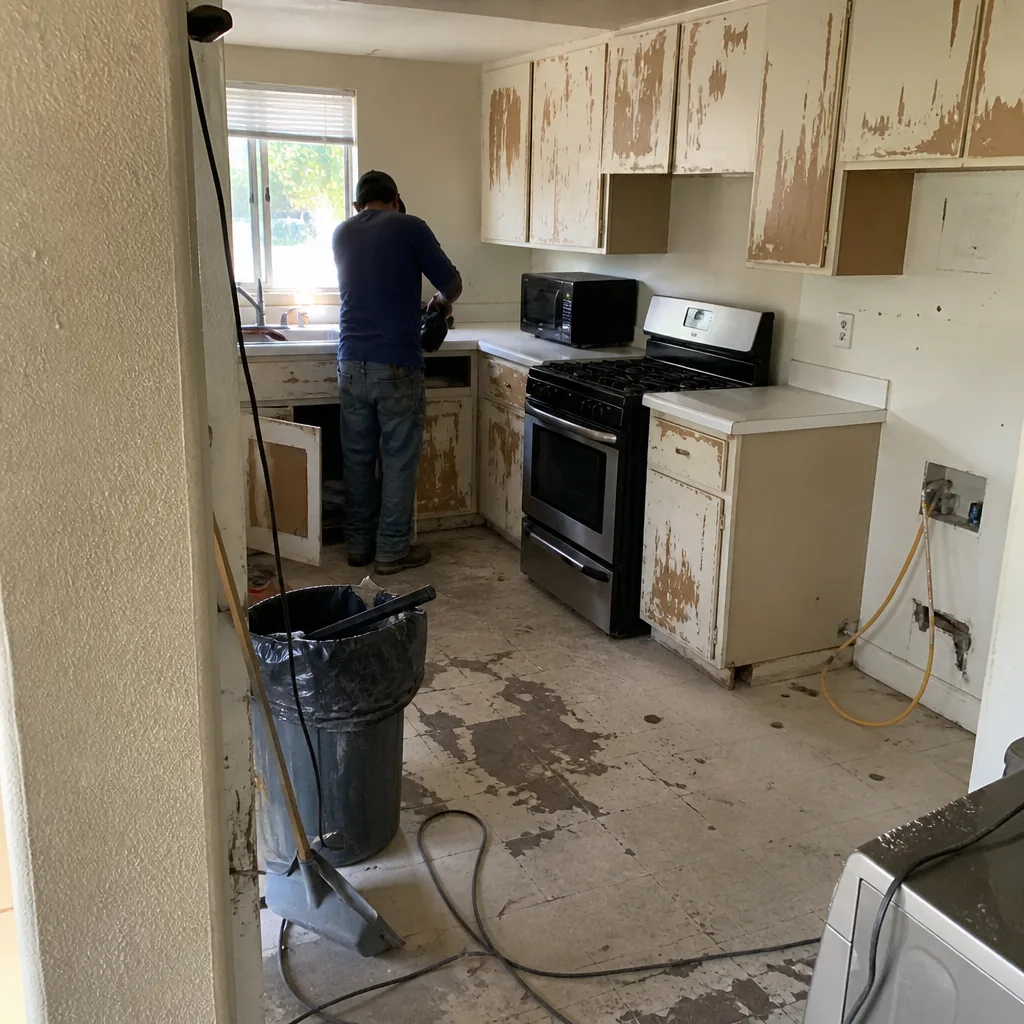 Before
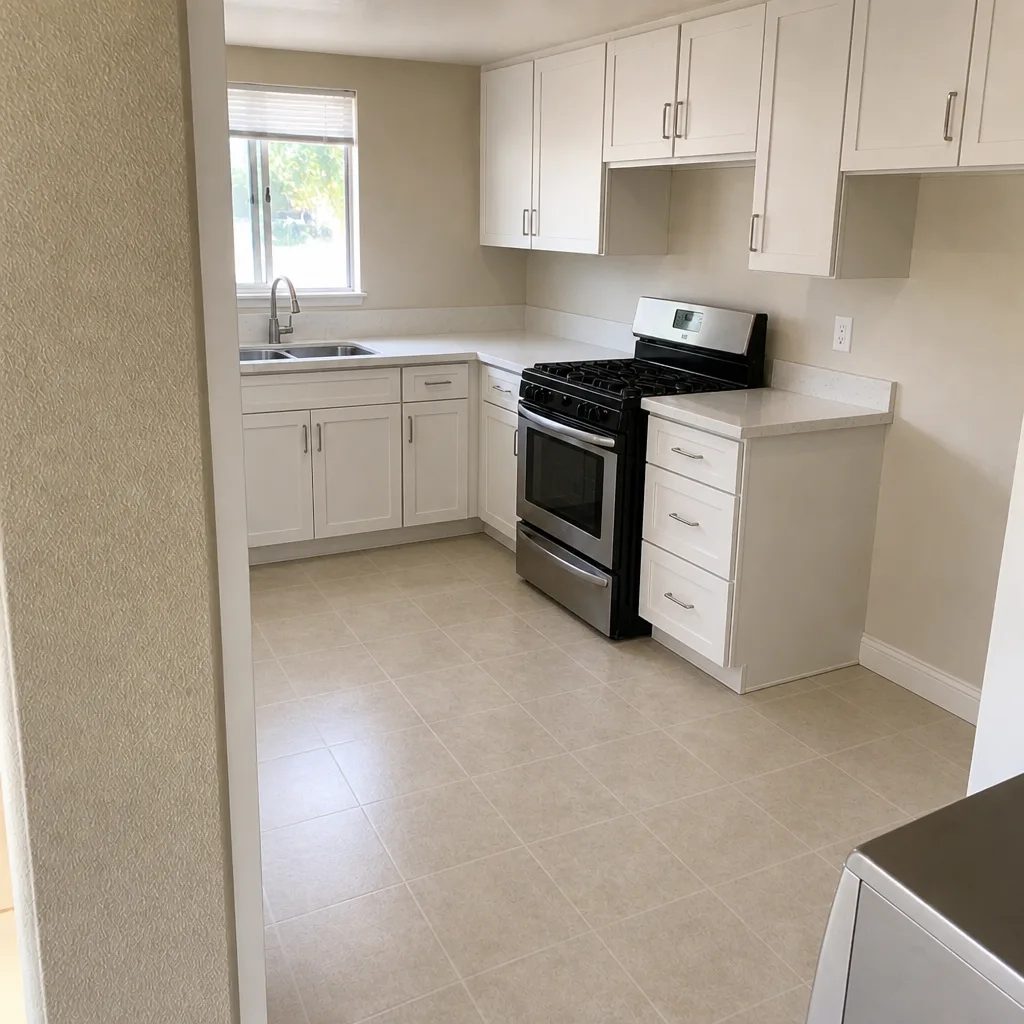 After
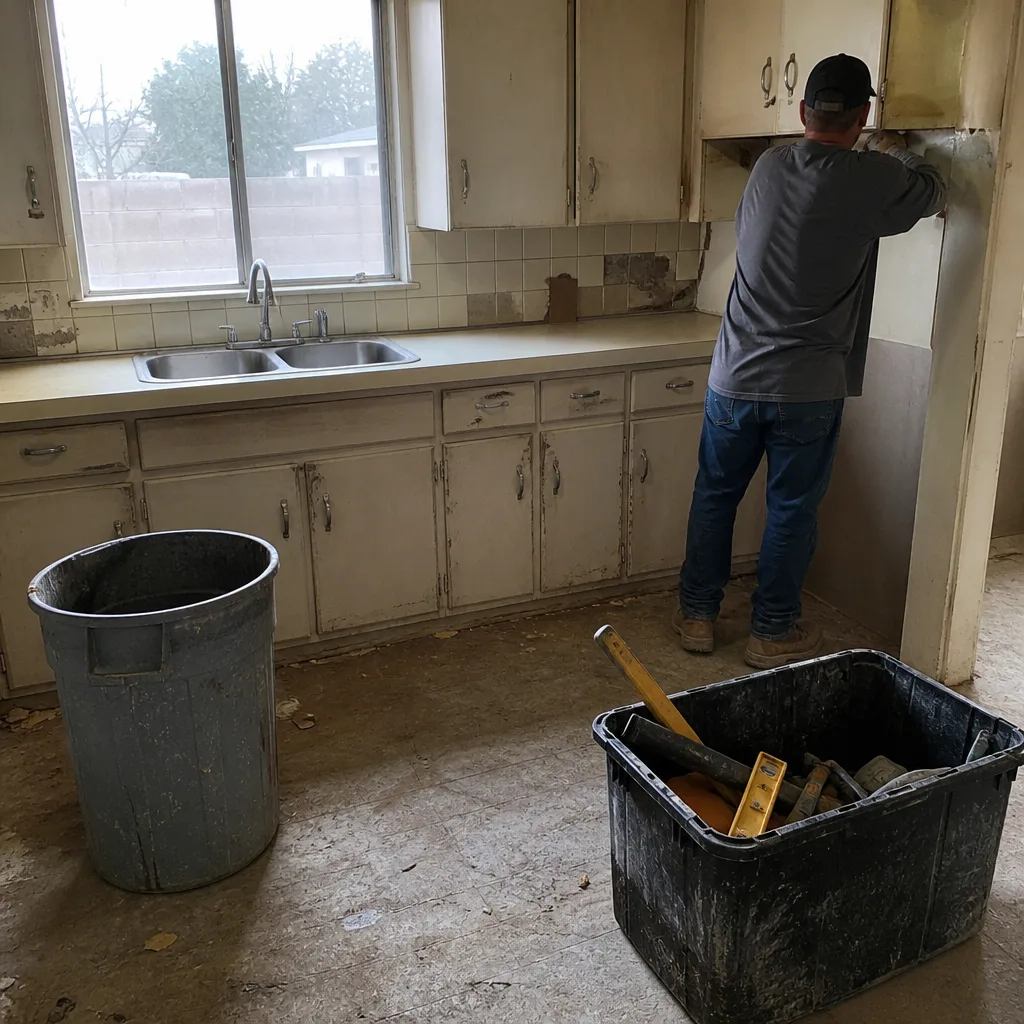 Before
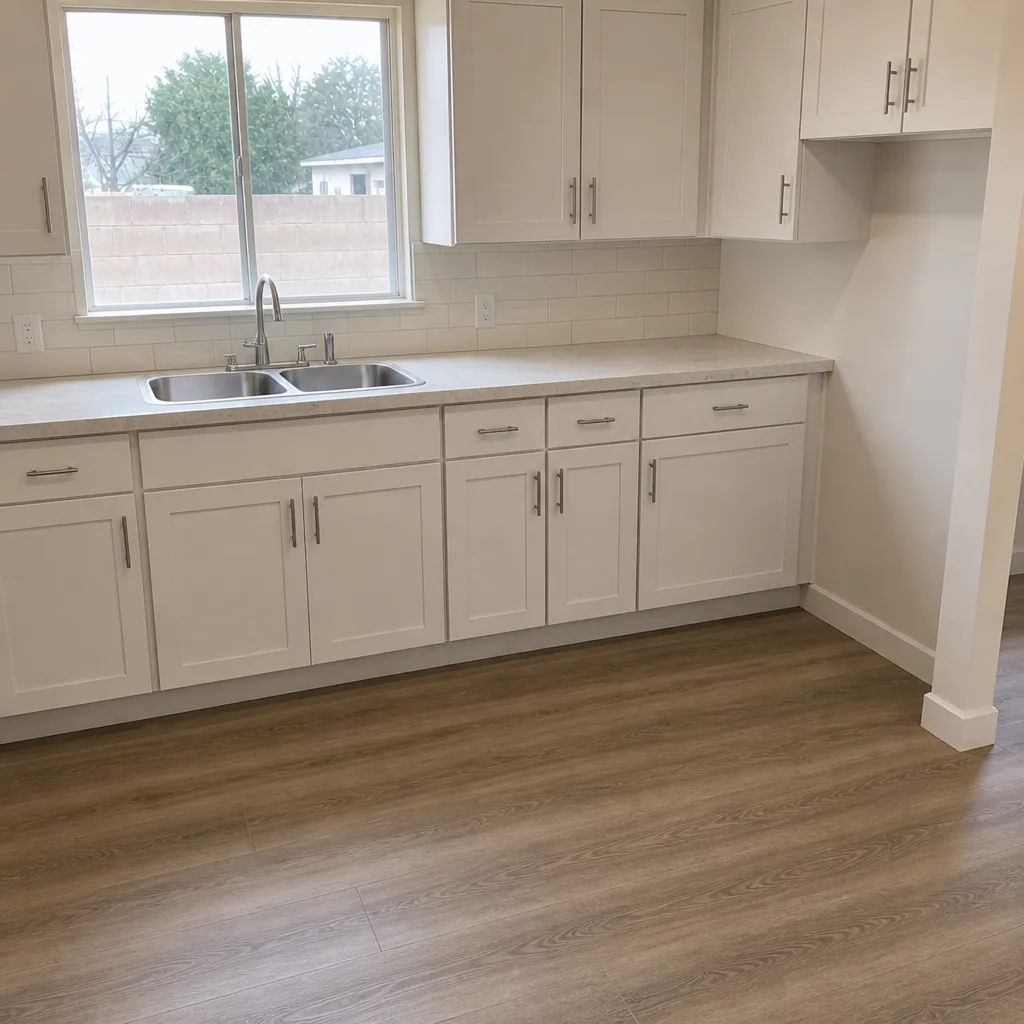 After
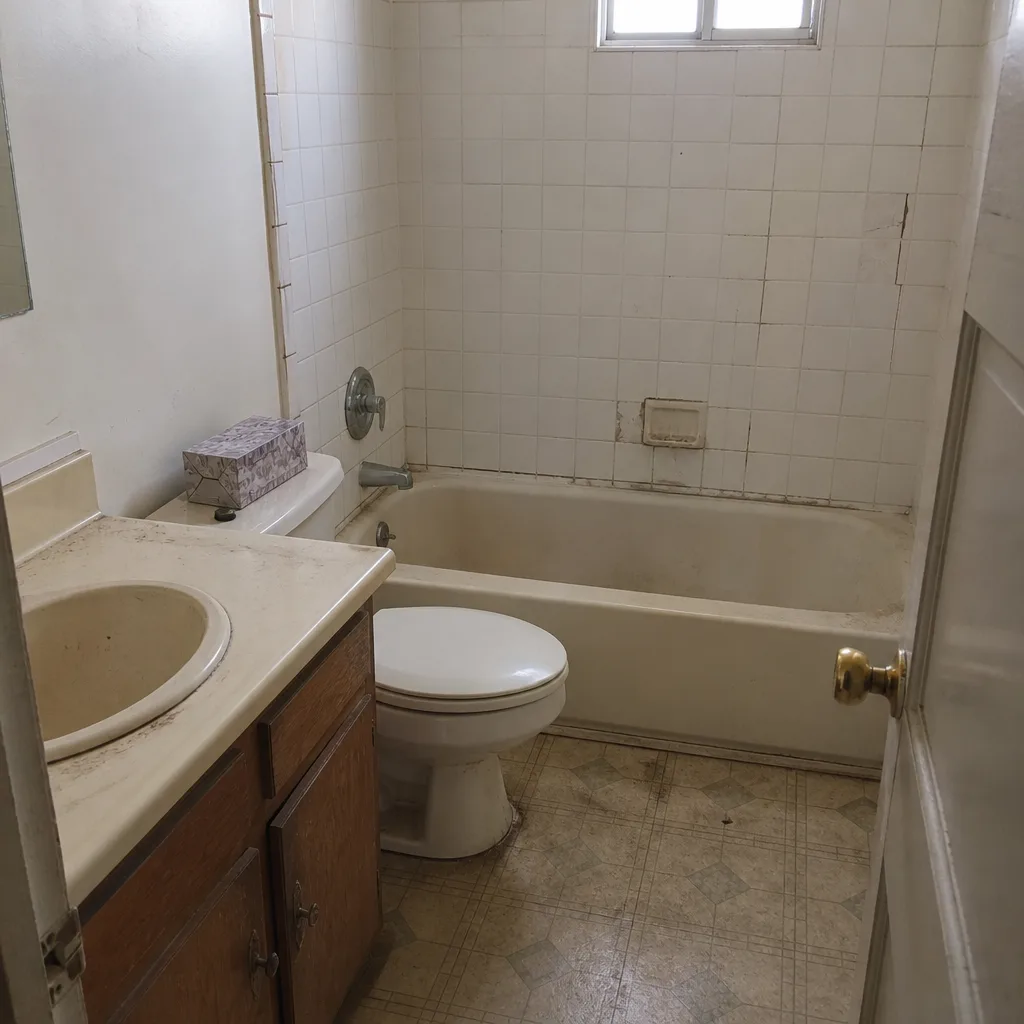 Before
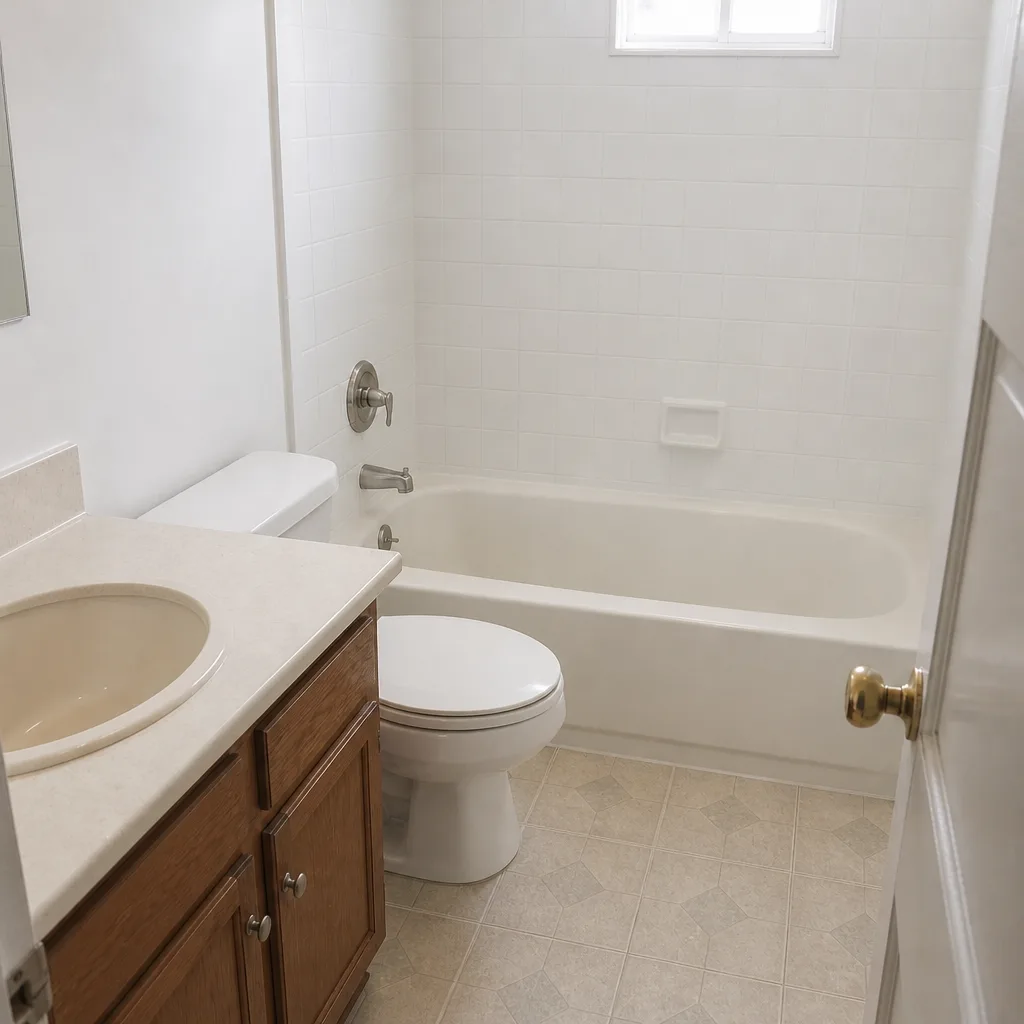 After
Common Mistakes to Avoid

- Moving a gas line without a permit. Two Spring Valley homeowners in the same block can end up with different insurance outcomes after a small gas leak because one had a permitted connection and one didn’t.
- Skipping the owner-builder permit when doing permitted work. A homeowner doing their own electrical rough-in still has to pull the permit. Unpermitted is the resale killer, and the county record is checked at closing.
- Ordering stone before cabinets are set. The fabricator templates off the actual installed cabinet line. If the cabinets are still in boxes, the template is fiction, and the slab cut is wrong.
- Buying a slab from a yard that doesn’t guarantee the fabricator cut. Cambria, Silestone, and Caesarstone warranties attach to a professional fabricator. A homeowner-cut slab often isn’t covered.
- Assuming an older kitchen has enough electrical capacity. In a Spring Valley home built in the 1970s, the panel is often a 100-amp service. Adding an induction range, an air fryer, a microwave, and a dishwasher all to the same kitchen means you need a load calculation before you buy the appliances.
- Doing plumbing moves that fail inspection months later. A sink relocated an inch too far from the existing drain often passes the rough-in walk-through and fails the final, because trap arm length is checked at the finish stage.
- Treating paint as prep when it’s finish. Painting cabinets before the substrate is deglossed and primed properly fails within a year in a Spring Valley kitchen, because the summer heat cycling peels bonding primers off factory lacquer. Prep must come first.
When to Call a Professional
Call a licensed contractor when the task touches gas, structure, the electrical panel, or a stone countertop cut. Call one when the project scope crosses multiple trades, because the odds of a self-managed rough-in passing every Clark County inspection drop fast past a certain complexity. And call one when the DIY task loses its charm the moment you’re on your back under a sink at 10 p.m. with a pipe that leaks in two places.
If the kitchen involves tile work at that quality, plumbing moves, and any stone fabrication, the sensible line is generally at the drywall-and-paint stage. Cosmetics are yours; the rough-in and stone are ours.
Penhallow Remodeling Spring Valley offers free estimates in Spring Valley. Call (844) 797-3346 and we’ll put a written price in front of you before any work starts, backed by our 365-Day Done Right Promise. If something we install fails inside a year, we come back and fix it at no charge, written into the guarantee. Background-checked, uniformed technicians show up in the arrival window we give you, and a real person answers the phone around the clock.
Frequently Asked Questions
Yes. Clark County allows a homeowner to pull an owner-builder permit for cabinet installation on their own primary residence, though the work still has to pass the final inspection. If you don’t want the permit-and-inspection risk, or your walls are out of plumb (most Spring Valley homes built before 1990 have some drift), hiring out is usually the lower-cost path. Call (844) 797-3346 for a free written quote.
Yes, and this one is non-negotiable. Gas line work in Clark County requires a licensed plumber or gas fitter and a permit, and the connection gets inspected. Moving the gas line yourself is a permit violation, an insurance liability, and a disclosure item at resale. If you’re changing the range location, this is a call-the-pro task every time.
It triggers a disclosure obligation on the seller’s real property disclosure statement, and it typically costs the seller either a retroactive permit-and-inspection bill or a negotiated buyer credit of roughly 1.5 to 2.5 times the original cost of the work. The savings from skipping a permit are hundreds of dollars; the cost at close is usually in the thousands. Call (844) 797-3346 for a written estimate on getting the paper trail right now.
Yes. Cabinet painting is one of the safest, most forgiving DIY projects in a kitchen remodel, and it’s a genuine money-saver on a Spring Valley kitchen refresh. The catch is substrate prep: deglossing, priming with a bonding primer, and using the right topcoat matter more than the paint color. Skip the prep and the paint fails within a year in our summer heat cycle. If the substrate is factory lacquer, plan on sanding before you prime.
You shouldn’t. Undermount sink cutouts in Cambria, Silestone, or Caesarstone require a fabricator’s cut to preserve the manufacturer’s warranty, and the opening has to be supported with a subframe or strapping to keep the stone from cracking under a full sink. A DIY cut usually voids the slab warranty before the seam cures. Call (844) 797-3346 for a written estimate that includes the fabricator cut.
The permit is triggered by the category of work: gas line changes, new electrical circuits, plumbing rough-in changes, and structural wall changes all require a Clark County permit. A licensed trade is required for any of the same categories, and for tasks that void a manufacturer warranty (stone cutouts, appliance installations with brand coverage). Cosmetic work like paint, hardware, and backsplash tile doesn’t trigger either. When you’re not sure, call (844) 797-3346 and we’ll tell you what category your task falls in before you pick up a tool.
The Bottom Line

Kitchen DIY in Spring Valley is a jurisdiction question before it’s a skill question. Cosmetic and reversible work is yours to keep: paint, hardware, backsplash tile, like-for-like faucet swaps. Permitted work is legal for a homeowner but checked by the county, so the DIY savings need to be worth the inspection risk. Gas, structure, panel upgrades, and stone cutouts are licensed-trade-only, and no amount of handiness makes them safe. Priced honestly, the tasks most homeowners overreach on (cabinet install, undermount cutouts, appliance circuits) cost more to undo than to hire out in the first place. Want a written number to compare against? Call (844) 797-3346 for a free estimate. We give you a written price before work begins, backed by our 365-Day Done Right Promise and a background-checked, uniformed crew that shows up in the window we promised.
When you’re ready to plan the whole project, start with Penhallow Remodeling Spring Valley, review our Kitchen Remodeling in Spring Valley service, and if the remodel spills into the adjacent bath, look at Bathroom Remodeling in Spring Valley as you scope the timeline. We build our projects on the Kingswell standard: a written price up front, a real arrival window, a clean job site, and a written guarantee on every project.
Written by the team at Penhallow Remodeling Spring Valley.