Last updated November 17, 2026


Free written scope consultation - allowances, timeline, and change-order rules on paper before a single trade is scheduled
Kitchen Remodeling Warning Signs Every Homeowner Should Know
The word “allowance” in a kitchen remodeling contract is doing a lot of work. It means the contractor has assigned a placeholder number – not a real one – to that line item, and if your taste or the market runs higher, you pay the difference. A $2,000 countertop allowance on a quote for quartz is a warning sign, not a deal.
Most homeowners know to watch the job site for problems. Fewer know to read the paperwork first. That’s where the costliest warnings hide: in allowances, in open-ended material specs, in language like “TBD at demo.” This guide walks you through the five lines of a bid worth auditing before you sign it, then covers the physical job-site signs we’ve seen go wrong in Spring Valley kitchens over the years. Ten minutes of reading could save you five figures.
Quick Answer
The most important kitchen remodeling warning signs are almost always in the contractor’s paperwork, not on the job site: an unusually low countertop or cabinet allowance, open-ended language like “TBD at demo” or “owner-supplied,” a quote missing a start date or finish window, and no written guarantee. Physical warning signs – absent crews, unlevel cabinets, tile laid without proper substrate prep – usually appear after the paperwork has already failed.
Styles & brands we work with
- Kitchen remodeling
- Bathroom remodeling
- Home additions & ADU
- Roofing
- Windows & doors
- Driveway & pavers
- Fence
Table of Contents
- How to Read a Kitchen Remodeling Quote Line by Line
- The Allowance Trap: Why a Low Number Isn’t a Deal
- Open-Ended Language That Hides Real Cost
- Mid-Job Warning Signs: When a Contractor Is Behind and Hiding It
- Physical Job-Site Warning Signs During a Kitchen Remodel
- Legitimate vs. Opportunistic Change Orders
- Three Questions to Ask at the Estimate Meeting
- How to Spot a Contractor Who Won’t Return
How to Read a Kitchen Remodeling Quote Line by Line
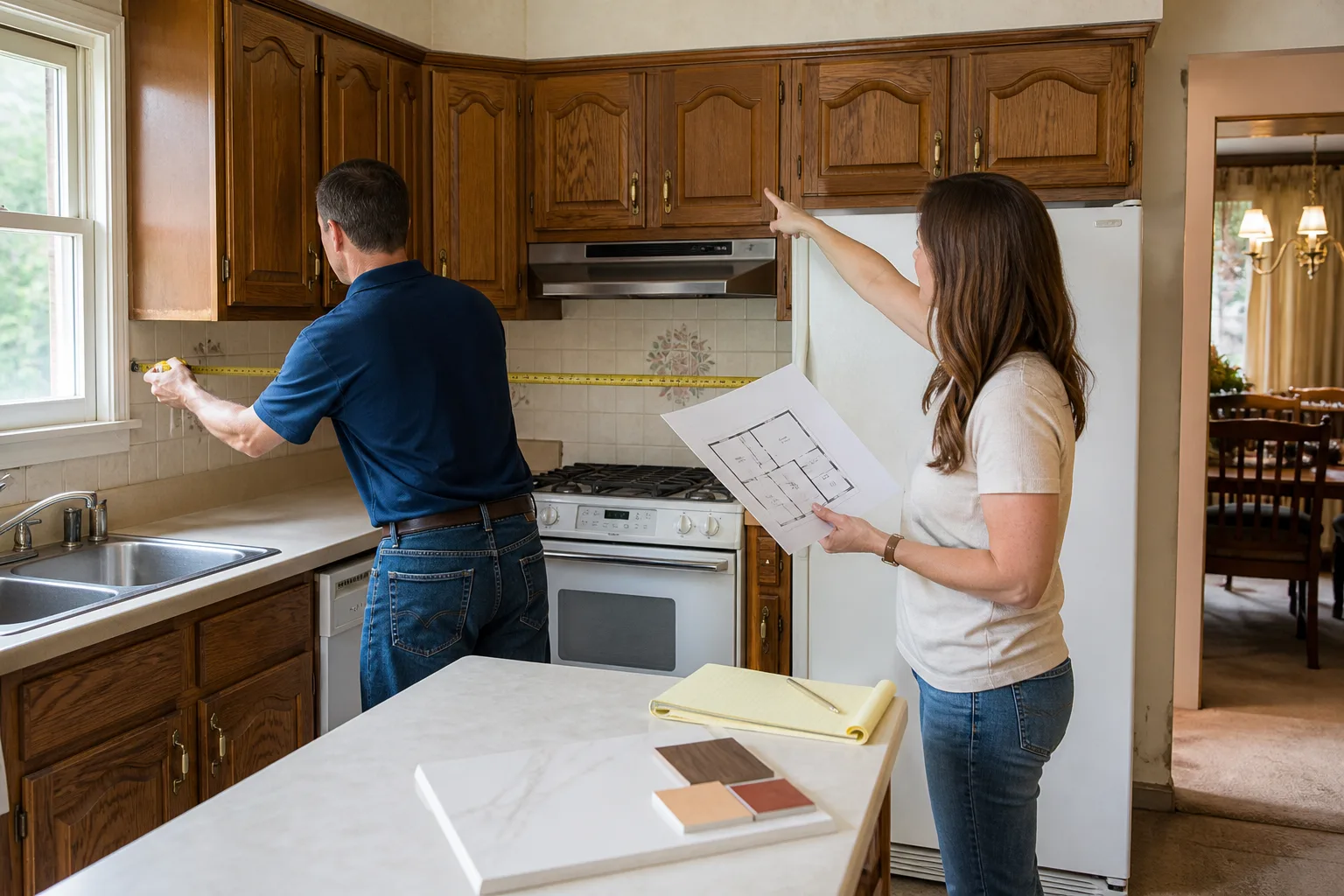
A kitchen quote isn’t a single number. It’s a series of promises, and every one of them needs a written value, a brand name, and a specific quantity. The fastest way to spot a bid that will grow is to run five lines through an audit before you sign anything. This is the same read-through we do with homeowners in Spring Valley before a project is priced.
Take the bid and work through it with a pen in hand. For each of these lines, ask what’s actually written:
- Cabinets: Is the brand named? A “quality shaker” or “semi-custom” without a manufacturer means the contractor can install anything from a big-box line to a mid-grade line and call it a match. A KraftMaid or Wellborn model number tells you exactly what you’re paying for.
- Countertops: Is the material specified with a thickness and edge profile? Quartz at 2 cm vs. 3 cm is a real cost difference. Cambria, Silestone, and Caesarstone all have price bands that move by pattern, not just brand.
- Fixtures: “Moen or equivalent” is not a spec. It’s an opening. Kohler and Moen both make $90 faucets and $900 faucets; the quote should name the model.
- Labor: Is demo, plumbing, electrical, drywall, and finish carpentry each listed as a separate line, or is “install” a lump sum? Separate lines are auditable. A lump sum isn’t.
- Timeline: Is there a written start date and a written finish window? “Approximately 6-8 weeks” is not a commitment; an actual calendar date is.
If two or three of these lines are vague, that’s a red flag. If four or five are, the bid isn’t a bid – it’s an opening offer, and you’ll be negotiating for the rest of the job. We’ve watched homeowners in Spring Valley discover on demo day that a “complete kitchen remodel” quote didn’t include plumbing rough-in or drywall repair. Both were added as change orders at $1,800 and $2,400. The paperwork told the story before the first hammer swung.
The Allowance Trap: Why a Low Number Isn’t a Deal
An allowance is a placeholder – a specific dollar amount the contractor assigns to a line item you haven’t yet selected. There’s nothing inherently wrong with them; they’re useful when a homeowner wants to choose countertops or lighting after the contract is signed. The warning sign is the size of the allowance relative to what the material actually costs.
Here’s how it plays out on a Spring Valley kitchen with quartz countertops. A bid shows a $2,000 countertop allowance for a 45-square-foot kitchen. That’s roughly $44 per square foot installed. Cambria catalog patterns routinely run $75 – $125 per square foot installed once you factor in template, fabrication, and edge work. The math is quick: you’re looking at roughly $1,400 – $3,600 of additional cost the day you pick out your slab. And you will pick out your slab, because nobody chooses countertops sight unseen.
The allowance isn’t always a mistake. Sometimes it’s a legitimate way to lock in the labor portion and let the homeowner choose material at a later date. The difference between honest and underhanded comes down to whether the contractor tells you what the allowance covers before you sign:
- Honest: The bid says “$4,200 countertop allowance – covers up to 45 sq ft of Cambria or Silestone in Group A or B pricing. Upgrades priced in writing before fabrication.”
- Underwritten: The bid says “Countertops: $2,000 allowance.” No material, no square footage, no upgrade path.
The second version pushes you into a decision under pressure, after demo has already started and your old kitchen is in a dumpster. That’s when the “upgrade” price gets negotiated, and you don’t have leverage. If you want to see what full-scope pricing on a Spring Valley kitchen looks like in writing, our Kitchen Remodeling in Spring Valley page breaks out how we structure the number. What we won’t do is quote a $2,000 allowance against a slab that starts at $75 a square foot.
Open-Ended Language That Hides Real Cost
Certain phrases in a kitchen contract work like a blank check written in the contractor’s favor. They’re common, they’re legal, and most homeowners sign them without noticing. Read your quote again and highlight any of these:
- “Owner-supplied” – You’re buying the material. That’s fine if you know it. It’s a warning when it appears on a line item you didn’t choose, like the sink or faucet. It shifts the risk of pricing changes and back-orders to you, and it can also shift the warranty: if the part fails, the contractor has no obligation to honor it.
- “TBD at demo” – This means the price for that scope isn’t actually set. It most often shows up on drywall, subfloor repair, or electrical, where hidden damage is possible. Real allowance language names a real number and a real contingency, not a shrug.
- “Equivalent” – “Moen or equivalent” or “Cambria or equivalent” gives the contractor pricing flexibility on the back end. Sometimes that’s legitimate (material substitution during a shortage). Sometimes it means you’re getting a lower-grade product than you thought you were paying for.
- “As needed” – Often applied to electrical and plumbing. “Electrical modifications as needed” is code for “we’ll charge for whatever we find.” A proper bid prices the electrical scope at the walk-through based on what the panel and existing wiring support.
- “Standard installation” – What’s non-standard? Nobody knows, but if the contractor decides your cabinetry install is non-standard, the price moves.
Here’s what’s interesting about Spring Valley kitchens specifically. The housing stock spans a wide range – from newer builds in the south and east to 1990s-era homes that were built before the current Title 24 energy and ventilation standards, and older remodels where the electrical panel is original to the house. That makes “TBD at demo” comfortable language for a contractor who hasn’t verified anything. It also means the homeowner is carrying real uncertainty. If a quote for a kitchen in a 1998-built Spring Valley home doesn’t include a note about what the electrician found in the panel, ask why. You’ll find out either that they verified it, or that they didn’t.
Mid-Job Warning Signs: When a Contractor Is Behind and Hiding It
Once the contract is signed and work begins, the warning signs shift from the paperwork to pattern and communication. Contractors rarely come out and say “we’re behind schedule.” What they do instead is slow down, get vague, and send less experienced people. If you know what to look for, catching these early gives you time to have a real conversation instead of a dispute.
Watch for:
- Workers absent without communication. A quiet Tuesday is normal. Three quiet days with no call, no text, and no explanation is a problem. Ask for a written schedule update, not a verbal one.
- Subcontractors arriving without the general contractor present. Subs are normal in kitchen remodels – plumbers, electricians, tilers. What’s not normal is a subcontractor sent into your home unsupervised with no plan for who’s coordinating. It’s also a background-check issue: the GC should be able to confirm every person entering your home has been checked.
- Inspection delays not disclosed to you. Kitchen remodels in Spring Valley require rough-in inspections for electrical and plumbing before drywall closes. If the crew starts hanging drywall without an inspection sticker or a documented approval, the contractor is either skipping the inspection or behind and covering for it. Neither is acceptable.
- Scope creep on the calendar, not the contract. The bid said 6 weeks. You’re in week 9 and no change orders were signed. That means the schedule was wrong at the start, or something is genuinely stuck, and either way you should be told why.
- A different point of contact. If your original contact suddenly stops returning calls and a project manager you’ve never met takes over, that’s a signal. Ask for a written status update and a revised completion date.
One more that isn’t in most lists: check the job site cleanliness. A contractor who is genuinely behind often leaves material and debris stacked everywhere because there’s no time to clean. It’s a tell, and it’s also a sign the schedule is not under control. The Kingswell Way, the standard we operate under, requires a clean job site at the end of every day – not just at the end of the job. That’s a discipline that shows up early in a project or not at all.
Physical Job-Site Warning Signs During a Kitchen Remodel
By the time physical problems show up, the paperwork has already passed or failed. That said, a homeowner should still know what clean, correct work looks like when it’s on their property. These are the signs we coach homeowners to catch during the walk-throughs at the phases they actually happen.
- Cabinets installed without checking level. A crew that sets base cabinets without running a level – and without shimming under them – is setting up a house of cards. The countertop fabricator templates against those cabinets, so an unlevel install means the countertop won’t sit flat, and the tile backsplash will have visible uneven mortar lines. Ask to see the level on the cabinets before template day.
- Countertop template taken before plumbing rough-in is inspected. The template is the point of no return for the countertop order. If the plumber hasn’t roughed in the sink supply and drain, and the inspection hasn’t been signed off, the template is premature. The fabricator needs verified dimensions, not a best guess.
- Tile set without proper substrate prep. Tile – whether backsplash or floor – needs a substrate that will hold it. That means cement board or an equivalent moisture-resistant layer, properly fastened and primed. Tile set directly onto drywall (or onto old tile with thinset skimmed over it) will crack, and often soon. If the crew starts setting tile before you can see the substrate, ask what’s under it.
- Electrical work without an inspector visit. Kitchen remodels almost always involve new circuits for the range, refrigerator, microwave, or dishwasher. Rough-in electrical needs a permit and inspection before drywall closes. If you never see an inspector, ask for the permit number and the inspection results.
- Seams, joints, or gaps filled with painter’s caulk as the final step. Some caulk is appropriate. Caulk covering a 3/8-inch gap between cabinet and wall is not; it’s a symptom that the cabinets weren’t scribed to the wall in the first place.
You don’t need to police a crew. You need to know enough that when a warning sign appears, you can ask a specific question and get a specific answer. Our General Contractor in Spring Valley page walks through what our phased inspections and walk-throughs look like in practice, and it’s the same process we recommend homeowners ask about at the estimate stage – before they’ve signed.
Legitimate vs. Opportunistic Change Orders
A change order is a written amendment to the contract that changes scope, price, or schedule. They’re a normal part of remodeling. But there’s a real difference between a change order that reflects something truly unforeseen and one that was hiding in plain sight at the walk-through.
Legitimate change orders come from conditions nobody could see before demo: water damage behind the wall, a rotting subfloor under the tile, a joist that had been cut by a previous remodel, or a gas line that’s not where the utility shows it. These are real, and a good contractor documents them with photos, gets your written approval, and prices the work against a written rate schedule that was agreed to at the start.
Opportunistic change orders are the ones that make homeowners lose trust. The most common form is “we opened the wall and found a problem” – on something that was visible before the wall went up. Cracked drywall at a plumbing access, a visible rotted sill under a window, or an undersized electrical panel with visible labels showing old wiring: none of these need demo to reveal. If a contractor discovers them at demo, they either didn’t look during the walk-through, or they saw them and bid around them. Either answer is a warning sign.
One number that should be in every kitchen contract: the change-order rate. When the rate for framing or drywall labor isn’t written down at signing, every change order is a fresh negotiation – and the homeowner has no leverage with an open wall. Ask for the rate schedule, and if the contractor can’t provide one, ask why. Cambria and Silestone both publish retail pricing; there’s no reason a contractor can’t publish a labor rate for the change-order scope.
Three Questions to Ask at the Estimate Meeting
Most homeowners leave the estimate meeting with a number and a vague sense of whether the contractor was honest. Three questions filter faster than any review site, and they force the contractor to demonstrate what they actually know.
- “Walk me through the five biggest cost drivers on this bid, in order.” A contractor who has actually priced your kitchen can name them in 30 seconds – usually cabinetry, countertops, labor, appliance package, and any layout change requiring plumbing or electrical relocation. A contractor who can’t name them is either pricing from a template or hasn’t looked closely at your scope.
- “What’s the contingency, and what specifically would trigger a change order on this job?” The right answer is a specific contingency percentage and a specific list – “hidden drywall damage, subfloor rot, or an electrical panel that can’t support the new circuits.” Vague answers (“whatever comes up”) mean the price isn’t stable.
- “What’s in writing, and what’s not?” The contractor should be able to hand you a written guarantee – not a verbal one – covering both labor and materials, with an explicit response window if something fails. We put the 365-Day Done Right Promise in writing on every project; if a repair fails inside that window, we come back and fix it at no charge, plus a free second visit if the repair doesn’t hold. Ask any contractor you’re considering what their written guarantee actually says. Then ask to see it.
Those three questions take ten minutes. They also make it much harder for a low-bid contractor to skate past the estimate meeting because the answers require actual knowledge of the specific kitchen in front of them. We’ve been in a few hundred of these meetings, and a contractor who can answer all three on the spot is almost always the one with the cleanest final invoice. If you want to see what a written bid from our side looks like, the Bathroom Remodeling in Spring Valley page walks through the same approach on a smaller-scale project.
How to Spot a Contractor Who Won’t Return
The final warning sign is about follow-through, and it shows up before you’ve signed anything. A contractor who is hard to reach during the sales phase becomes very hard to reach after the job is done. Test it while the stakes are low.
- Call the number on a Saturday evening. A live person should answer. If the number routes to voicemail, or to an answering service, or to a “we’ll call you back within 24 hours” prompt, that answers the question about what happens when a pipe bursts during the remodel. A contractor worth hiring has a real person answering the phone around the clock, not a callback window.
- Ask who shows up on site. The answer should describe background-checked technicians in uniform. If it’s “our guys” with no detail, ask for specifics. You have a right to know exactly who is in your home during a remodel.
- Ask about material brands by name. A good contractor can tell you which cabinet line they install and why, which countertop brands they work with, and how those brands back their product. Cambria quartz, for example, carries its own warranty alongside the installer’s. If a contractor gets vague when you name brands, you’re not talking to a company with real manufacturer relationships.
- Ask for the guarantee in writing. Not “we stand behind our work” – an actual document. If it isn’t written down, it isn’t a guarantee.
Any one of these on its own is a yellow flag. Two together is a strong signal to keep looking. None of them takes more than a few minutes to check, and all of them are a lot cheaper than finding out after the kitchen is torn apart.
Common Mistakes to Avoid
- Comparing total costs instead of line-item costs. Two bids can show nearly identical totals and different allowances, different material specs, and different scope. Compare the line items, not the bottom line.
- Accepting an “equivalent” on a brand you actually chose. If you asked for Cambria and the quote says “Cambria or equivalent,” you’ve just authorized a substitution. Insist on the exact brand and pattern.
- Signing a contract without a finish window. Spring Valley homeowners are often told “6 to 8 weeks” verbally. That’s not a commitment. If the number isn’t on the page with a start date, ask why.
- Letting demo start before the electrical panel has been evaluated. Older Spring Valley homes frequently have panels that are undersized or that don’t support a new induction range or a kitchen island outlet. Verify the panel before the walls come down, not after.
- Assuming the crew will pull permits. In Spring Valley, kitchen remodels that involve electrical or plumbing typically require permits. Ask for the permit number, and confirm the inspections get scheduled. The cost of a re-inspection or a stop-work order lands on the homeowner, not the contractor.
- Paying for change orders without photos. A change order without documentation of what was uncovered isn’t auditable. Ask for photos of any hidden condition before approving the price.
- Believing the guarantee is real because the contractor says it is. Verbal guarantees don’t exist in practice. Ask to see the document, read what it covers, and confirm the response window in writing.
See the difference
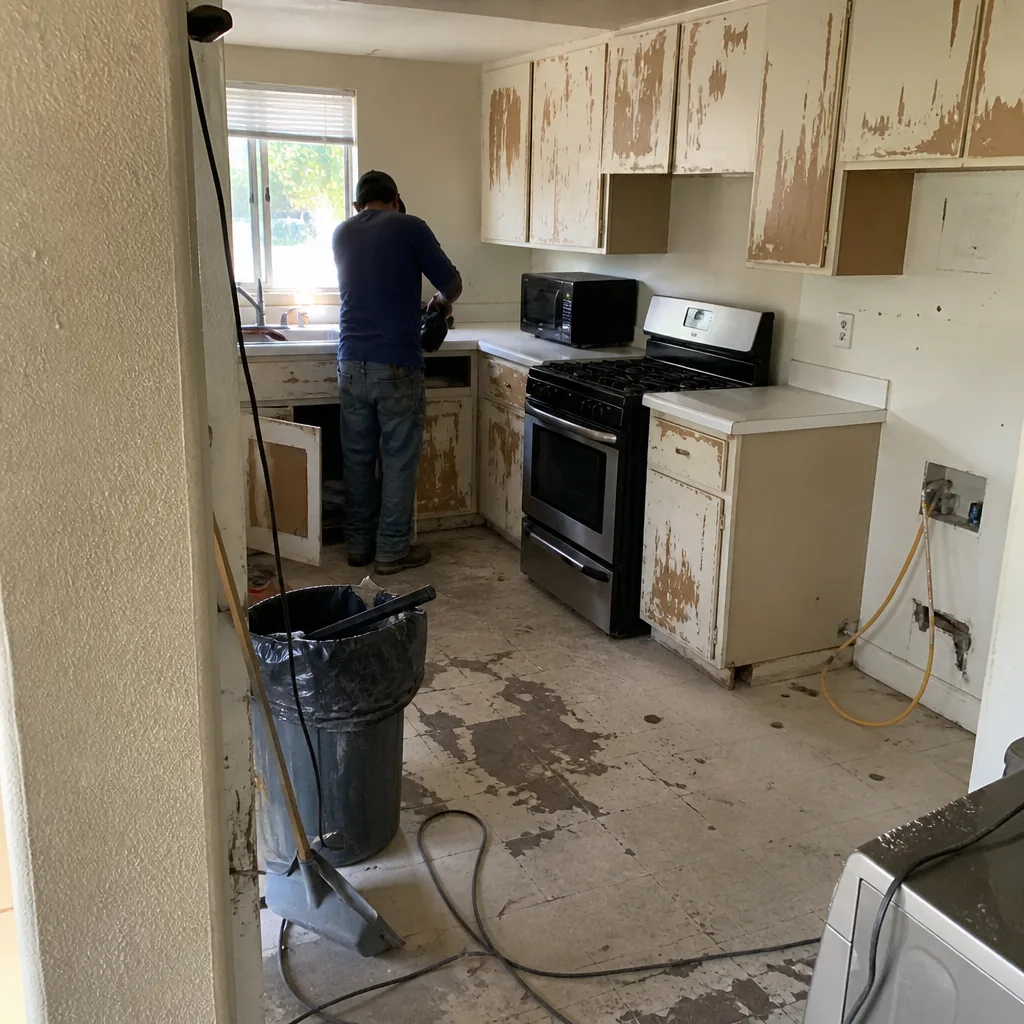 Before
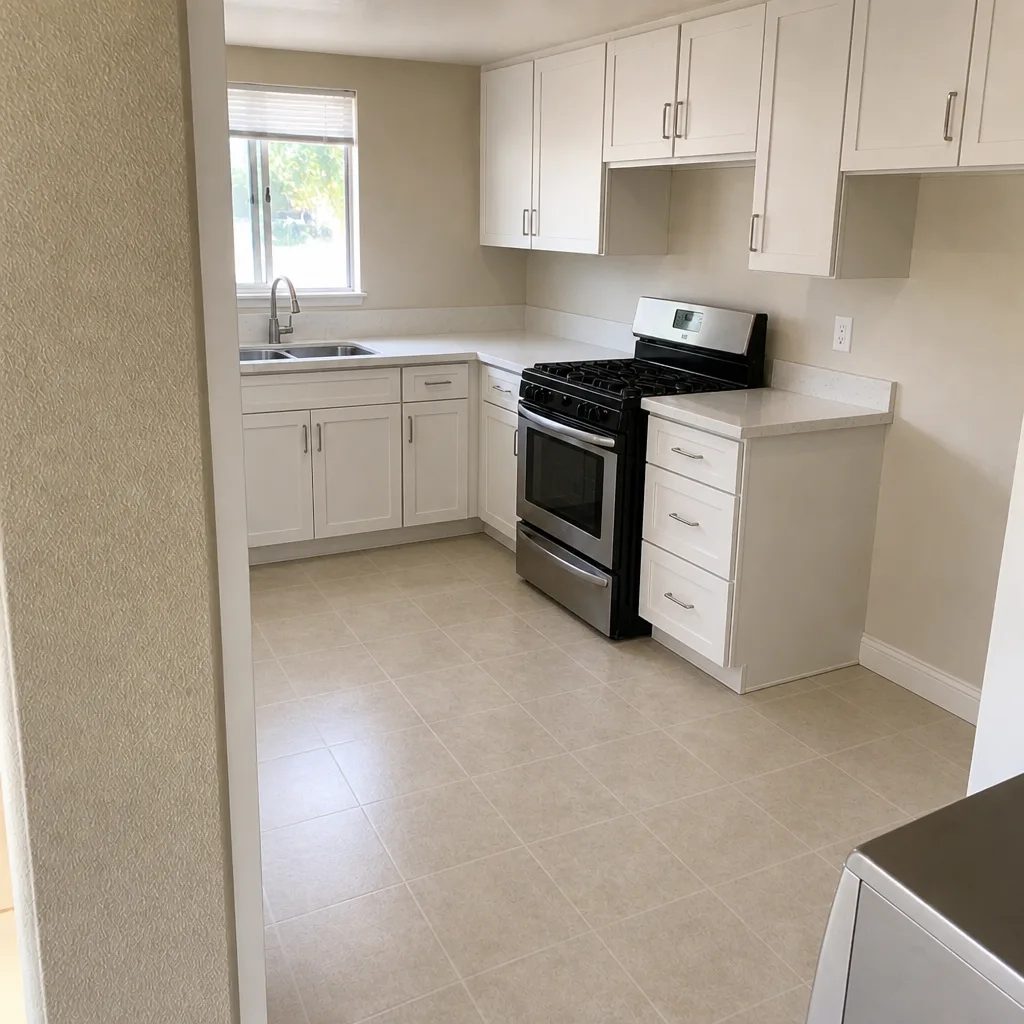 After
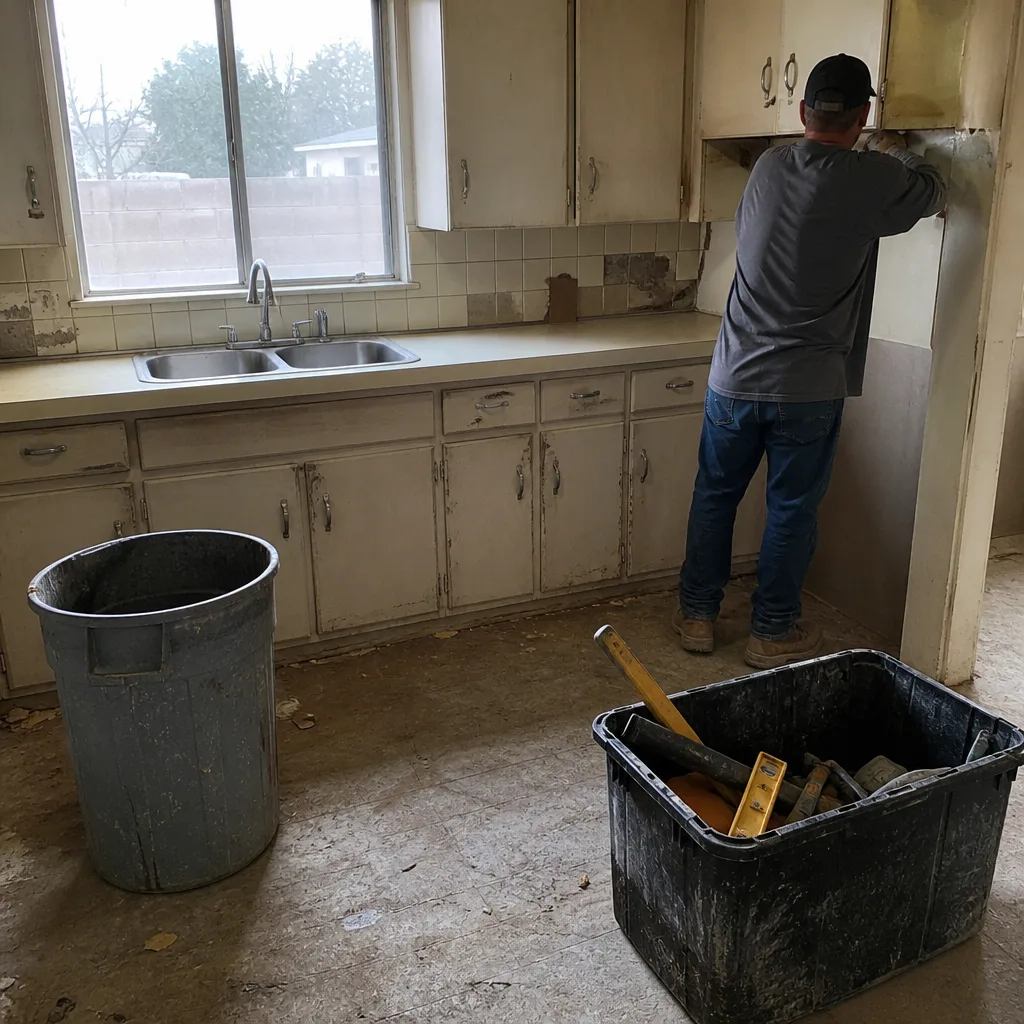 Before
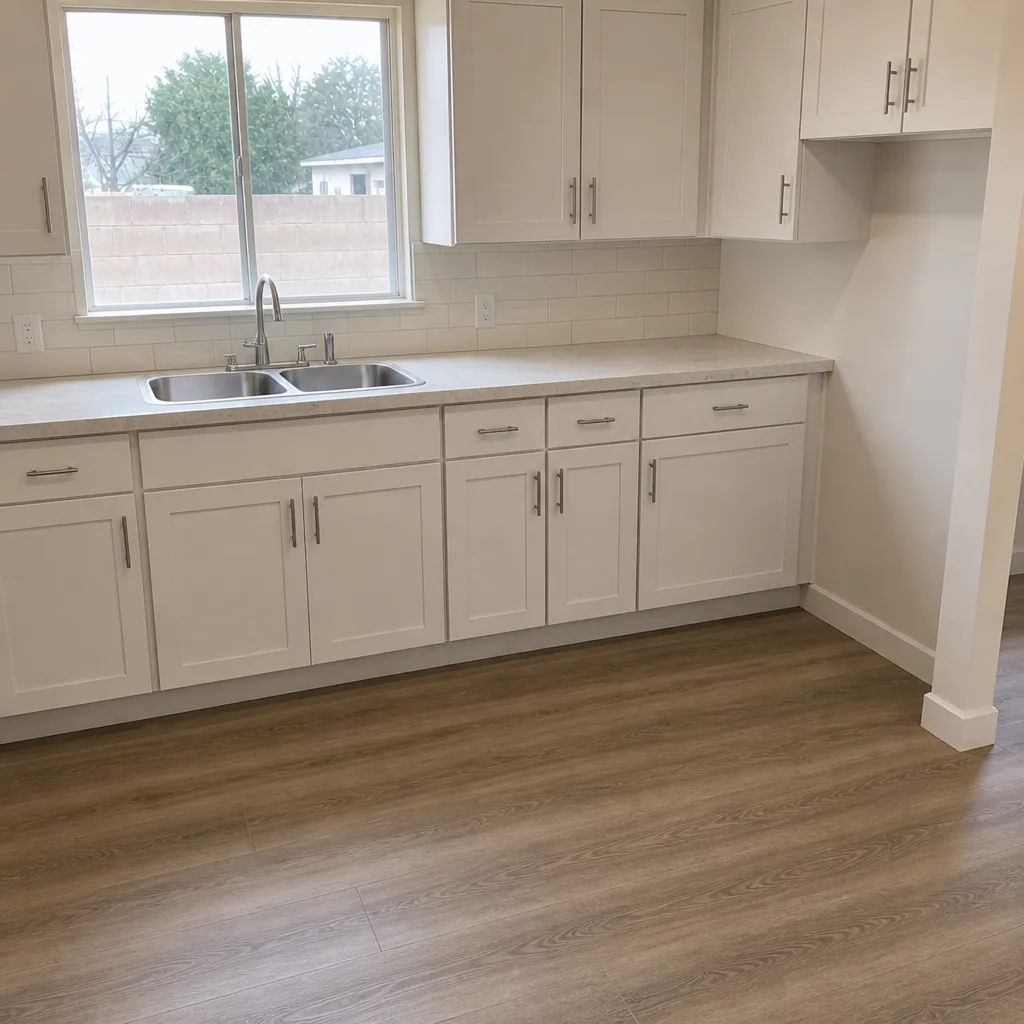 After
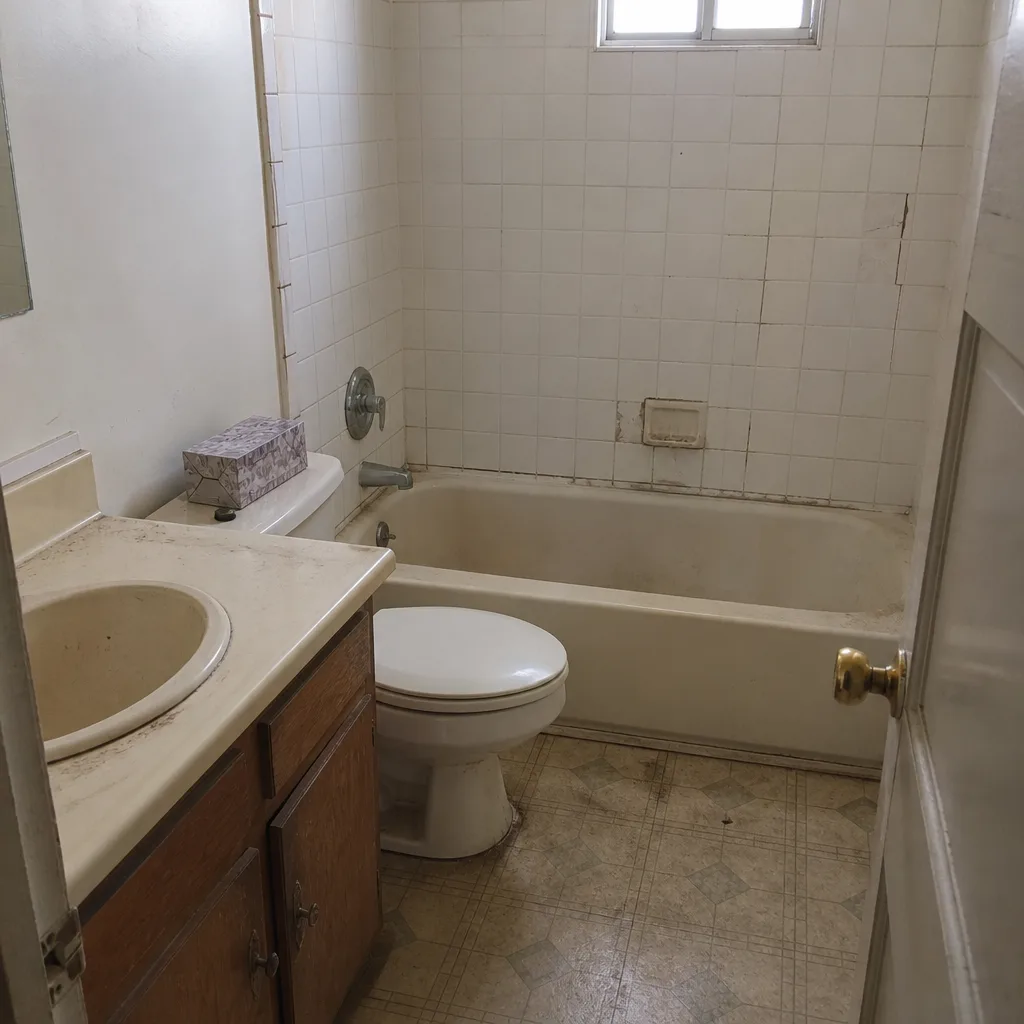 Before
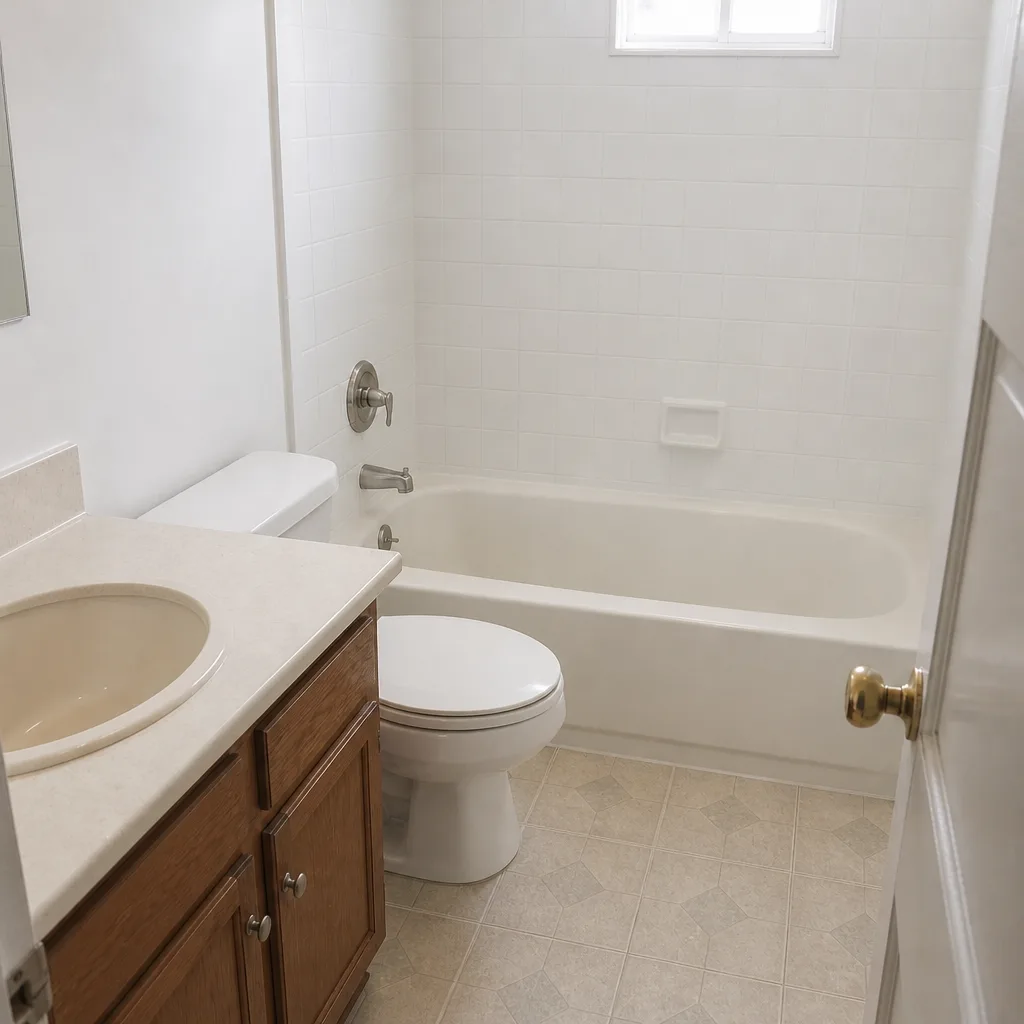 After
When to Call a Professional
If you’re reading this while holding a bid you’re not sure about, that’s the right moment to call. The paperwork audit takes ten minutes on our end and can save you a real amount of money on the front end. Call us if you’re evaluating a quote from another contractor and want a second opinion, if your current remodel has a warning sign you’re trying to interpret, or if you’re planning a kitchen and want a written scope and price that are actually auditable. Penhallow Remodeling Spring Valley offers free estimates in Spring Valley and can be reached at (844) 797-3346. A live person answers around the clock. Every estimate comes with a written price before work starts, and every project gets a written guarantee – the same 365-Day Done Right Promise that covers repairs after the crew leaves. If you’re staring at a bid and something feels off, call. It probably is.
Frequently Asked Questions

Most Spring Valley kitchen remodels run $18,000 – $55,000 depending on layout changes, cabinet line, and countertop material. A cosmetic refresh with the same layout and mid-grade cabinets typically lands in the low $20s; a full layout change with new plumbing, electrical, and upgraded stone can push past $50,000. The number that matters is your written bid, line by line. Call (844) 797-3346 for a free written estimate in Spring Valley.
An allowance is a placeholder dollar amount the contractor assigns to a material or fixture you haven’t selected yet, such as countertops or lighting. The contract total reflects the allowance, but you pay the actual cost when you choose. A too-low allowance – like $2,000 for quartz in a 45-square-foot kitchen – is a warning sign, because quartz typically runs $75 – $125 per square foot installed. Ask for a realistic allowance before signing. Call (844) 797-3346 and we’ll walk you through what a realistic allowance looks like for your kitchen.
Yes, most Spring Valley kitchen remodels that involve electrical changes, plumbing relocation, or structural work require permits, and the electrical and plumbing rough-ins need to pass inspection before drywall closes. If your contractor hasn’t mentioned permits during the estimate, ask. If the answer is “we’ll handle it” without a permit number on the contract, that’s a warning sign, and it can cost you a re-inspection fee or worse. Call (844) 797-3346 with questions about permits and inspections on your project.
A too-low quote almost always shows up in three specific places: an underwritten countertop or cabinet allowance, missing scope items like demo, drywall, or plumbing rough-in, and open-ended language like “TBD at demo.” Compare the line items, not the total, and ask what specifically would trigger a change order. If the answer is vague, the price isn’t stable. Call (844) 797-3346 for a written line-item scope you can compare against any other bid.
A legitimate change order covers a condition nobody could see before demo – hidden water damage, a rotting subfloor, or a framing issue from a previous remodel. An opportunistic change order charges for something visible at the walk-through that the contractor bid around or didn’t check. Ask for photos of the uncovered condition before approving the price, and make sure your contract includes a written rate schedule for change-order labor. Call (844) 797-3346 to have a scope reviewed before you sign.
You know because the guarantee is in writing and specifies a response window. Verbal assurances aren’t a guarantee. Ask to see the document, read what it covers – labor, materials, or both – and confirm how long the coverage lasts. At Penhallow Remodeling Spring Valley, the 365-Day Done Right Promise is written into every project, and if a repair fails inside the window, we come back at no charge. Call (844) 797-3346 to see a copy before you sign with anyone.
The Bottom Line
Most kitchen remodeling horror stories don’t start on demo day. They start the moment a homeowner signs a bid that was written to grow – an allowance that doesn’t cover real material costs, a scope missing a rough-in line item, a “TBD” that becomes a change order. Reading the paperwork before you sign is the single highest-leverage thing you can do. Then verify the contractor’s follow-through: the phone that gets answered, the guarantee that’s in writing, the crew that’s background-checked and in uniform. We wrote this as a guide from a kitchen-table point of view, because the homeowners who reach us after a bad job almost always tell us the paperwork had the warning sign in it – they just didn’t know which line to read. Now you do.
Ready to price your kitchen the right way? Call Penhallow Remodeling Spring Valley at (844) 797-3346 for a free written estimate. A live person answers any hour, and the number you see on day one is the number on your final invoice.
Written by the team at Penhallow Remodeling Spring Valley.